
Dilapidations Surveyors
Dilapidation surveys for landlords and tenants on commercial property — schedules of dilapidations, terminal claims, response review, and lease-end negotiation.
Acting for a landlord at lease end? Use the fast track form for a terminal schedule of dilapidations fee proposal and we will reply the same working day.
Terminal Schedule Fast Track →Dilapidations support
Choose the right starting point for your dilapidations matter
The best starting point often depends on whether you are acting for the landlord, responding as a tenant, or already have lease documents and schedules ready for review.
Landlord-side strategy
Use this route if you need a schedule of dilapidations, quantified demand, lease-end inspection planning, or a more structured landlord-side approach to a claim.
Best suited to lease expiry, interim schedules, and landlord-led preparation before a terminal schedule is served.
Tenant-side review
Use this route if you have received a terminal schedule, quantified demand, or break-clause related claim and want scope, liability, and cost tested against the lease obligations.
Best suited to live dilapidations claims, break clauses, and negotiation support where scope, liability, and the cost of a claim need to be tested quickly against the lease.
Fast document-led start
If you already have the lease, schedule, Scott schedule, or quantified demand, start with a document-led conversation so the instruction can begin directly from the paperwork.
Useful where timing matters and you want to move directly from the existing documents to a clear instruction without a separate scoping stage.
Typically instructed by
Landlords, tenants, managing agents, and occupiers approaching lease-end liability.
Common instruction stage
Interim review, lease expiry, break clause exercise, or after service of a terminal schedule.
Typical output
Schedules, responses, Scott schedules, quantified review, and negotiation support.
Case study outcomes
Current case studies show savings of up to 50% of the initial claim value.
Dilapidations Services
Dilapidations in the context of a commercial lease refer to alleged breaches of repair, reinstatement, decoration, and other physical condition obligations contained within the lease. A dilapidation survey is the inspection used to test those obligations against the actual condition of the property, on either side of a claim.
These issues often arise near the end of a lease term, but they can also emerge earlier where condition and compliance need to be reviewed in relation to lease obligations.
In England and Wales, dilapidations practice is shaped by the Dilapidations Protocol under the Civil Procedure Rules together with RICS professional guidance. Those frameworks influence how claims are documented, responded to, and negotiated before formal proceedings are contemplated.
Definitions and Key Concepts
A schedule of dilapidations is typically prepared on behalf of a landlord and records alleged breaches of the repairing and reinstatement covenants in the lease, often identifying the works considered necessary to return the property to the required condition.
A quantified demand accompanies the schedule and sets out the landlord’s claimed loss. A tenant or their surveyor may respond by way of a response and/or a Scott schedule, dealing with the claim line by line and testing each item against the lease, evidence, and scope of liability.
When Dilapidations Matters Arise
Dilapidations can become relevant at several stages in the life of a lease: during the term by way of interim schedules, approaching lease expiry through a terminal schedule, and after termination where remedial works remain outstanding.
- Interim schedules prepared during the lease term to record deterioration or prompt compliance.
- Terminal schedules served near lease expiry to document alleged breaches at the end of occupation.
- Post-termination claims and negotiations where remedial works have not been carried out.
Lease Exit Dilapidations
Lease exit dilapidations refer to the repair, reinstatement, and condition obligations that arise specifically at the end of a commercial lease. As a tenant approaches the expiry of their term — or exercises a break clause — the landlord becomes entitled to inspect the property, document any breaches of the repairing and reinstatement covenants, and pursue a claim for the resulting loss.
Early engagement with a dilapidations surveyor during the lease exit period helps tenants understand their exposure, challenge overreaching claims, and manage the negotiation process before the final position is crystallised. For landlords, timely preparation of a terminal schedule and quantified demand is essential to preserving the claim.
- Pre-exit lease review to identify repairing and reinstatement obligations before they become live issues.
- Inspection and condition assessment at the end of the lease term or immediately before break exercise.
- Response to terminal schedules and negotiation of lease exit settlements based on lease evidence.
- Coordination of remedial works where the tenant elects to carry out repairs rather than pay a cash settlement.
Role of the Dilapidations Surveyor
The work usually begins with a dilapidation survey on site, where the lease covenants are tested against the condition of the property as found.
For landlords, the surveyor’s role is often to identify outstanding obligations and quantify recoverable loss in a structured and defensible way. For tenants, the role is to review the landlord’s documents, test liability, challenge untenable items, and negotiate settlement from a position grounded in evidence and lease interpretation.
In either case, the work involves careful review of lease covenants, inspection of the property, and preparation or critique of documents in accordance with accepted professional standards. Where a claim proceeds towards litigation, the practice also provides expert witness building surveying with reports prepared to Civil Procedure Rules Part 35.
Detailed Process and Deliverables
A typical dilapidations instruction progresses through document review, inspection, preparation of schedules and responses, and negotiation support. The exact deliverables vary by instruction, but the process is usually methodical and evidence-led.
- Document review of the lease, licences to alter, schedules of condition, and related records.
- A dilapidation survey on site to assess building fabric, finishes, services, and condition against the obligations in the lease.
- Preparation of schedules, quantified demands, responses, or Scott schedules as needed.
- Negotiation support to narrow differences, clarify disputed items, and support settlement.
The route of a dilapidations claim
Lease end approaches
Repair, reinstatement, and decoration liability starts to crystallise up to twelve months before expiry or break.
Schedule served
The landlord serves a terminal schedule with a quantified demand. Claims commonly run to five and six figures.
Response prepared
Each item is tested against the lease obligations, the evidence, and the statutory cap on damages.
Negotiation
Surveyor-to-surveyor negotiation on a Scott schedule narrows scope, liability, and cost.
Settlement
Savings of up to 50%
of the initial claim value in current case studies.
Considerations for Landlords
Landlords often require a schedule of dilapidations and a quantified demand at lease expiry in order to record alleged breaches and frame the claim in accordance with the lease and protocol requirements.
Professional input helps ensure that inspections, recording, and scope of claim are objective, properly evidenced, and procedurally sound. That does not guarantee recovery, but it does make the position more coherent and defensible.
Considerations for Tenants
Tenants benefit from early review of lease liabilities and close scrutiny of the landlord’s schedule. Not every claimed item is necessarily recoverable, and many disputes turn on the precise wording of the lease, condition evidence, or scope of works alleged.
A tenant-side response may include a Scott schedule, comment on lease interpretation, factual condition analysis, and cost-based challenge to claimed allowances.
Benefits of Professional Engagement
Qualified surveyor involvement brings structure, technical scrutiny, and protocol-aware analysis to what can otherwise become an expensive and poorly defined dispute.
It also improves the prospect of negotiated resolution by turning broad allegations into specific, reviewable items supported by lease and condition evidence.
Dilapidations Case Studies
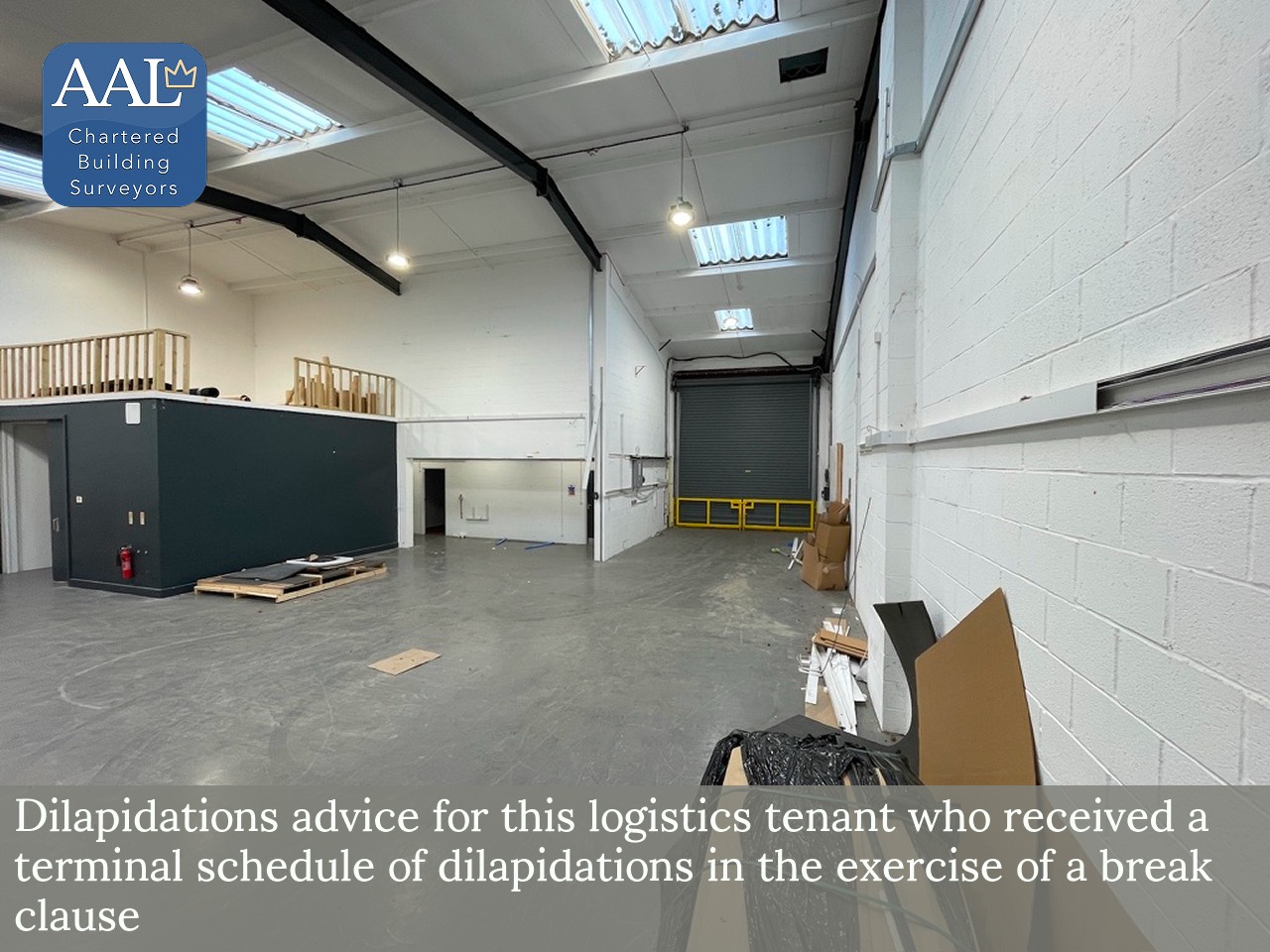
Case Study 1 — Tech SME, Central London: Break Clause and Terminal Dilapidations
A technology SME occupying commercial premises exercised a tenant break clause and subsequently received a terminal schedule of dilapidations from the landlord. We were instructed to review the lease, inspect the property, and analyse the claim in detail.
Our response identified elements of the claim that did not align with the tenant’s contractual obligations. Through structured review and negotiation, the initial claim of approximately £45,000 was reduced to around £26,000.
That outcome represented an approximate saving of £19,000 and demonstrates the value of disciplined lease interpretation and evidence-led negotiation when break clauses and terminal claims overlap.
Case Study 2 — Commercial Warehouse, South East London: Tenant Negotiation and Cost Reduction
We acted for a tenant in relation to a commercial warehouse schedule of dilapidations, reviewing the landlord’s allegations, inspecting the unit, and assessing the scope of liability under the lease.
We interrogated the basis of the claimed works and cost allowances, then negotiated a revised position with the landlord’s surveyor. The demand was reduced from approximately £88,000 to £70,000.
The result was a significant saving for the client and highlights the importance of prompt professional review where a landlord’s position appears overly broad or aggressively costed.
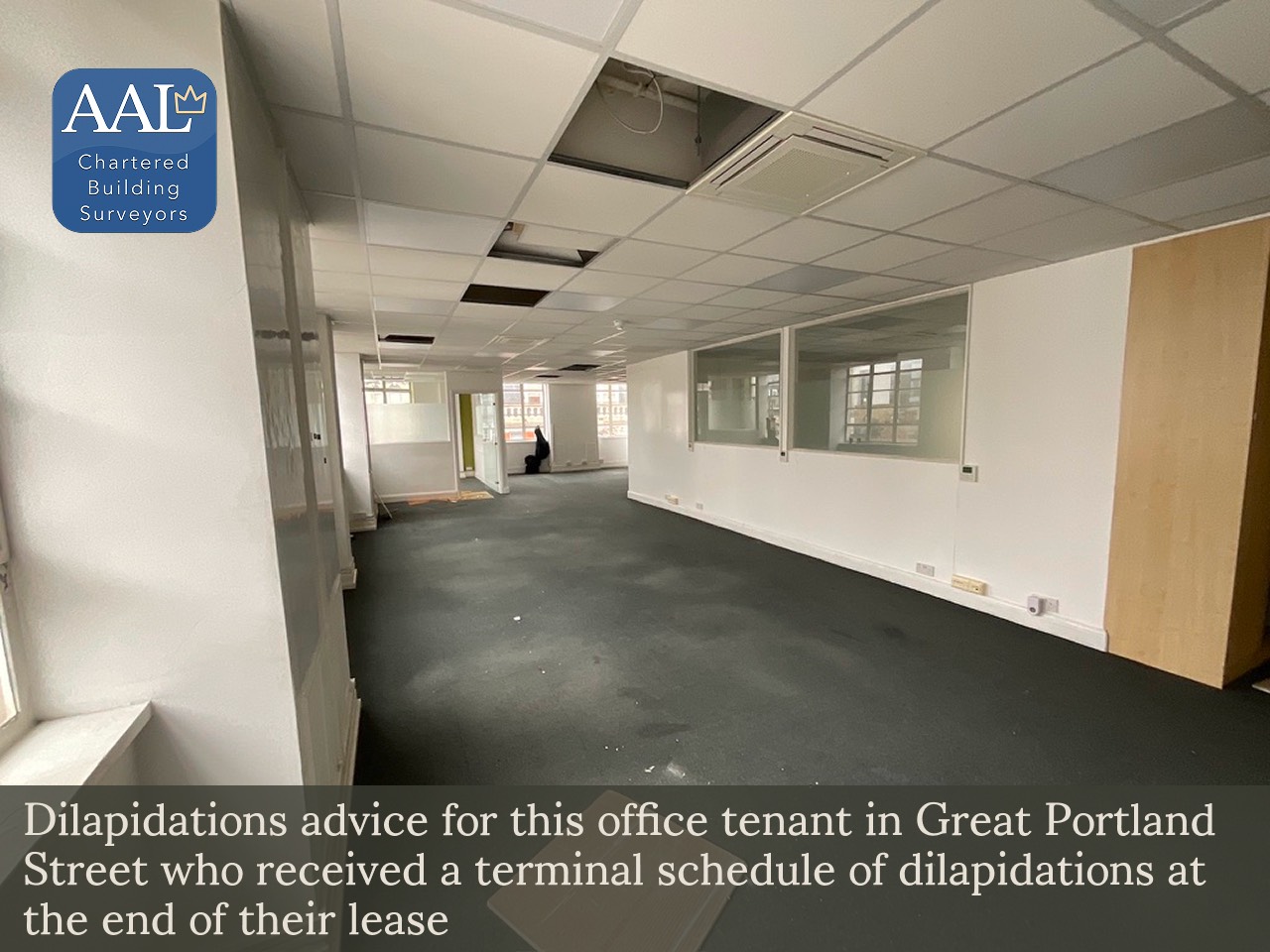
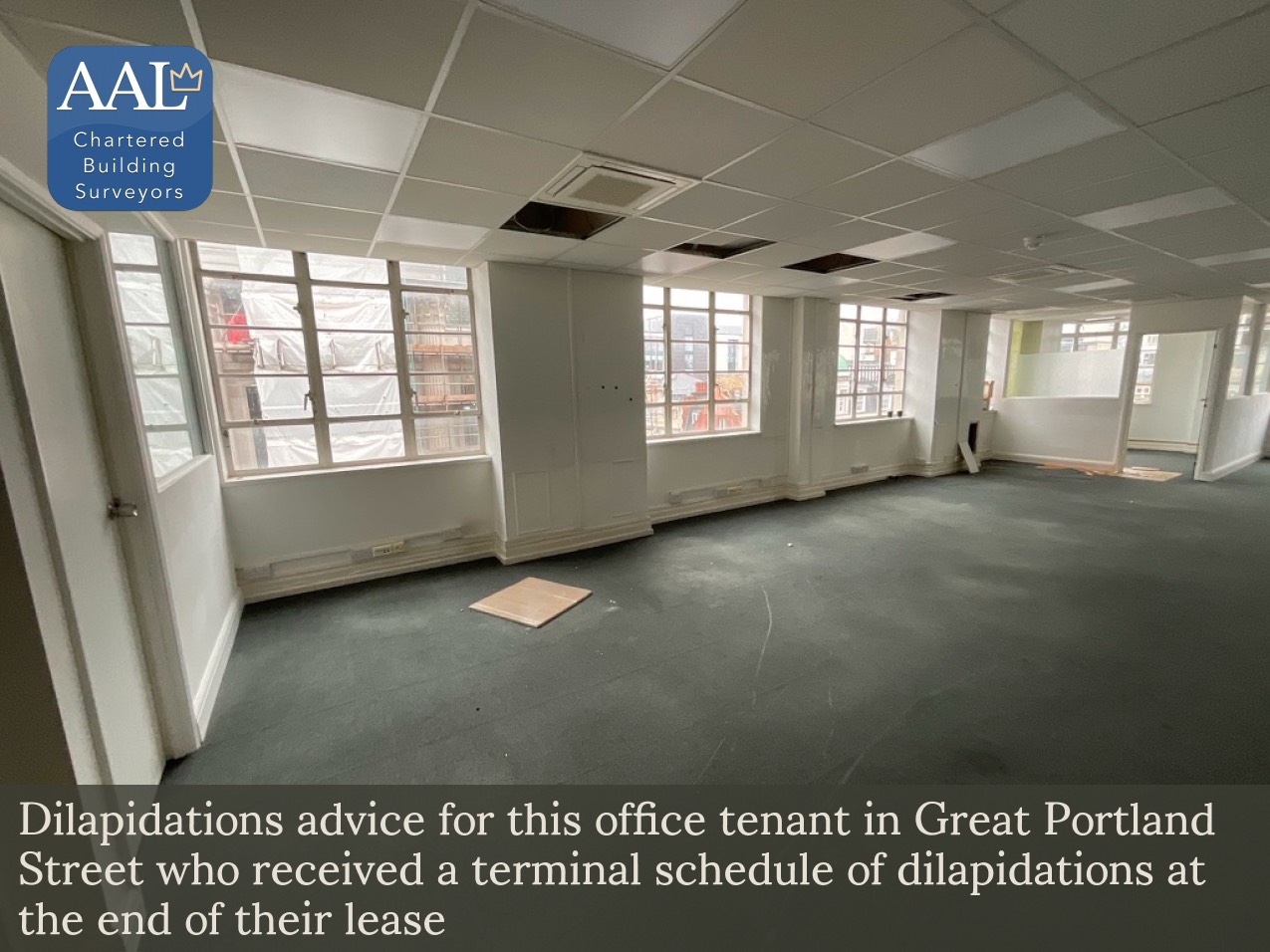
Case Study 3 — Office Space, Great Portland Street: Substantial Reduction in Terminal Claim
We were instructed by a tenant following service of a terminal schedule for office premises on Great Portland Street. After reviewing the lease and the landlord’s claim, we carried out an inspection to compare the allegations against actual condition.
Several items were found to be unsupported by the evidence or beyond the true repairing obligations in the lease. We challenged the claim line by line and negotiated directly with the landlord’s surveyor.
The initial claim of approximately £45,000 settled at £23,000, creating an approximate saving of £22,000 for the client.
Dilapidations FAQs
Practical answers to common questions about dilapidations claims, surveys, and lease-end obligations.
Dilapidations are breaches of the repairing, reinstatement, and decoration covenants in a commercial lease. They describe the condition obligations a tenant owes to the landlord, and typically become a financial issue at the end of the lease term when the landlord assesses the property and claims for any shortfall.
A dilapidation survey is a detailed inspection of a commercial property carried out by a chartered building surveyor to assess its condition against the repairing obligations in the lease. The survey forms the basis of either a schedule of dilapidations prepared for the landlord or a response prepared for the tenant.
A schedule of dilapidations is a formal document listing every item of disrepair, want of decoration, and failure to reinstate that the tenant is alleged to be liable for under the lease. It is typically prepared by the landlord's surveyor and served on the tenant at or after lease expiry, together with a quantified demand setting out the cost of remedying each breach.
A terminal schedule is served at or after the end of the lease and forms the basis of a damages claim. An interim schedule is served during the lease term to prompt the tenant to carry out repairs while still in occupation. Interim schedules do not result in a damages claim at that stage, but failure to act on them can strengthen the landlord's eventual terminal claim.
Section 18 of the Landlord and Tenant Act 1927 caps the damages a landlord can recover in a dilapidations claim. The landlord cannot recover more than the amount by which the value of their reversion has been diminished by the tenant's breaches. Where the landlord intends to demolish or substantially refurbish the property, the cap may reduce the claim significantly or to nil.
The cost depends on the size and condition of the property, the scope of the repairing obligations in the lease, and whether the claim involves repair, reinstatement, redecoration, or all three. Claims can range from a few thousand pounds for a small office to several hundred thousand for a large commercial property. Professional surveyor fees are separate from the claim value itself.
Yes. A tenant can choose to carry out the required repairs, reinstatement, and redecoration before the lease expires rather than face a financial claim afterwards. This can be a more cost-effective route where the tenant manages the works directly. However, there is a risk that the landlord will not accept the works or will disagree with their scope and extent, and may still raise a dilapidations claim. Early engagement with a surveyor and, where possible, agreement with the landlord on the specification before works begin can reduce that risk.
Ideally 12 to 18 months before lease expiry if you are a tenant, so there is time to assess liability, plan any works, and negotiate before the claim crystallises. For landlords, the surveyor should be instructed in the final months of the lease so the terminal schedule is ready to serve promptly after the tenant vacates.
Need Dilapidations Advice?
We can review lease documents, advise on inspection timing and scope, prepare or respond to schedules, and support structured negotiations.
Social Media Feed

AAL Chartered Surveyors
2026-09-23 09:55:52 British local time

Dilapidations Case in Great Portland Street:
Navigating the complexities of dilapidations claims can be challenging, which is why our expertise in dealing with such matters was pivotal in assisting a tenant on Great Portland Street. When faced with a claim...... Read more
Navigating the complexities of dilapidations claims can be challenging, which is why our expertise in dealing with such matters was pivotal in assisting a tenant on Great Portland Street. When faced with a claim that appeared overstated, we stepped in to provide a comprehensive assessment and achieve a more balanced outcome.
Our careful evaluation involved:
- Reviewing the schedule of dilapidations to ensure accuracy and relevance.
- Identifying discrepancies where items exceeded lease obligations or inaccurately represented the tenant's responsibility.
- Scrutinising the cost methodology for items, paying particular attention to pricing basis, any potential betterment, and associated consequential works.
Through our strategic negotiations with the landlord’s surveyor, we were able to secure a significant reduction in the claim, resulting in substantial cost savings for our client. This case exemplifies our commitment to safeguarding tenant interests while fostering constructive relations within the landlord-tenant dynamic. If you're facing a similar challenge, we're here to help you navigate it efficiently and effectively.
#interimschedule #BuildingDefects #dilapidations #ConstructionSurveying #CommercialProperty #RealEstateSurveying #terminalschedule #BuildingSurveying #AssetManagement #PropertySurveying #LeaseManagement
AAL Chartered Surveyors
2026-05-09 14:20:00 British local time
Acting for a Tenant: Dilapidations Success on Great Portland Street
Cost-Saving Expertise
When acting for our tenant client in this office dilapidations matter, we successfully navigated the claim on behalf of our client to deliver a substantial cost savi...... Read more
Cost-Saving Expertise
When acting for our tenant client in this office dilapidations matter, we successfully navigated the claim on behalf of our client to deliver a substantial cost saving. Through a careful review of the schedule of dilapidations and a negotiation with the landlord’s surveyor, we were able to reduce the original claim of approximately £44,000 to a far more manageable sum of £23,000.
This result highlights the value of having a skilled and experienced RICS building surveyor on your side when faced with a terminal dilapidations schedule.
If you’ve received a schedule of dilapidations, we encourage you to explore how we can assist. Visit www.aylingassociates.com/dilapidations-surveyor.html to learn more, or contact us directly for a no-obligation consultation.
#interimschedule #BuildingDefects #dilapidations #ConstructionSurveying #CommercialProperty #RealEstateSurveying #terminalschedule #BuildingSurveying #AssetManagement #PropertySurveying #LeaseManagement
AAL Chartered Surveyors
2026-05-09 12:20:00 British local time
Dilapidations Expertise at a Warehouse Unit in South East London
We were pleased to assist our client in South East London by successfully negotiating a substantial cost saving on their dilapidations claim. Originally assessed at £88,000, our team’s negoti...... Read more
We were pleased to assist our client in South East London by successfully negotiating a substantial cost saving on their dilapidations claim. Originally assessed at £88,000, our team’s negotiations brought this down to £70,000, resulting in a significant saving of approximately £18k.
For tenants facing a schedule of dilapidations, this outcome demonstrates how effective negotiation can mitigate potential financial burden. Our thorough understanding of the process allows us the foresight to identify fair and achievable savings.
If you find yourself in a similar situation, we encourage you to reach out for a complimentary consultation. Our professional team is ready to offer you insights and strategies tailored to your specific circumstance, striving for an outcome that works in your favour.
#terminalschedule #dilapidations #BuildingSurveying #AssetManagement #CommercialProperty #BuildingDefects #PropertySurveying
AAL Chartered Surveyors
2026-05-09 10:20:00 British local time
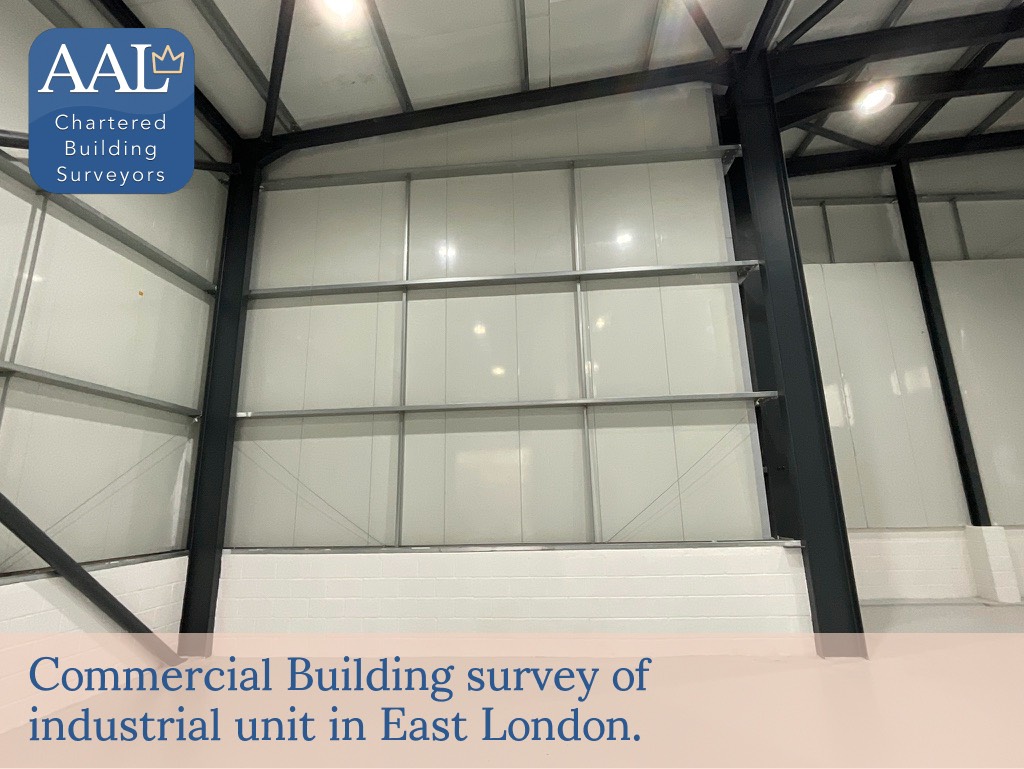
At AAL Chartered Surveyors, we employ a rigorous and tech savvy approach to conducting commercial due diligence surveys, especially tailored for commercial properties. Our survey methodology integrates cutting-edge technology and systematic procedures to pr...... Read more
Key Features of Our Survey Methodology
1. Visual Inspection:
Our surveyors conduct thorough visual inspections, utilising BuildSurvAI, our bespoke application. This tool streamlines the data gathering process, ensuring that nothing is overlooked and enhancing the accuracy of our findings. BuildSurvAI facilitates real-time data entry, which speeds up the generation of reports, enabling us to provide you with insights more swiftly.
2. Drone Survey:
Acknowledging the challenges in accessing certain areas of industrial buildings, we deploy drone technology to inspect hard-to-reach areas such as roofs, high-level cladding panels, rainwater goods, and high-level windows. This not only increases the safety of our surveyors by reducing the need for physical access to high places but also provides a more detailed and comprehensive overview of the condition of these critical areas.
Benefits of Our Approach
- Efficiency and Accuracy: Our use of BuildSurvAI and drones cuts down on the time typically required for manual data collection and entry, allowing for more precise and quicker surveys. This means you can make informed decisions faster, crucial in the dynamic real estate markets of London.
- Comprehensive Coverage: The combination of traditional surveying methods with advanced technology ensures that every part of the property is thoroughly assessed, leaving no stone unturned.
- Safety and Accessibility: Drone surveys reduce the risk associated with physically accessing dangerous or difficult-to-reach areas, ensuring comprehensive coverage without compromising safety.
- Enhanced Report Quality: Our technology-driven approach results in higher quality, detailed reports that provide a clearer picture of the property condition, aiding in the due diligence process.
This strategic blend of technology and expertise underscores our commitment to delivering top-tier service and reliable information, helping you navigate your commercial property investments with confidence.
#FacilitiesManagement #AssetManagement #PropertyMaintenance #BuildingDefects #BuildingSurvey #RealEstateSurvey #StructuralAssessment #PropertyInspection #CommercialBuildingSurvey #CommercialProperty
AAL Chartered Surveyors
2026-05-08 18:20:00 British local time
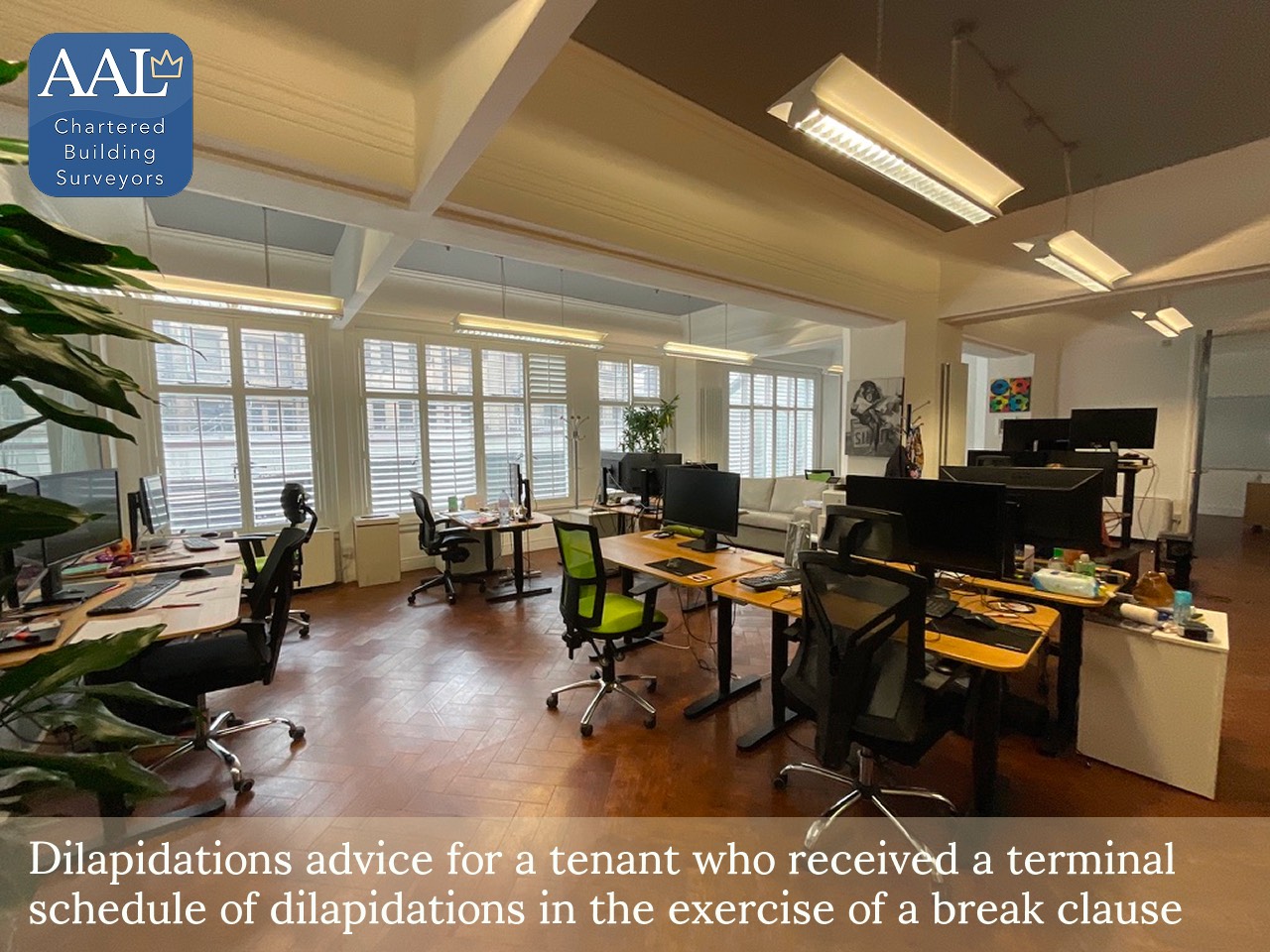
Navigating the complexities of a terminal schedule of dilapidations can be daunting, particularly when it intersects with the exercise of a break clause. For tenants, understanding your rights and obligations is crucial in managing both the legal and financ...... Read more
At AAL Chartered Surveyors, we specialise in providing expert advice and robust representation for tenants faced with dilapidation claims. A recent example of our work demonstrates the tangible impact of professional intervention. In this case, our client faced an initial dilapidations claim of circa £45,000. Throughour assessment and negotiation, we successfully reduced the claim to £26,000, achieving a cost saving of approximately £19,000 for our client.
This outcome isn't just about financial relief; it's a testament to the importance of strategic planning and expertise in the field of building surveying. Our goal is to ensure that tenants are not only compliant with their lease terms but are also protected from excessive claims that can arise during key transition moments such as the exercise of a break clause.
Understanding the details of your lease, the condition of the premises, and the specific terms of the dilapidations claim are vital steps in this process. Our team of accredited professionals works diligently to assess the validity and extent of claims, providing clear, actionable advice tailored to each unique situation.
Should you find yourself in a similar situation, or if you are looking to better understand your position before such a scenario arises, our team is here to assist. By offering a tailored approach and striving for the most favorable outcomes, we empower our tenants to navigate dilapidations claims confidently and cost-effectively.
#terminalschedule #dilapidations #interimschedule #CommercialProperty #PropertySurveying #AssetManagement #PropertyMaintenance #BuildingDefects #BuildingSurveying #ConstructionSurveying #RealEstateSurveying #LeaseManagement
Dilapidations by AreaBrowse local dilapidations pages
London and South East
- Abbey Wood
- Acton
- Aldgate
- Alexandra Palace
- Anerley
- Archway
- Balham
- Bank
- Barbican
- Barking
- Barnes
- Barnsbury
- Basingstoke
- Battersea
- Bayswater
- Beckenham
- Beckton
- Belgravia
- Belsize Park
- Belvedere
- Bermondsey
- Bethnal Green
- Bexleyheath
- Bishopsgate
- Blackheath
- Bloomsbury
- Borough
- Bow
- Bracknell
- Brent Cross
- Brentford
- Brimsdown
- Brixton
- Brockley
- Bromley-by-Bow
- Brompton
- Brondesbury Park
- Camberwell
- Camden Town
- Canary Wharf
- Canning Town
- Canonbury
- Catford
- Chalk Farm
- Charlton
- Cheapside
- Chelsea
- Chingford
- Chiswick
- Chiswick Park
- City of London
- Clapham
- Clapham Junction
- Clapton
- Clerkenwell
- Colindale
- Collier's Wood
- Cottenham Park
- Covent Garden
- Cricklewood
- Crofton Park
- Crouch End
- Croydon
- Crystal Palace
- Dagenham
- Dalston
- Deptford
- Dollis Hill
- Dulwich
- Ealing
- Earl's Court
- Earlsfield
- East Central London
- East Dulwich
- East Finchley
- East Ham
- East London
- Edgware
- Elephant and Castle
- Eltham
- Enfield
- Erith
- Finchley
- Finchley Central
- Finchley Church End
- Finchley Road
- Finsbury
- Finsbury Circus
- Finsbury Park
- Fitzrovia
- Fleet Street
- Forest Gate
- Forest Hill
- Fulham
- Golders Green
- Gospel Oak
- Gray's Inn
- Greenwich
- Greenwich Peninsula
- Hackney
- Hackney Wick
- Hammersmith
- Hampstead
- Hanwell
- Harlesden
- Harrow
- Hayes
- Heathrow
- Hendon
- Herne Hill
- High Wycombe
- Highams Park
- Highbury
- Highgate
- Hither Green
- Holborn
- Holland Park
- Holloway
- Homerton
- Honor Oak Park
- Hornsey
- Hoxton
- Hyde Park
- Ilford
- Islington
- Kennington
- Kensal Green
- Kensington
- Kensington (central)
- Kentish Town
- Kew
- Kilburn
- King's Cross
- Kingsbury
- Kingston upon Thames
- Knightsbridge
- Lambeth
- Lee
- Lewisham
- Leyton
- Leytonstone
- Liverpool Street
- London
- London Bridge
- Lower Edmonton
- Maida Hill
- Maida Vale
- Maidenhead
- Manor House
- Manor Park
- Marylebone
- Mayfair
- Meridian Water
- Merton
- Mile End
- Mill Hill
- Millwall
- Moorgate
- Morden
- Mortlake
- Muswell Hill
- Neasden
- New Cross
- New Southgate
- Newbury
- Norbury
- North Finchley
- North Kensington
- North Lambeth
- North London
- North Marylebone
- North West London
- North Woolwich
- Norwood
- Notting Hill
- Paddington
- Palmers Green
- Park Royal
- Parson's Green
- Peckham
- Pimlico
- Plaistow
- Poplar
- Primrose Hill
- Putney
- Queen's Park
- Raynes Park
- Reading
- Regent's Park
- Richmond
- Romford
- Rotherhithe
- Royal Docks
- Seven Sisters
- Shadwell
- Shepherd's Bush
- Shoreditch
- Sidcup
- Silvertown
- Slough
- Soho
- South East London
- South Hampstead
- South Kensington
- South Lambeth
- South London
- South Marylebone
- South Norwood
- South Tottenham
- South West London
- South Wimbledon
- South Woodford
- Southgate
- Southwark
- Spitalfields
- St John's Wood
- St Pancras
- St Paul's
- Staines-upon-Thames
- Stamford Hill
- Staples Corner
- Stepney
- Stockley Park
- Stockwell
- Stoke Newington
- Strand
- Stratford
- Streatham
- Sutton
- Swiss Cottage
- Sydenham
- Temple
- Thamesmead
- Thatcham
- The Hyde
- Theale
- Tooting
- Tottenham
- Tufnell Park
- Tulse Hill
- Twickenham
- Upper Edmonton
- Upper Holloway
- Upton Park
- Vauxhall
- Victoria
- Victoria Docks
- Walthamstow
- Walworth
- Wandsworth Town
- Wanstead
- Warwick Avenue
- Waterloo
- Wembley
- West Brompton
- West Central London
- West Ealing
- West Ham
- West Hampstead
- West Kensington
- West London
- West Norwood
- West Wimbledon
- Westcombe Park
- Westminster
- Whetstone
- Whitechapel
- Willesden
- Wimbledon
- Winchmore Hill
- Windsor
- Wokingham
- Wood Green
- Woodford
- Woodside Park
- Woolwich
- World's End