
Dilapidations Surveyors in Bracknell
Dilapidation surveys for landlords and tenants on commercial property — schedules of dilapidations, terminal claims, response review, and lease-end negotiation. Serving Bracknell with local knowledge and a disciplined approach tied to the lease.
Acting for a landlord at lease end? Use the fast track form for a terminal schedule of dilapidations fee proposal and we will reply the same working day.
Terminal Schedule Fast Track →Dilapidations support in Bracknell
Choose the right starting point for dilapidations in Bracknell
The best starting point often depends on whether you are acting for the landlord, responding as a tenant, or already have lease documents and schedules ready for review.
Landlord-side strategy
Use this route if you need a schedule of dilapidations, quantified demand, lease-end inspection planning, or a more structured landlord-side approach to a claim.
Best suited to lease expiry, interim schedules, and landlord-led preparation before a terminal schedule is served.
Tenant-side review
Use this route if you have received a terminal schedule, quantified demand, or break-clause related claim and want scope, liability, and cost tested against the lease obligations.
Best suited to live dilapidations claims, break clauses, and negotiation support where scope, liability, and the cost of a claim need to be tested quickly against the lease.
Fast document-led start
If you already have the lease, schedule, Scott schedule, or quantified demand, start with a document-led conversation so the instruction can begin directly from the paperwork.
Useful where timing matters and you want to move directly from the existing documents to a clear instruction without a separate scoping stage.
Typically instructed by
Landlords, tenants, managing agents, and occupiers approaching lease-end liability.
Common instruction stage
Interim review, lease expiry, break clause exercise, or after service of a terminal schedule.
Typical output
Schedules, responses, Scott schedules, quantified review, and negotiation support.
Case study outcomes
Current case studies show savings of up to 50% of the initial claim value.
Dilapidations Services
Dilapidations in the context of a commercial lease refer to alleged breaches of repair, reinstatement, decoration, and other physical condition obligations contained within the lease. A dilapidation survey is the inspection used to test those obligations against the actual condition of the property, on either side of a claim.
These issues often arise near the end of a lease term, but they can also emerge earlier where condition and compliance need to be reviewed in relation to lease obligations.
In England and Wales, dilapidations practice is shaped by the Dilapidations Protocol under the Civil Procedure Rules together with RICS professional guidance. Those frameworks influence how claims are documented, responded to, and negotiated before formal proceedings are contemplated.
Definitions and Key Concepts
A schedule of dilapidations is typically prepared on behalf of a landlord and records alleged breaches of the repairing and reinstatement covenants in the lease, often identifying the works considered necessary to return the property to the required condition.
A quantified demand accompanies the schedule and sets out the landlord’s claimed loss. A tenant or their surveyor may respond by way of a response and/or a Scott schedule, dealing with the claim line by line and testing each item against the lease, evidence, and scope of liability.
When Dilapidations Matters Arise
Dilapidations can become relevant at several stages in the life of a lease: during the term by way of interim schedules, approaching lease expiry through a terminal schedule, and after termination where remedial works remain outstanding.
- Interim schedules prepared during the lease term to record deterioration or prompt compliance.
- Terminal schedules served near lease expiry to document alleged breaches at the end of occupation.
- Post-termination claims and negotiations where remedial works have not been carried out.
Lease Exit Dilapidations in Bracknell
Lease exit dilapidations refer to the repair, reinstatement, and condition obligations that arise specifically at the end of a commercial lease. As a tenant approaches the expiry of their term — or exercises a break clause — the landlord becomes entitled to inspect the property, document any breaches of the repairing and reinstatement covenants, and pursue a claim for the resulting loss.
Early engagement with a dilapidations surveyor during the lease exit period helps tenants understand their exposure, challenge overreaching claims, and manage the negotiation process before the final position is crystallised. For landlords, timely preparation of a terminal schedule and quantified demand is essential to preserving the claim.
- Pre-exit lease review to identify repairing and reinstatement obligations before they become live issues.
- Inspection and condition assessment at the end of the lease term or immediately before break exercise.
- Response to terminal schedules and negotiation of lease exit settlements based on lease evidence.
- Coordination of remedial works where the tenant elects to carry out repairs rather than pay a cash settlement.
Role of the Dilapidations Surveyor
The work usually begins with a dilapidation survey on site, where the lease covenants are tested against the condition of the property as found.
For landlords, the surveyor’s role is often to identify outstanding obligations and quantify recoverable loss in a structured and defensible way. For tenants, the role is to review the landlord’s documents, test liability, challenge untenable items, and negotiate settlement from a position grounded in evidence and lease interpretation.
In either case, the work involves careful review of lease covenants, inspection of the property, and preparation or critique of documents in accordance with accepted professional standards. Where a claim proceeds towards litigation, the practice also provides expert witness building surveying with reports prepared to Civil Procedure Rules Part 35.
Detailed Process and Deliverables
A typical dilapidations instruction progresses through document review, inspection, preparation of schedules and responses, and negotiation support. The exact deliverables vary by instruction, but the process is usually methodical and evidence-led.
- Document review of the lease, licences to alter, schedules of condition, and related records.
- A dilapidation survey on site to assess building fabric, finishes, services, and condition against the obligations in the lease.
- Preparation of schedules, quantified demands, responses, or Scott schedules as needed.
- Negotiation support to narrow differences, clarify disputed items, and support settlement.
The route of a dilapidations claim
Lease end approaches
Repair, reinstatement, and decoration liability starts to crystallise up to twelve months before expiry or break.
Schedule served
The landlord serves a terminal schedule with a quantified demand. Claims commonly run to five and six figures.
Response prepared
Each item is tested against the lease obligations, the evidence, and the statutory cap on damages.
Negotiation
Surveyor-to-surveyor negotiation on a Scott schedule narrows scope, liability, and cost.
Settlement
Savings of up to 50%
of the initial claim value in current case studies.
Considerations for Landlords
Landlords often require a schedule of dilapidations and a quantified demand at lease expiry in order to record alleged breaches and frame the claim in accordance with the lease and protocol requirements.
Professional input helps ensure that inspections, recording, and scope of claim are objective, properly evidenced, and procedurally sound. That does not guarantee recovery, but it does make the position more coherent and defensible.
Considerations for Tenants
Tenants benefit from early review of lease liabilities and close scrutiny of the landlord’s schedule. Not every claimed item is necessarily recoverable, and many disputes turn on the precise wording of the lease, condition evidence, or scope of works alleged.
A tenant-side response may include a Scott schedule, comment on lease interpretation, factual condition analysis, and cost-based challenge to claimed allowances.
Benefits of Professional Engagement
Qualified surveyor involvement brings structure, technical scrutiny, and protocol-aware analysis to what can otherwise become an expensive and poorly defined dispute.
It also improves the prospect of negotiated resolution by turning broad allegations into specific, reviewable items supported by lease and condition evidence.
Dilapidations FAQs
Practical answers to common questions about dilapidations claims, surveys, and lease-end obligations.
Dilapidations are breaches of the repairing, reinstatement, and decoration covenants in a commercial lease. They describe the condition obligations a tenant owes to the landlord, and typically become a financial issue at the end of the lease term when the landlord assesses the property and claims for any shortfall.
A dilapidation survey is a detailed inspection of a commercial property carried out by a chartered building surveyor to assess its condition against the repairing obligations in the lease. The survey forms the basis of either a schedule of dilapidations prepared for the landlord or a response prepared for the tenant.
A schedule of dilapidations is a formal document listing every item of disrepair, want of decoration, and failure to reinstate that the tenant is alleged to be liable for under the lease. It is typically prepared by the landlord's surveyor and served on the tenant at or after lease expiry, together with a quantified demand setting out the cost of remedying each breach.
A terminal schedule is served at or after the end of the lease and forms the basis of a damages claim. An interim schedule is served during the lease term to prompt the tenant to carry out repairs while still in occupation. Interim schedules do not result in a damages claim at that stage, but failure to act on them can strengthen the landlord's eventual terminal claim.
Section 18 of the Landlord and Tenant Act 1927 caps the damages a landlord can recover in a dilapidations claim. The landlord cannot recover more than the amount by which the value of their reversion has been diminished by the tenant's breaches. Where the landlord intends to demolish or substantially refurbish the property, the cap may reduce the claim significantly or to nil.
The cost depends on the size and condition of the property, the scope of the repairing obligations in the lease, and whether the claim involves repair, reinstatement, redecoration, or all three. Claims can range from a few thousand pounds for a small office to several hundred thousand for a large commercial property. Professional surveyor fees are separate from the claim value itself.
Yes. A tenant can choose to carry out the required repairs, reinstatement, and redecoration before the lease expires rather than face a financial claim afterwards. This can be a more cost-effective route where the tenant manages the works directly. However, there is a risk that the landlord will not accept the works or will disagree with their scope and extent, and may still raise a dilapidations claim. Early engagement with a surveyor and, where possible, agreement with the landlord on the specification before works begin can reduce that risk.
Ideally 12 to 18 months before lease expiry if you are a tenant, so there is time to assess liability, plan any works, and negotiate before the claim crystallises. For landlords, the surveyor should be instructed in the final months of the lease so the terminal schedule is ready to serve promptly after the tenant vacates.
Need Dilapidations Advice? in Bracknell?
We can review lease documents, advise on inspection timing and scope, prepare or respond to schedules, and support structured negotiations.
Social Media Feed

AAL Chartered Surveyors
2026-09-24 14:20:00 British local time

At our recent commercial due diligence survey of an industrial unit in East London the findings of our report led to significant financial advantages for our client. We identified several issues which equated to potential cost savings of approximately £150,...... Read more
These findings played a pivotal role in empowering our client during lease negotiations. With the evidence provided by us, our client was able to engage confidently and effectively in discussions with the landlord. This not only facilitated a reconsideration of the lease terms but also allowed the client to negotiate a reduction in rental values and improvements to other lease-related conditions.
Our proactive approach in highlighting these issues underscores our commitment to adding tangible value to our clients' investment decisions.
By ensuring that all factors are thoroughly vetted, we position our clients in a place of strength, enabling them to make informed and advantageous decisions and negotiations.
#FacilitiesManagement #AssetManagement #PropertyMaintenance #BuildingDefects #BuildingSurvey #RealEstateSurvey #StructuralAssessment #PropertyInspection #CommercialBuildingSurvey #CommercialProperty
AAL Chartered Surveyors
2026-09-24 12:20:00 British local time
When Flat Roof Coverings Diverge from Standard Practice
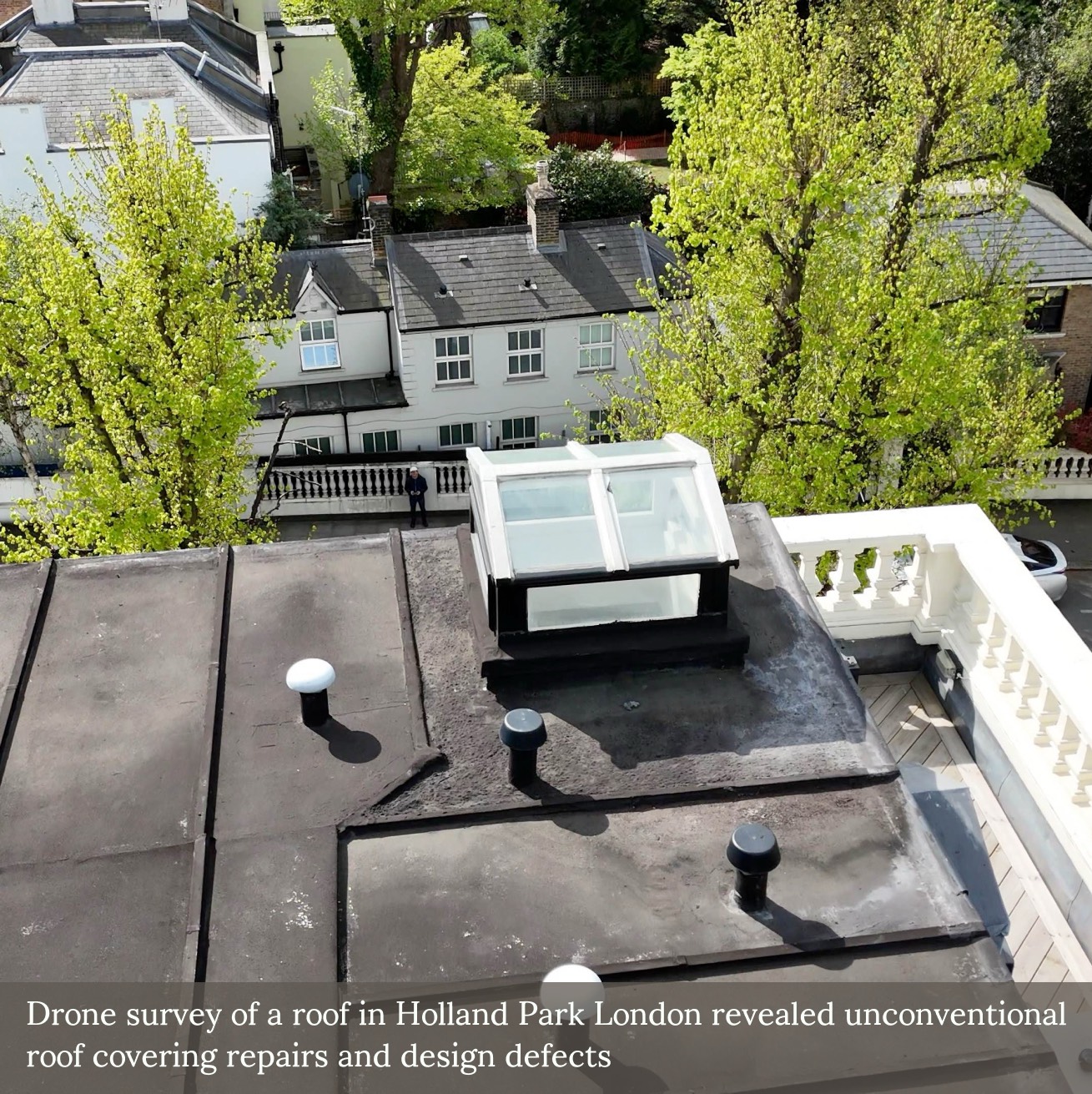
We recently carried out a drone-based roof condition inspection in West London, where an unusual bituminous liquid-applied membrane had been installed over a zinc flat roof.
This type of overlay—rein...... Read more
We recently carried out a drone-based roof condition inspection in West London, where an unusual bituminous liquid-applied membrane had been installed over a zinc flat roof.
This type of overlay—reinforced with a textile mesh—is not typically encountered in applications of this kind, where polymeric systems are more commonly specified. In this case, surface discolouration, exposed reinforcement mesh, and evidence of ponding all raised concerns regarding durability and workmanship.
When flat roofing systems deviate from established detailing or product specifications, there is increased risk of premature failure—particularly when installation records or manufacturer compliance documentation are unavailable.
Early identification through external inspection can assist in defining appropriate next steps, including testing or sampling to determine whether remedial works or full replacement is required.
AAL Chartered Surveyors
2026-09-24 10:20:01 British local time
Roof Risk Without Internal Access
We are often instructed to assess external roof coverings where internal access is restricted. A recent case in W14 illustrates the value of high-level drone inspection for identifying latent structural concerns from the o...... Read more
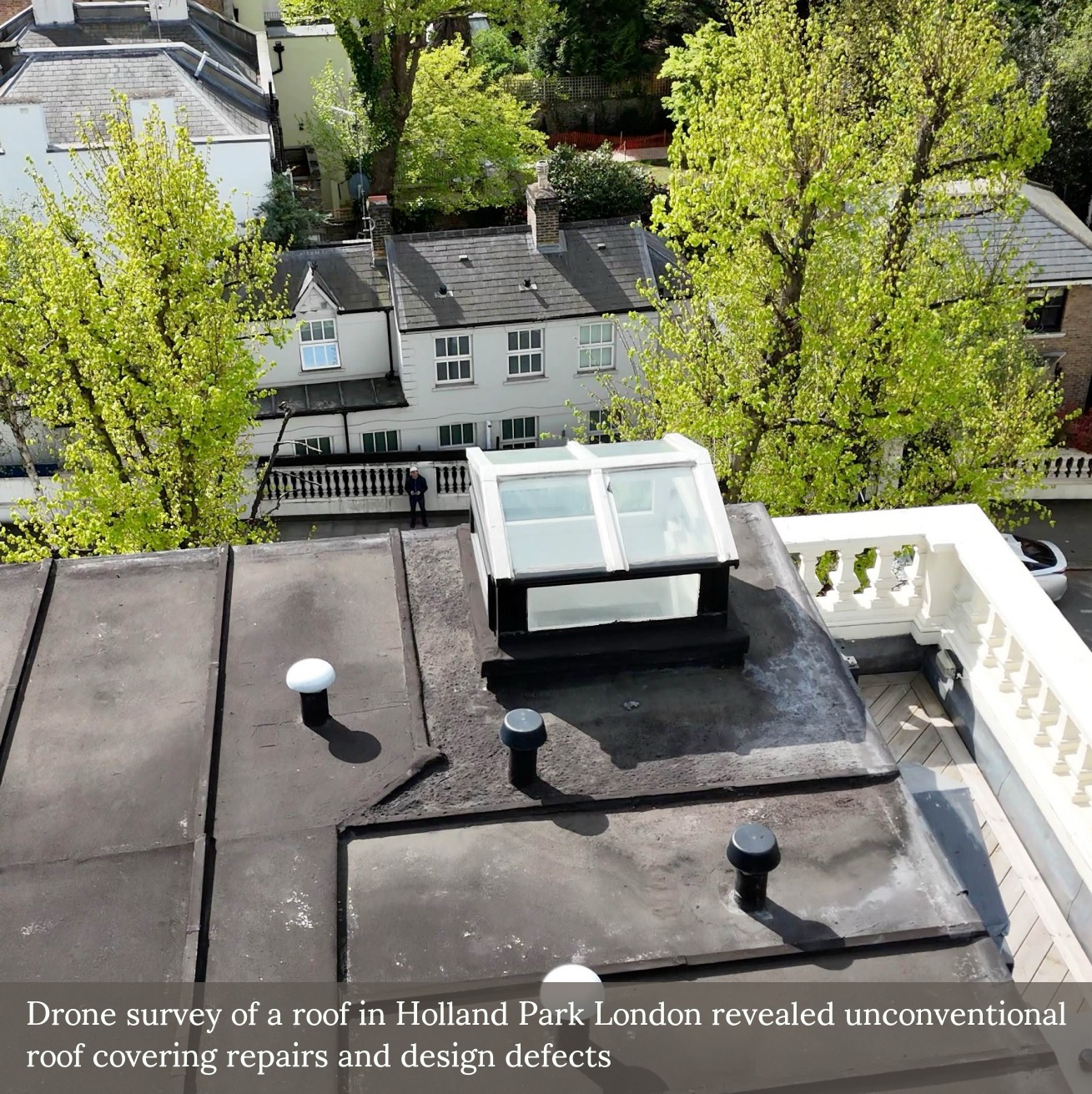
We are often instructed to assess external roof coverings where internal access is restricted. A recent case in W14 illustrates the value of high-level drone inspection for identifying latent structural concerns from the outside.
Numerous depressions in the flat roof deck suggested potential hidden deterioration of the substrate, likely linked to historical water ingress. In the absence of internal inspection, we recommended core sampling to confirm the extent of any concealed damage and to inform the appropriate scope of remedial work.
External-only inspections, when carried out systematically, can yield sufficient evidence to justify further investigation, particularly where the risk of ongoing deterioration to concealed timber or insulation is suspected.
AAL Chartered Surveyors
2026-09-23 14:20:00 British local time
Where Roof Design Meets Condensation Risk
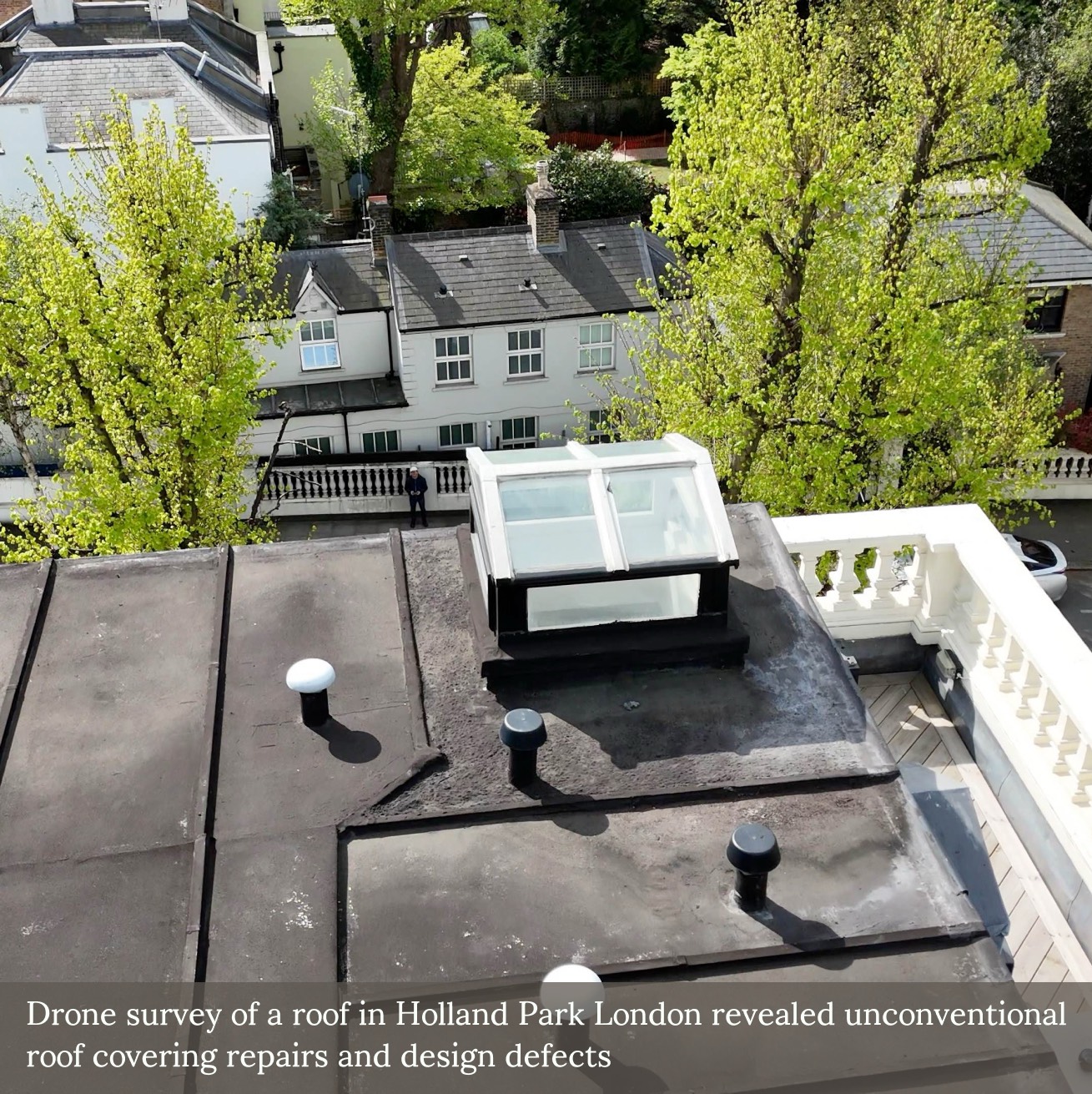
Two timber-framed roof lanterns formed part of a recent external inspection we undertook on a mansard roof in West London. Both featured single glazed elements, limited overhangs, and decorative paint finishes in p...... Read more
Two timber-framed roof lanterns formed part of a recent external inspection we undertook on a mansard roof in West London. Both featured single glazed elements, limited overhangs, and decorative paint finishes in poor condition.
The presence of condensation to internal glazing, along with signs of historical repair and timber exposure, highlights a common set of issues—particularly in traditional or poorly detailed roof structures.
Where single glazed rooflights are retained in occupied spaces, internal dampness is frequently the result of thermal bridging or trapped moisture, rather than rainwater penetration alone.
In such cases, replacement offers the opportunity to introduce modern, thermally efficient materials and more robust junction detailing—reducing risk and improving long-term performance.
AAL Chartered Surveyors
2026-09-23 12:20:00 British local time
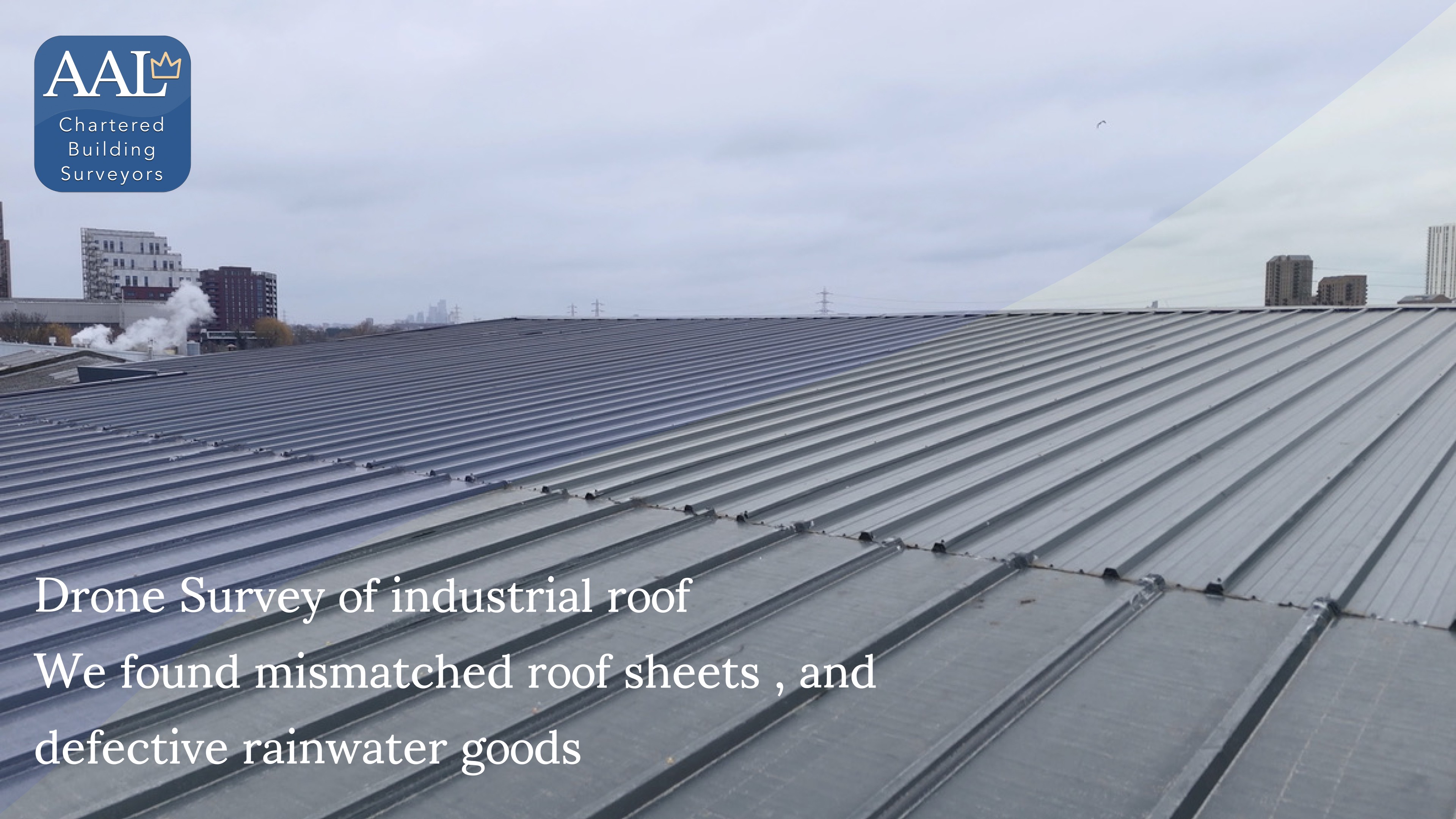
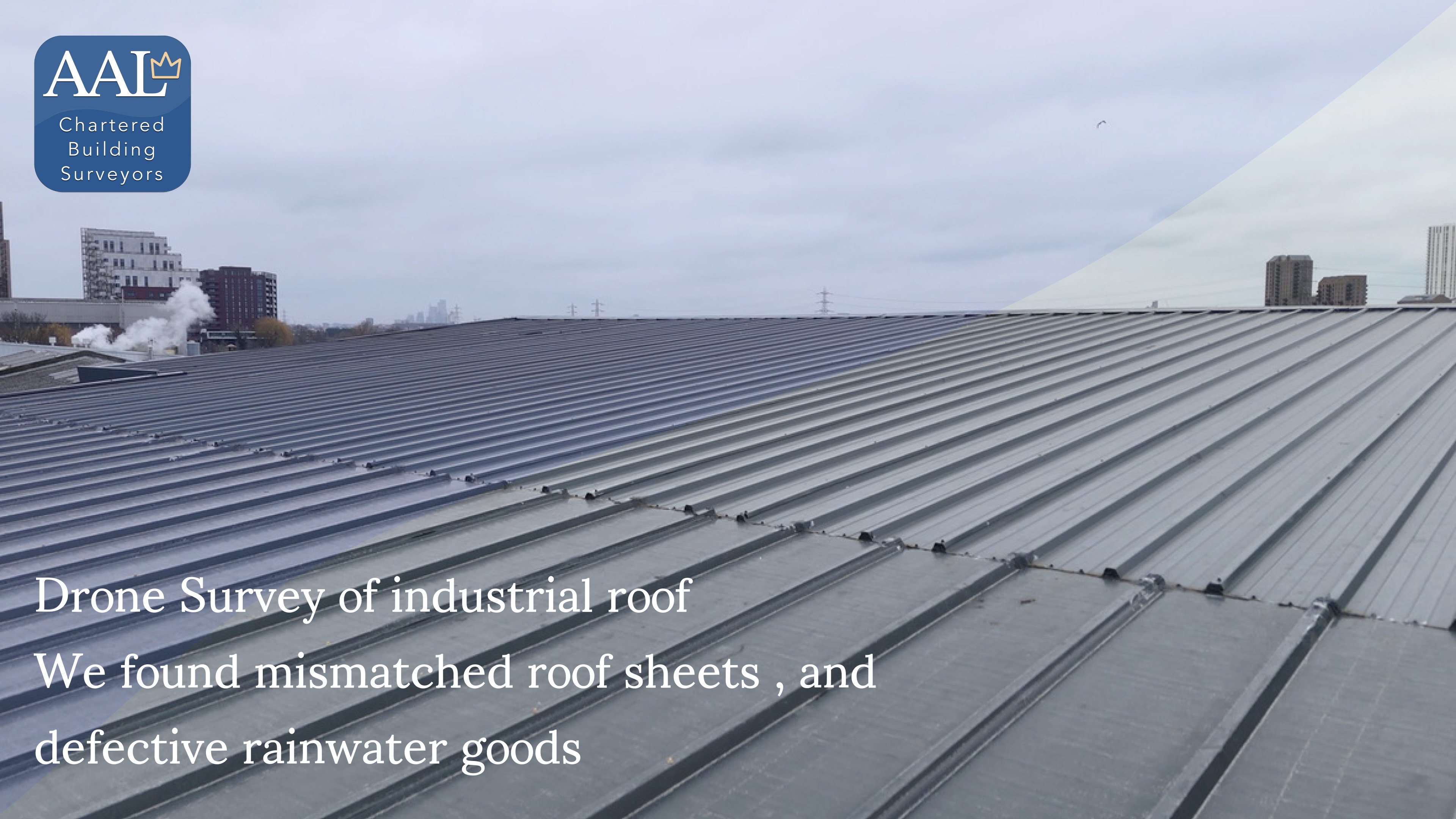
At our recent commercial due diligence survey of an industrial unit in East London, we utilised drone technology to conduct a detailed inspection of areas otherwise impossible to access, such as the roof, cladding, and high-level windows. Our surveyors, who...... Read more
The drone survey captured high-resolution images and data of the relevant areas, allowing us to identify key issues that might otherwise have been missed. Specifically, we discovered significant defects in the roof and cladding, along with issues in the rainwater goods. Such findings are crucial as they hold the potential to save our client significant expenditure, mitigating risks that could escalate into costly repairs if left unaddressed.
Our ability to integrate drone technology into traditional surveying practices not only elevates the thoroughness of our inspections but also adds substantial value to our clients by providing more comprehensive insights. This case in East London is a prime example of how leveraging innovative technology can lead to advantageous outcomes for our clients, ensuring their investments are sound, and their properties are maintained to the highest standard.
#FacilitiesManagement #AssetManagement #PropertyMaintenance #BuildingDefects #BuildingSurvey #RealEstateSurvey #StructuralAssessment #PropertyInspection #CommercialBuildingSurvey #CommercialProperty
Local Area
About Bracknell
Bracknell
Bracknell is a post-war new town rebuilt at its centre by the Lexicon development, carrying one of the larger technology office markets in the Thames Valley alongside the industrial floorspace of the Western and Southern Industrial Estates. Office lease events dominate the commercial surveying workload, and instructions in Bracknell commonly include dilapidations on campus and town-centre office premises, schedules of condition at commencement, commercial building surveys on acquisition, and reinstatement advice where technology fit-outs meet lease expiry.
Office Campuses and Business Parks
The office stock runs from 1960s and 1970s new-town blocks, many now redeveloped or converted, through the campus buildings that technology occupiers built from the 1980s onward at Cain Road, the Arlington Square area, and the parks along the A329. Recurring lease-end items include mechanical and electrical plant at the end of its design life, curtain-wall gaskets and double glazing failing at seals, flat and shallow-pitched membrane roofs approaching renewal, and the reinstatement of laboratory, data, and demonstration fit-outs whose removal costs surprise vacating occupiers. Where landlords intend refurbishment or conversion, the realistic standard of reinstatement becomes the central negotiation question, and the town's active conversion market makes that question live on most of the older stock.
The Lexicon and Retail Stock
The Lexicon replaced the new-town precincts with a managed open-street retail centre, and its units generate schedule-of-condition and reinstatement instructions at each letting cycle, with service-charge exposure on the shared realm and envelope a standing question for incoming tenants. The surviving older retail stock around the fringes of the centre carries flat-roofed 1960s construction at the end of its design life, where landlord redevelopment intentions bear directly on whether dilapidations claims are worth pursuing at all.
Industrial and Trade Stock
The Western and Southern Industrial Estates present portal-frame units from the new-town era onward, in brick-and-sheet and profiled-metal construction. Roof sheeting condition, rooflights, gutter systems, and yard surfaces drive lease-end liability, and the older units add asbestos cement coverings to scope. Trade-counter and last-mile occupiers keep letting churn steady, generating schedule-of-condition instructions at each cycle, and the estates' gradual densification brings party wall and neighbouring-works questions where new units rise against occupied ones.