
Expert Witness Building Surveyor in Essex
A building dispute that reaches court carries substantial cost, and the expert evidence often decides the outcome. Expert witness building surveying for defects, contract disputes, party wall, and dilapidations matters, with reports prepared to Civil Procedure Rules Part 35. Roofs and high-level defects are recorded by drone, flown by the expert in person. Serving Essex with inspection and reporting local to the property in dispute.
Acting for a client in a building dispute? Send the letter of instruction and we will reply with a fee estimate. Part 35 reports are undertaken on a minimum fee of £1,800 plus VAT, subject to current capacity.
Send the Letter of Instruction →Expert Witness Building Surveying
The cost of a building dispute rises sharply once proceedings are contemplated, and weak expert evidence is expensive to repair late in a case. An expert witness building surveyor provides the court with an independent technical opinion on building matters in dispute.
Expert witness work at Ayling Associates is carried out by a chartered building surveyor experienced in expert witness instruction. The practice is regulated by RICS. The practice has acted as party-appointed expert, as single joint expert, and as expert adviser.
Clayton Ayling flies his own camera drone and is fully qualified and insured for the flights, which comply with legal requirements. Roofs, chimneys, gutters and high-level walls are recorded without the cost of scaffold or access equipment. The expert takes the aerial images in person, so the report does not rely on evidence gathered by a third-party drone operator.
Instructions commonly come from solicitors acting for a party whose property is in our coverage area. We accept instructions directly from solicitors and from parties in dispute.
EXPERT WITNESS REPORT
Prepared for the court under Civil Procedure Rules Part 35
- 1Introduction and instructions
- 2The property and the inspection
- 3Investigations and evidence
- 4Opinion
- 5Declaration and statement of truth
The duty to the court under Part 35 takes precedence over any obligation to the instructing party. Opinion is confined to matters within the expert’s expertise.
Overriding duty
To the court
Author
Clayton Ayling MRICS
Disputes Covered
The practice provides expert witness building surveying across the disputes that commonly turn on building evidence.
- Building defects and workmanship, including disputes over the standard and completeness of construction work.
- Contract disputes concerning building works, scope, and compliance with the specification.
- Party wall disputes and matters arising under the Party Wall etc. Act 1996.
- Dilapidations claims, including the condition and repair evidence behind a schedule of dilapidations.
How an Instruction Proceeds
Each instruction moves through five stages. Cost, scope, and timescale are confirmed at the second stage, before any chargeable work begins.
1. Letter of Instruction
Send the letter of instruction or a summary of the dispute.
2. Conflict Check and Fee Estimate
We confirm the scope, timescale, and the fee before work begins. Reports are undertaken on a minimum fee of £1,800 plus VAT, with further work at £200 per hour plus VAT.
3. Inspection and Document Review
The property is inspected and the lease, contract, and/or technical documents are reviewed. Roofs and high-level areas are recorded by drone, flown by the expert.
4. Part 35 Report
The report is prepared to Civil Procedure Rules Part 35 with the statement of truth.
5. Expert Meetings and Joint Statement
We take part in expert meetings and joint statements as the court directs.

The Duty to the Court
Expert evidence in England and Wales is governed by Part 35 of the Civil Procedure Rules and its Practice Direction. The overriding duty of the expert is to the court, not to the party who instructs or pays.
That duty shapes the whole instruction. The opinion given is the honest professional view of the surveyor on the technical questions, whether or not it assists the instructing party. A report that overstates the case for one side is likely to be exposed under cross-examination and can damage the case it was meant to support.
Each report contains the statement of truth and the declarations required by Practice Direction 35.
Forms of Instruction
The form of appointment affects cost, procedure, and how the evidence is used. All three of the forms below have been undertaken in this practice.
Party-Appointed Expert
Instructed by one party, with the duty owed to the court, producing a Part 35 report and taking part in expert meetings and joint statements.
Single Joint Expert
Instructed jointly by both parties under a shared letter of instruction, commonly directed by the court in lower-value claims to control cost.
Expert Adviser
Instructed before or outside proceedings to advise a party on the technical strength of its position, without the Part 35 duties that attach to a testifying expert.
What a Part 35 Report Includes
A compliant report follows a defined structure. Reports prepared by the practice include the following as standard.
Qualifications and Experience
The qualifications and experience of the expert.
Instructions Received
The substance of all material instructions received.
Facts and Documents
The facts and documents relied on, separated from opinion.
Inspections and Tests
Details of any inspection, measurement, or test relied on, and who carried it out. Drone images are taken by the expert, so the author of the report can speak to them directly.
Opinion and Reasoning
The opinion on each question, with the reasoning behind it, and the range of opinion where one exists.
Conclusions and Statement of Truth
A summary of conclusions, the statement of truth, and the declarations required by Practice Direction 35.
What We Do Not Do
We are building surveyors. We are not valuers and we are not quantity surveyors.
Diminution valuation evidence under section 18 of the Landlord and Tenant Act 1927 is valuation work and requires a suitably qualified valuer. Detailed quantum evidence beyond the cost of building works is the province of a quantity surveyor. Where a dispute needs that evidence, we identify the requirement early so the right expert can be instructed alongside the building surveying evidence.
Coverage
The practice is based in London and undertakes expert witness work across London, Essex, and the wider South East. Solicitors instructing from outside the region can rely on inspection and reporting being handled locally to the property in dispute.
For Instructing Solicitors
Late instruction of the expert raises cost and narrows options. Early technical input can identify weak allegations before pleadings harden around them.
Instructions are accepted from solicitors, or from parties with a letter of instruction, for Part 35 reports on a minimum fee of £1,800 plus VAT. Instructions are taken subject to current capacity, and the earliest report date is confirmed with the fee estimate. Reports are prepared to Part 35 and the practice takes part in expert meetings and joint statements as directed.
For Parties in Dispute
A dispute pursued without a realistic view of the technical evidence carries a high risk of irrecoverable cost. An expert adviser appointment is intended to provide that view before positions become entrenched.
Where proceedings follow, the same discipline applies: the opinion given is the one the evidence supports, stated plainly, so decisions on settlement or trial rest on solid ground.
Independence and Credibility
The value of expert evidence rests on independence. An expert who argues the case of the instructing party loses credibility with the court, and with it the weight of the evidence.
The practice keeps advisory work and testifying work distinct. Where prior involvement in a matter would compromise independence, we say so and decline the testifying role.
Expert Witness FAQs
Answers to common questions about expert witness building surveying, CPR Part 35, and instruction.
An expert witness building surveyor is a chartered building surveyor instructed to give the court an independent technical opinion on building matters in dispute, such as defects, workmanship, party wall damage, or the condition evidence behind a dilapidations claim. The overriding duty of the expert is to the court, not to the party who instructs or pays.
Part 35 of the Civil Procedure Rules governs expert evidence in the courts of England and Wales. It restricts expert evidence to what is reasonably required, places the expert under an overriding duty to the court, and, together with its Practice Direction, prescribes the required contents of an expert report, including the statement of truth.
A single joint expert is instructed jointly by both parties to a dispute under a shared letter of instruction. The court commonly directs this in lower-value claims to control cost. The expert owes the same duty to the court and reports to both parties at the same time.
Yes. Clayton Ayling flies his own camera drone and is fully qualified and insured for the flights, which comply with legal requirements. Roofs, chimneys, gutters and high-level walls are recorded without the cost and delay of scaffold or access equipment. Because the expert takes the images in person, the report states who gathered the evidence and the expert can answer questions on it directly.
No. We are building surveyors, not valuers or quantity surveyors. Diminution valuation evidence under section 18 of the Landlord and Tenant Act 1927 requires a qualified valuer, and detailed quantum evidence beyond the cost of building works requires a quantity surveyor. We identify that requirement early so the right expert can be instructed alongside the building surveying evidence.
Reports are undertaken on a minimum fee of £1,800 plus VAT. The fee above that depends on the volume of documents, the size and location of the property, the number of questions in the letter of instruction, and whether expert meetings and court attendance follow. Further work beyond the report is charged at £200 per hour plus VAT. We confirm a fee estimate after reviewing the letter of instruction and before work begins.
Usually this needs care. A surveyor who has negotiated for a party has acted in its interest, and that prior role can be put to the expert in cross-examination as a challenge to independence. In many cases the better course is to keep the negotiating surveyor as adviser and instruct a separate expert for the testifying role.
The practice is based in London and undertakes expert witness instructions across London, Essex, and the wider South East. Many instructions come from solicitors based elsewhere whose client property is in this region.
Need Expert Witness Input on a Building Dispute in Essex?
Send the letter of instruction or a summary of the dispute. Instructions are accepted for Part 35 reports on a minimum fee of £1,800 plus VAT and subject to current capacity. We will confirm scope, conflicts, timescale, and a fee estimate before any work begins.
Contact UsSocial Media Feed

AAL Chartered Surveyors
2026-09-24 14:20:00 British local time

At our recent commercial due diligence survey of an industrial unit in East London the findings of our report led to significant financial advantages for our client. We identified several issues which equated to potential cost savings of approximately £150,...... Read more
These findings played a pivotal role in empowering our client during lease negotiations. With the evidence provided by us, our client was able to engage confidently and effectively in discussions with the landlord. This not only facilitated a reconsideration of the lease terms but also allowed the client to negotiate a reduction in rental values and improvements to other lease-related conditions.
Our proactive approach in highlighting these issues underscores our commitment to adding tangible value to our clients' investment decisions.
By ensuring that all factors are thoroughly vetted, we position our clients in a place of strength, enabling them to make informed and advantageous decisions and negotiations.
#FacilitiesManagement #AssetManagement #PropertyMaintenance #BuildingDefects #BuildingSurvey #RealEstateSurvey #StructuralAssessment #PropertyInspection #CommercialBuildingSurvey #CommercialProperty

AAL Chartered Surveyors
2026-09-24 12:20:00 British local time
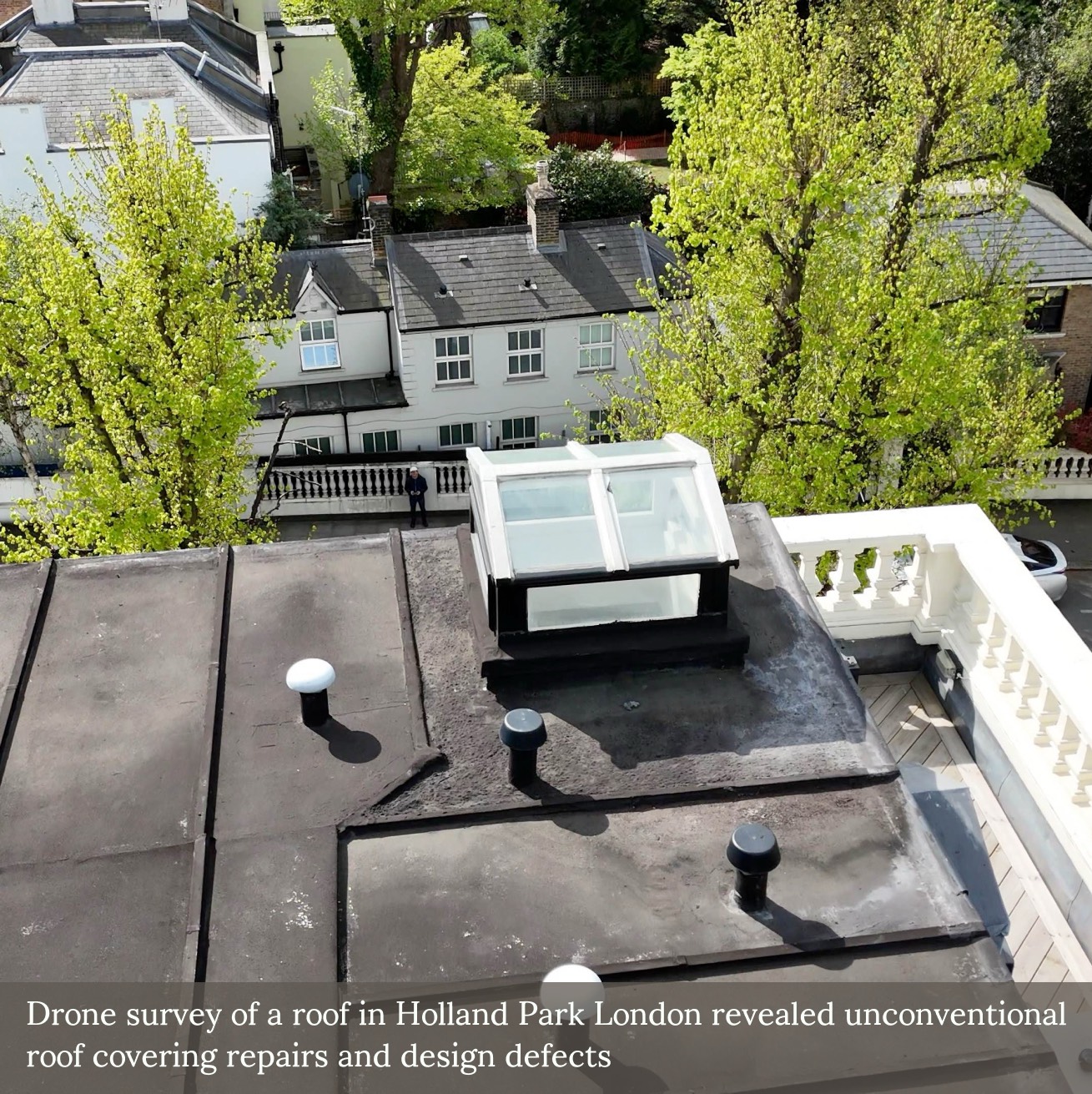
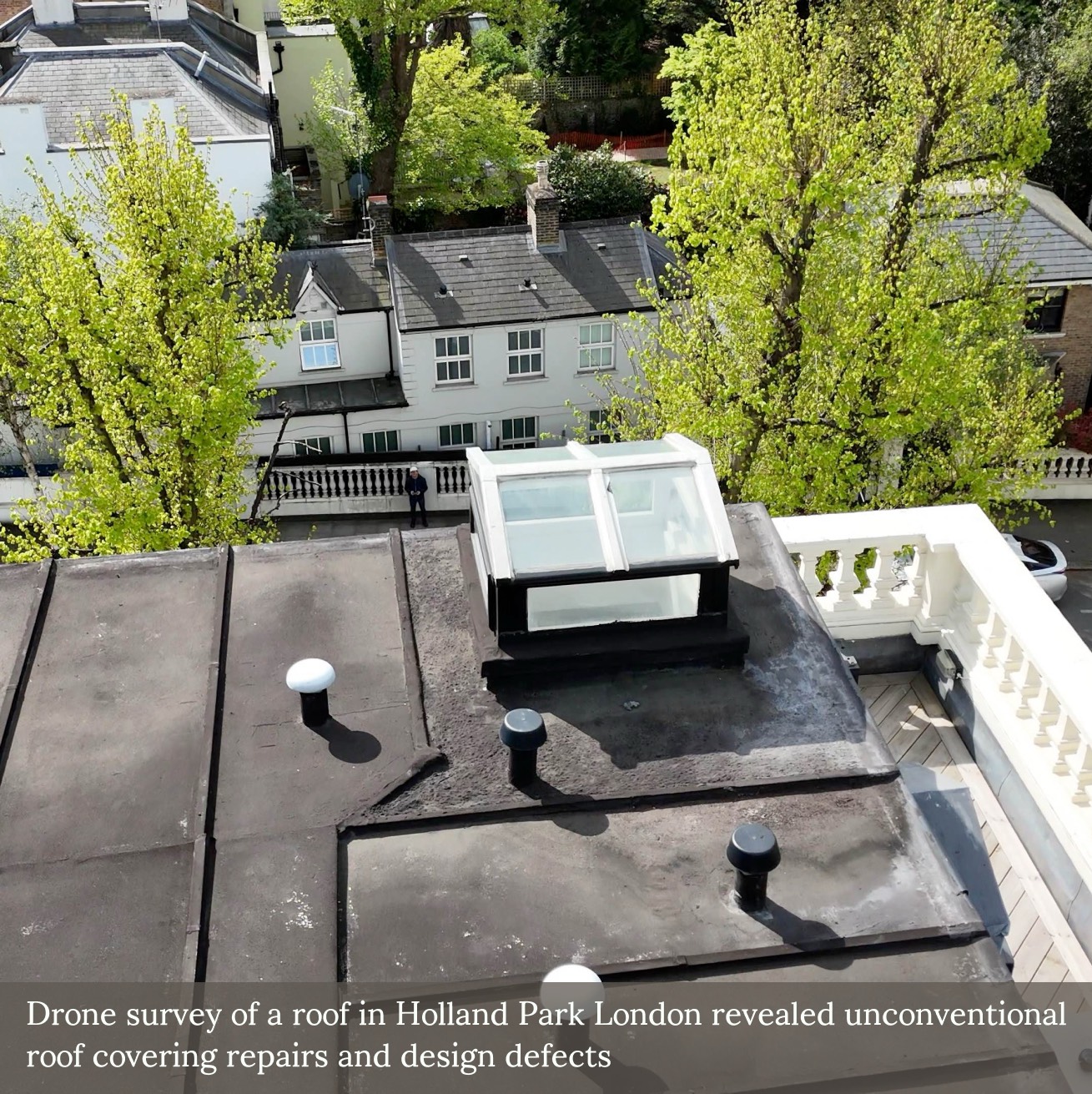
When Flat Roof Coverings Diverge from Standard Practice
We recently carried out a drone-based roof condition inspection in West London, where an unusual bituminous liquid-applied membrane had been installed over a zinc flat roof.
This type of overlay—rein...... Read more
We recently carried out a drone-based roof condition inspection in West London, where an unusual bituminous liquid-applied membrane had been installed over a zinc flat roof.
This type of overlay—reinforced with a textile mesh—is not typically encountered in applications of this kind, where polymeric systems are more commonly specified. In this case, surface discolouration, exposed reinforcement mesh, and evidence of ponding all raised concerns regarding durability and workmanship.
When flat roofing systems deviate from established detailing or product specifications, there is increased risk of premature failure—particularly when installation records or manufacturer compliance documentation are unavailable.
Early identification through external inspection can assist in defining appropriate next steps, including testing or sampling to determine whether remedial works or full replacement is required.
AAL Chartered Surveyors
2026-09-24 10:20:01 British local time
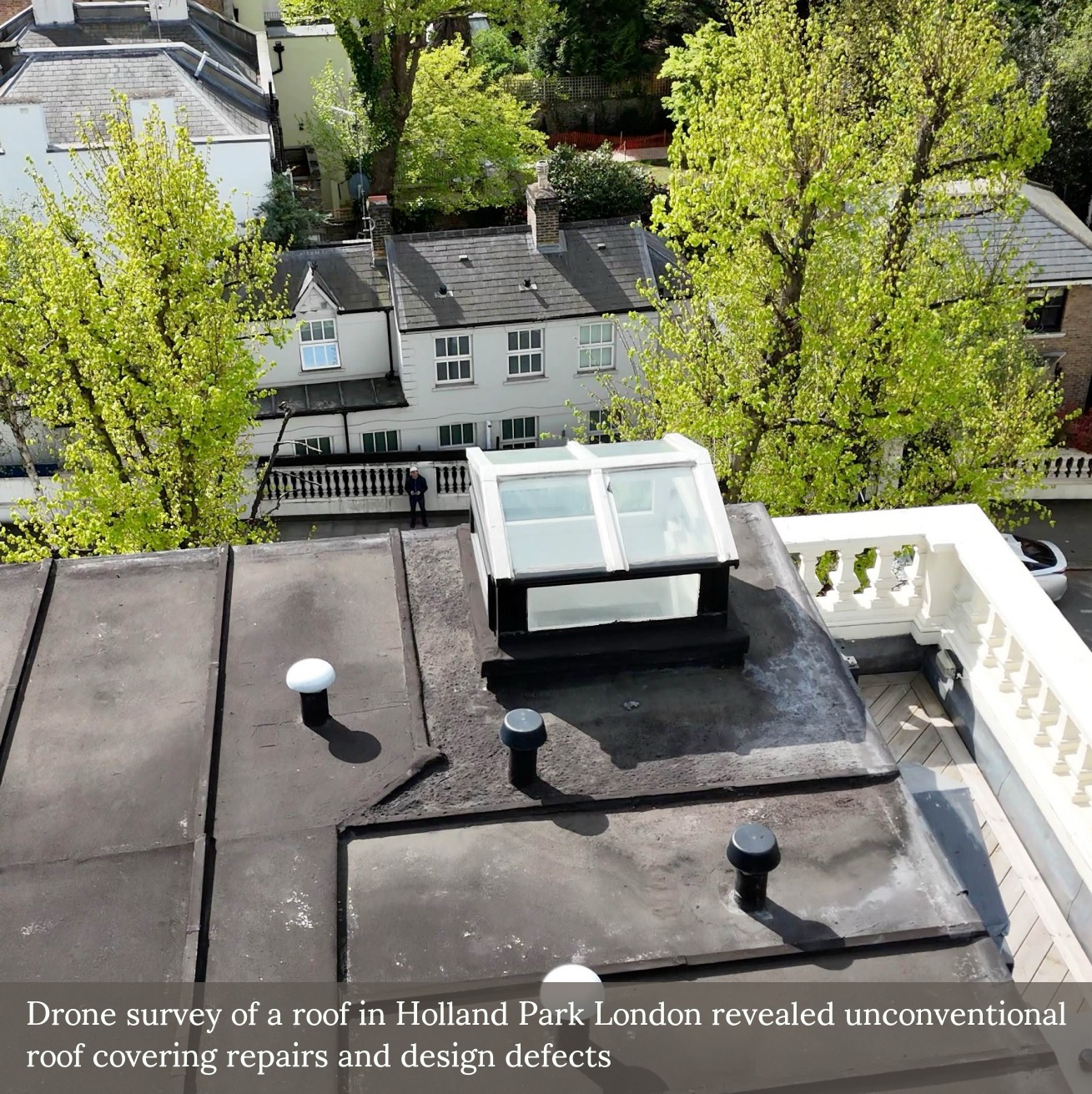
Roof Risk Without Internal Access
We are often instructed to assess external roof coverings where internal access is restricted. A recent case in W14 illustrates the value of high-level drone inspection for identifying latent structural concerns from the o...... Read more
We are often instructed to assess external roof coverings where internal access is restricted. A recent case in W14 illustrates the value of high-level drone inspection for identifying latent structural concerns from the outside.
Numerous depressions in the flat roof deck suggested potential hidden deterioration of the substrate, likely linked to historical water ingress. In the absence of internal inspection, we recommended core sampling to confirm the extent of any concealed damage and to inform the appropriate scope of remedial work.
External-only inspections, when carried out systematically, can yield sufficient evidence to justify further investigation, particularly where the risk of ongoing deterioration to concealed timber or insulation is suspected.
AAL Chartered Surveyors
2026-09-23 14:20:00 British local time
Where Roof Design Meets Condensation Risk
Two timber-framed roof lanterns formed part of a recent external inspection we undertook on a mansard roof in West London. Both featured single glazed elements, limited overhangs, and decorative paint finishes in p...... Read more
Two timber-framed roof lanterns formed part of a recent external inspection we undertook on a mansard roof in West London. Both featured single glazed elements, limited overhangs, and decorative paint finishes in poor condition.
The presence of condensation to internal glazing, along with signs of historical repair and timber exposure, highlights a common set of issues—particularly in traditional or poorly detailed roof structures.
Where single glazed rooflights are retained in occupied spaces, internal dampness is frequently the result of thermal bridging or trapped moisture, rather than rainwater penetration alone.
In such cases, replacement offers the opportunity to introduce modern, thermally efficient materials and more robust junction detailing—reducing risk and improving long-term performance.
AAL Chartered Surveyors
2026-09-23 12:20:00 British local time
At our recent commercial due diligence survey of an industrial unit in East London, we utilised drone technology to conduct a detailed inspection of areas otherwise impossible to access, such as the roof, cladding, and high-level windows. Our surveyors, who...... Read more
The drone survey captured high-resolution images and data of the relevant areas, allowing us to identify key issues that might otherwise have been missed. Specifically, we discovered significant defects in the roof and cladding, along with issues in the rainwater goods. Such findings are crucial as they hold the potential to save our client significant expenditure, mitigating risks that could escalate into costly repairs if left unaddressed.
Our ability to integrate drone technology into traditional surveying practices not only elevates the thoroughness of our inspections but also adds substantial value to our clients by providing more comprehensive insights. This case in East London is a prime example of how leveraging innovative technology can lead to advantageous outcomes for our clients, ensuring their investments are sound, and their properties are maintained to the highest standard.
#FacilitiesManagement #AssetManagement #PropertyMaintenance #BuildingDefects #BuildingSurvey #RealEstateSurvey #StructuralAssessment #PropertyInspection #CommercialBuildingSurvey #CommercialProperty

Local Area
About Essex
Essex
Essex is a ceremonial county in the East of England, covering a substantial area from the eastern fringes of London through to the North Sea coast. The building stock reflects an exceptionally wide range: medieval timber-framed houses in villages including Finchingfield, Thaxted, and Saffron Walden, Georgian and Victorian market-town stock in Colchester, Chelmsford, and Braintree, coastal and seaside development at Southend-on-Sea, Harwich, and Clacton, post-war new towns at Basildon and Harlow with extensive system-built housing, Essex-London commuter suburbia across Brentwood, Billericay, Hornchurch, and Romford, substantial industrial and logistics stock in the Thames Gateway corridor, and extensive recent residential-led development across the county. Surveying instructions across Essex commonly include pre-purchase surveys on listed timber-framed and Georgian stock, Victorian and inter-war suburban housing, and new-build developments, schedules of condition and dilapidations on commercial, industrial, and retail leases, party wall advice for residential extensions, and technical due diligence on commercial and development transactions.
Historic Timber-Framed and Georgian Stock
Rural Essex contains one of the densest concentrations of listed timber-framed buildings in England. Pre-purchase surveys on timber-framed stock require specialist assessment: original frame condition, decay at ground beams and principal posts, secondary frame and wall-panel integrity, thatch or clay tile roof condition, and the impact of previous alterations and cement-based repairs that trap moisture. Lime-mortar and lime-plaster specification, breathable repair philosophy, and listed-building consent engagement are central. Georgian market-town stock in Chelmsford, Colchester, Saffron Walden, and Maldon presents substantial brick-built townhouses requiring assessment of stucco render, parapets, timber sashes, and basement damp management.
Post-War New Towns and System-Built Housing
Basildon and Harlow — post-war new towns — contain significant system-built council and ex-council housing of varied types. Pre-purchase surveys on ex-council flats and houses need to identify the specific construction system because this has direct implications for mortgageability, insurance, and long-term repair liability. Concrete-framed blocks, Large Panel Systems, and other prefabricated types feature. Communal element condition, flat-roof performance, thermal insulation, and major-works liability are central to leasehold-flat advice.
Commercial, Industrial, and Commuter Suburbia
The Thames Gateway corridor through south Essex — including Thurrock, Tilbury, and the A13 logistics cluster — generates substantial schedule-of-condition and dilapidations work on industrial, warehouse, and logistics leases. Inter-war and post-war commuter suburbia across Brentwood, Billericay, Upminster, and Romford presents cavity-walled semi-detached and detached housing with typical issues of wall-tie corrosion, rendered-finish cracking, and subsidence on clay subsoils. New residential delivery at Beaulieu Park (Chelmsford), Dunton Hills (Brentwood fringe), and across the wider county generates Building Safety Act compliance, EWS1 assessments where applicable, and early-life defect assessment on new-build flats and houses.