
Dilapidation Building Inspections in Reading
Dilapidation building inspections for landlords and tenants who need condition evidence and practical support around schedules and leasehold dilapidation claims. Serving Reading with local context and lease-led inspection support.
What a Dilapidation Building Inspection Covers
A dilapidation building inspection is a detailed assessment of a commercial property carried out in the context of lease obligations, alleged breaches, or exit planning. The inspection is used to connect what is physically present on site with what the lease actually requires.
That usually means looking at repair, reinstatement, decoration, and visible deterioration in a structured way, then feeding the findings into the preparation of a schedule, a response, a Scott schedule, or a negotiation strategy. The aim is to distinguish actionable lease issues from items that are overstated, historic, or outside the tenant’s liability.
- Inspection of condition in the context of repair and reinstatement covenants.
- Gathering evidence to support schedules prepared for the landlord or responses prepared for the tenant.
- Review before lease expiry, break exercise, or live negotiation.
- Condition analysis that links physical findings back to the lease and claim documents.
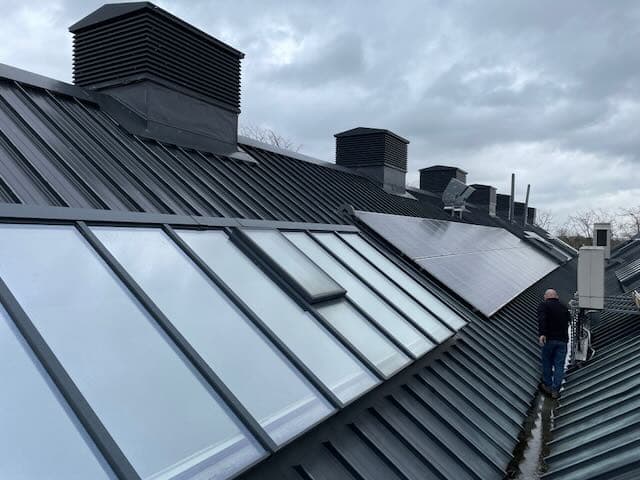
Condition evidence recorded on site before a schedule is served or answered.
£88,000 → £70,000
warehouse claim reduced through negotiation
Up to 50%
of initial claim value saved in current case studies
When This Type of Inspection Helps
This type of inspection is often useful where a landlord wants clearer evidence before serving a schedule, or where a tenant wants to test a claim against the actual condition of the premises.
It is also valuable before lease expiry or a break exercise, when there is still time to review liabilities properly, consider remedial works, and avoid being forced into a rushed response later.
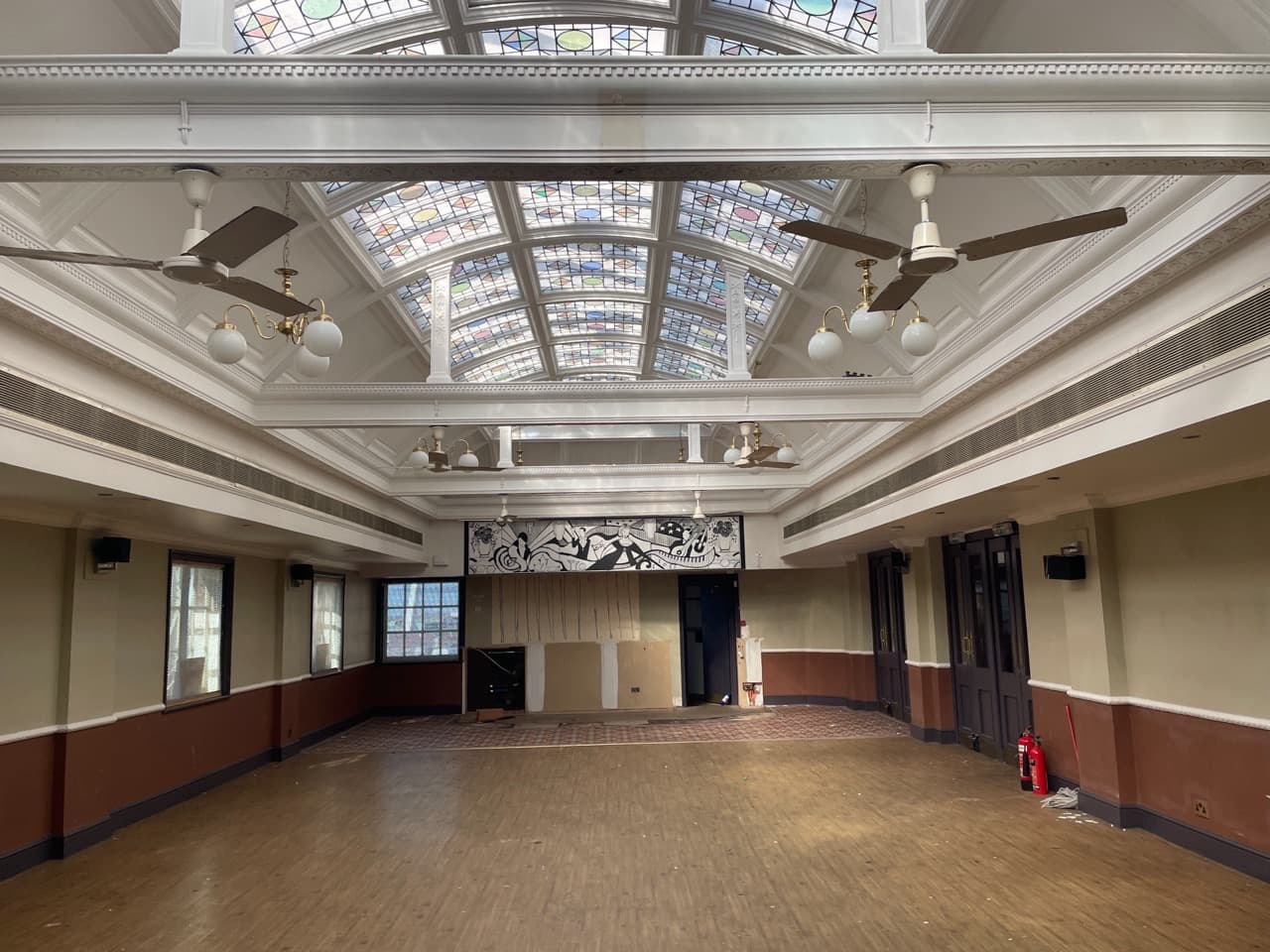
Where These Inspections Usually Fit
Landlord-Side Inspection
Inspection used to identify alleged breaches, record condition, and support the preparation of a schedule of dilapidations and quantified demand that is better grounded in the lease and the physical evidence.
Tenant-Side Challenge
Inspection used to test the landlord’s allegations against actual condition on site, identify overreach, and narrow the items that are genuinely arguable under the lease.
Pre-Exit Review
Inspection before lease expiry or break exercise so occupiers can understand likely exposure, decide whether works should be undertaken, and avoid reacting too late once the claim is served.
Local Property Context
Area pages make it easier to discuss a specific property, local stock, and the practical context of the instruction while still keeping the focus on lease obligations and condition evidence.
How The Instruction Usually Progresses
The inspection is rarely useful in isolation. Its value comes from sequencing the site visit with the lease, schedules, licences, and claim documents so the resulting advice is tied to liability rather than just condition in the abstract.
Where a live claim already exists, the inspection usually feeds into document critique and negotiation. Where the inspection happens earlier, it can shape lease-exit planning, repair strategy, and the question of whether works should be undertaken before the claim crystallises.
- Review the lease, schedules of condition, licences to alter, and any existing claim material.
- Inspect the premises with attention to repair, reinstatement, finishes, and visible condition issues.
- Compare the physical findings against the scope of the alleged or anticipated breaches.
- Translate the inspection into practical next steps: schedule preparation, response, negotiation, or pre-exit works planning.
Related Dilapidations Support
If the matter already involves a live claim, a schedule of dilapidations, or a quantified demand, the main dilapidations service page is the better route for the wider instruction and the next steps beyond the inspection itself.
View the main dilapidations serviceDilapidation Building Inspection FAQs
A dilapidation building inspection is a condition-led inspection of a commercial property carried out in the context of lease obligations, alleged breaches, or lease-exit planning. It is used to connect physical condition on site with the repair, reinstatement, and decoration obligations in the lease.
In many cases, yes. The inspection is often one part of a wider dilapidations surveyor instruction that may also include lease review, schedule preparation, response drafting, Scott schedules, and negotiation support.
Ideally before lease expiry or before responding to a terminal schedule, so there is time to understand likely exposure, challenge over-broad items, and decide whether works should be carried out before the claim hardens.
A landlord should usually instruct the inspection as lease expiry approaches or when preparing to serve a schedule, so the alleged breaches and claimed works are tied to actual condition evidence rather than assumption.
Need A Dilapidation Building Inspection? in Reading?
We can review the lease wording, inspect the premises, and advise on how the condition evidence affects schedules, scope, and negotiation strategy.
Contact UsSocial Media Feed

AAL Chartered Surveyors
2026-09-24 14:20:00 British local time

At our recent commercial due diligence survey of an industrial unit in East London the findings of our report led to significant financial advantages for our client. We identified several issues which equated to potential cost savings of approximately £150,...... Read more
These findings played a pivotal role in empowering our client during lease negotiations. With the evidence provided by us, our client was able to engage confidently and effectively in discussions with the landlord. This not only facilitated a reconsideration of the lease terms but also allowed the client to negotiate a reduction in rental values and improvements to other lease-related conditions.
Our proactive approach in highlighting these issues underscores our commitment to adding tangible value to our clients' investment decisions.
By ensuring that all factors are thoroughly vetted, we position our clients in a place of strength, enabling them to make informed and advantageous decisions and negotiations.
#FacilitiesManagement #AssetManagement #PropertyMaintenance #BuildingDefects #BuildingSurvey #RealEstateSurvey #StructuralAssessment #PropertyInspection #CommercialBuildingSurvey #CommercialProperty
AAL Chartered Surveyors
2026-09-24 12:20:00 British local time
When Flat Roof Coverings Diverge from Standard Practice
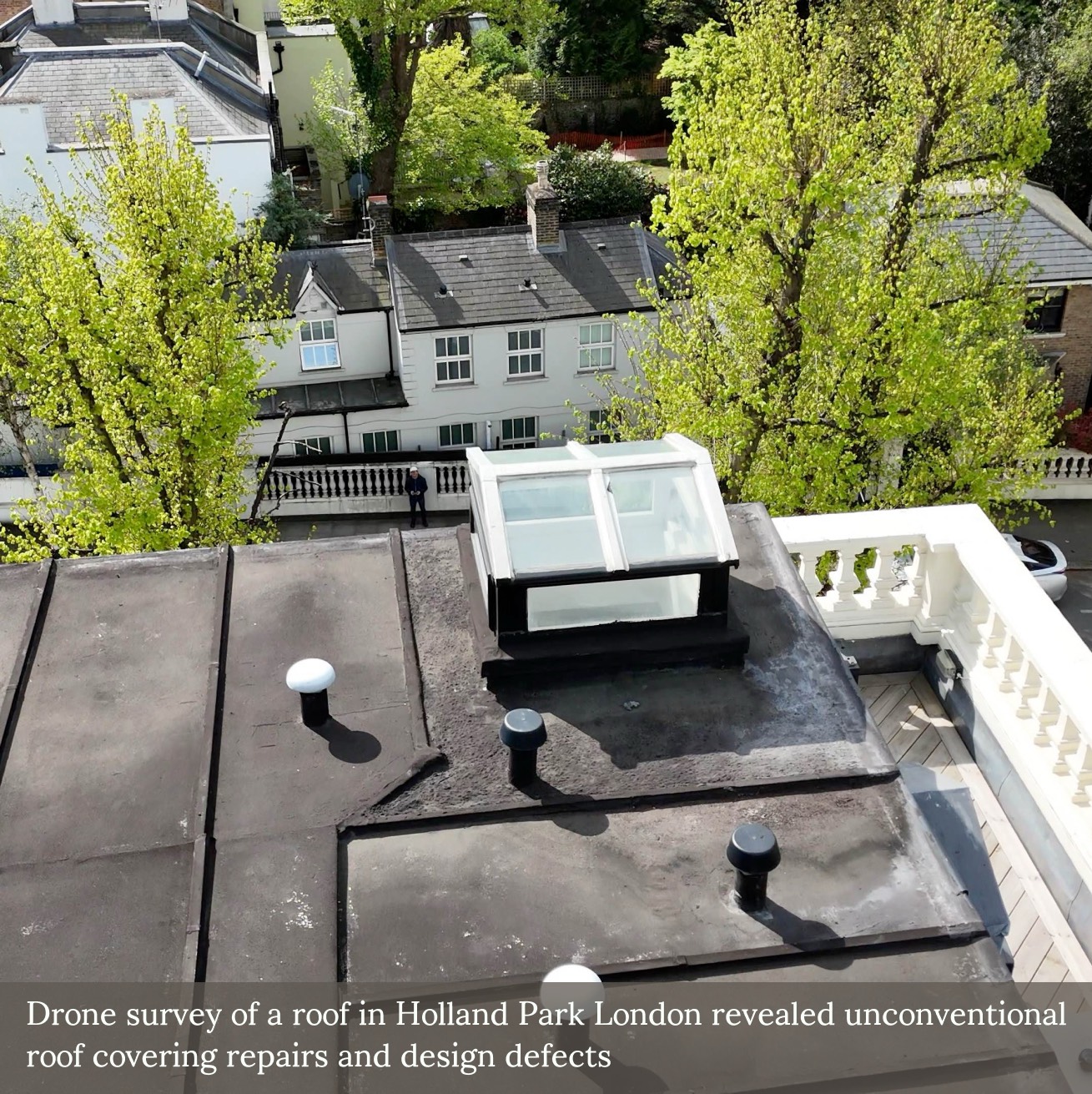
We recently carried out a drone-based roof condition inspection in West London, where an unusual bituminous liquid-applied membrane had been installed over a zinc flat roof.
This type of overlay—rein...... Read more
We recently carried out a drone-based roof condition inspection in West London, where an unusual bituminous liquid-applied membrane had been installed over a zinc flat roof.
This type of overlay—reinforced with a textile mesh—is not typically encountered in applications of this kind, where polymeric systems are more commonly specified. In this case, surface discolouration, exposed reinforcement mesh, and evidence of ponding all raised concerns regarding durability and workmanship.
When flat roofing systems deviate from established detailing or product specifications, there is increased risk of premature failure—particularly when installation records or manufacturer compliance documentation are unavailable.
Early identification through external inspection can assist in defining appropriate next steps, including testing or sampling to determine whether remedial works or full replacement is required.
AAL Chartered Surveyors
2026-09-24 10:20:01 British local time
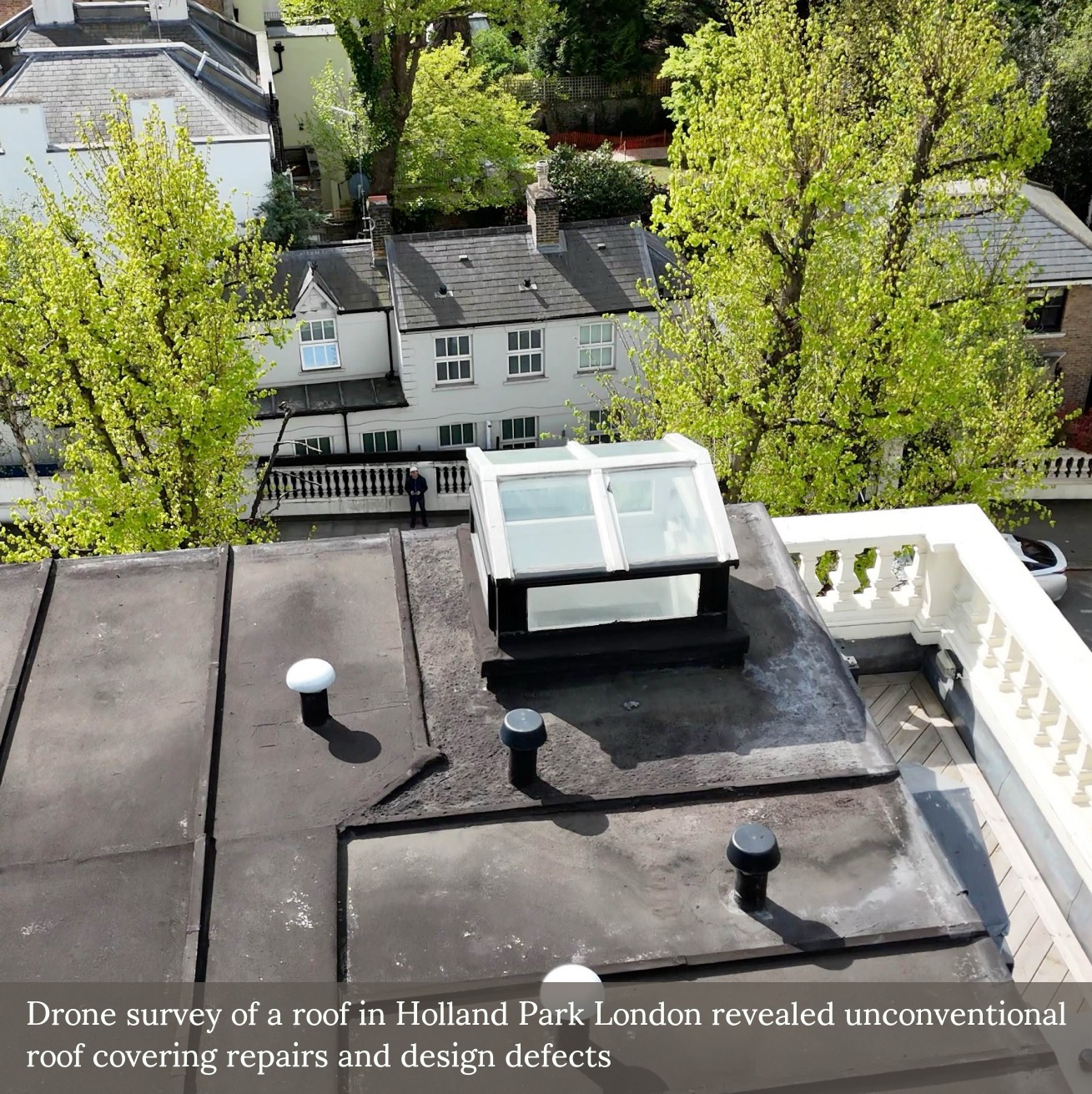
Roof Risk Without Internal Access
We are often instructed to assess external roof coverings where internal access is restricted. A recent case in W14 illustrates the value of high-level drone inspection for identifying latent structural concerns from the o...... Read more
We are often instructed to assess external roof coverings where internal access is restricted. A recent case in W14 illustrates the value of high-level drone inspection for identifying latent structural concerns from the outside.
Numerous depressions in the flat roof deck suggested potential hidden deterioration of the substrate, likely linked to historical water ingress. In the absence of internal inspection, we recommended core sampling to confirm the extent of any concealed damage and to inform the appropriate scope of remedial work.
External-only inspections, when carried out systematically, can yield sufficient evidence to justify further investigation, particularly where the risk of ongoing deterioration to concealed timber or insulation is suspected.
AAL Chartered Surveyors
2026-09-23 14:20:00 British local time
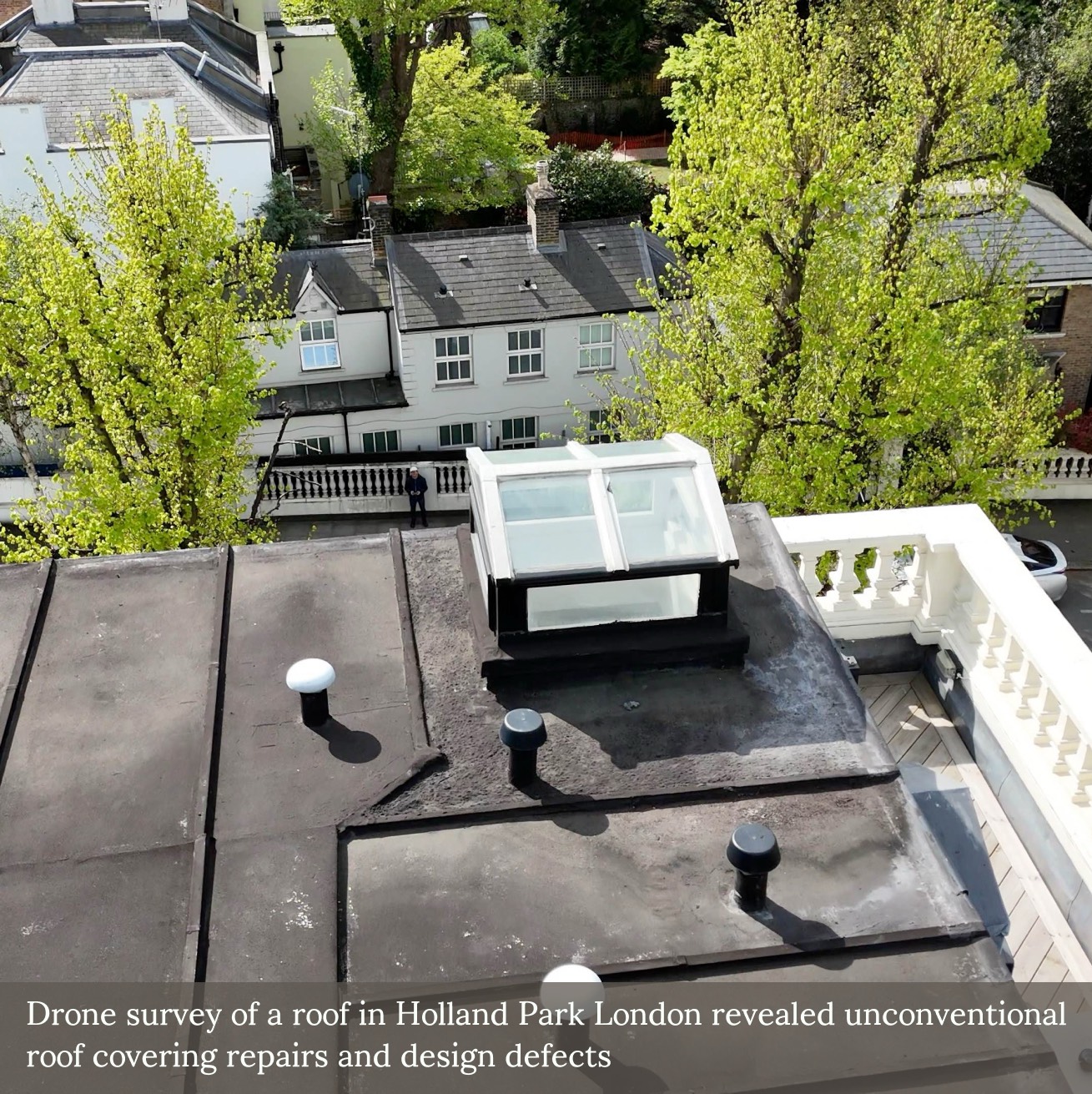
Where Roof Design Meets Condensation Risk
Two timber-framed roof lanterns formed part of a recent external inspection we undertook on a mansard roof in West London. Both featured single glazed elements, limited overhangs, and decorative paint finishes in p...... Read more
Two timber-framed roof lanterns formed part of a recent external inspection we undertook on a mansard roof in West London. Both featured single glazed elements, limited overhangs, and decorative paint finishes in poor condition.
The presence of condensation to internal glazing, along with signs of historical repair and timber exposure, highlights a common set of issues—particularly in traditional or poorly detailed roof structures.
Where single glazed rooflights are retained in occupied spaces, internal dampness is frequently the result of thermal bridging or trapped moisture, rather than rainwater penetration alone.
In such cases, replacement offers the opportunity to introduce modern, thermally efficient materials and more robust junction detailing—reducing risk and improving long-term performance.
AAL Chartered Surveyors
2026-09-23 12:20:00 British local time
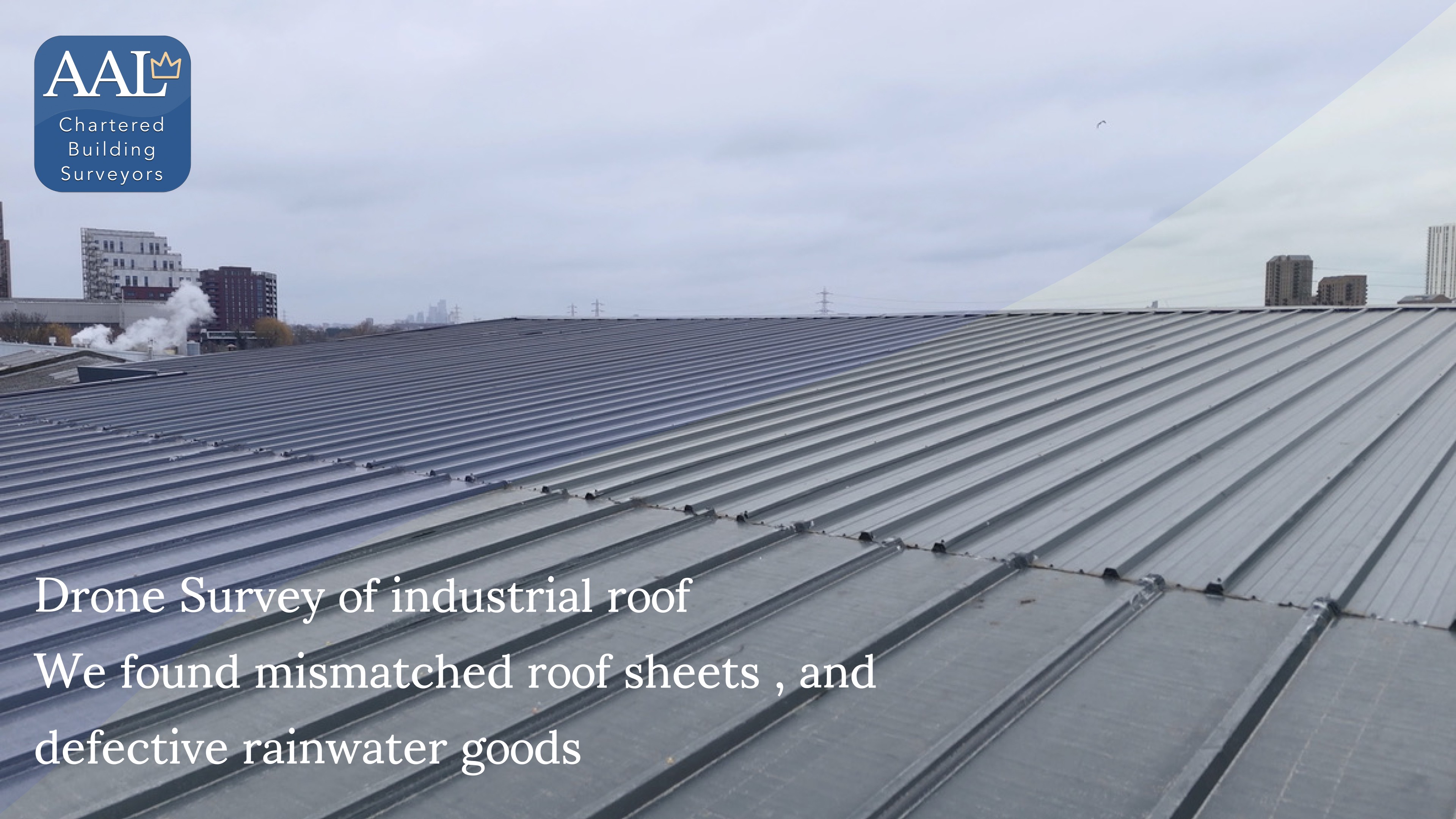
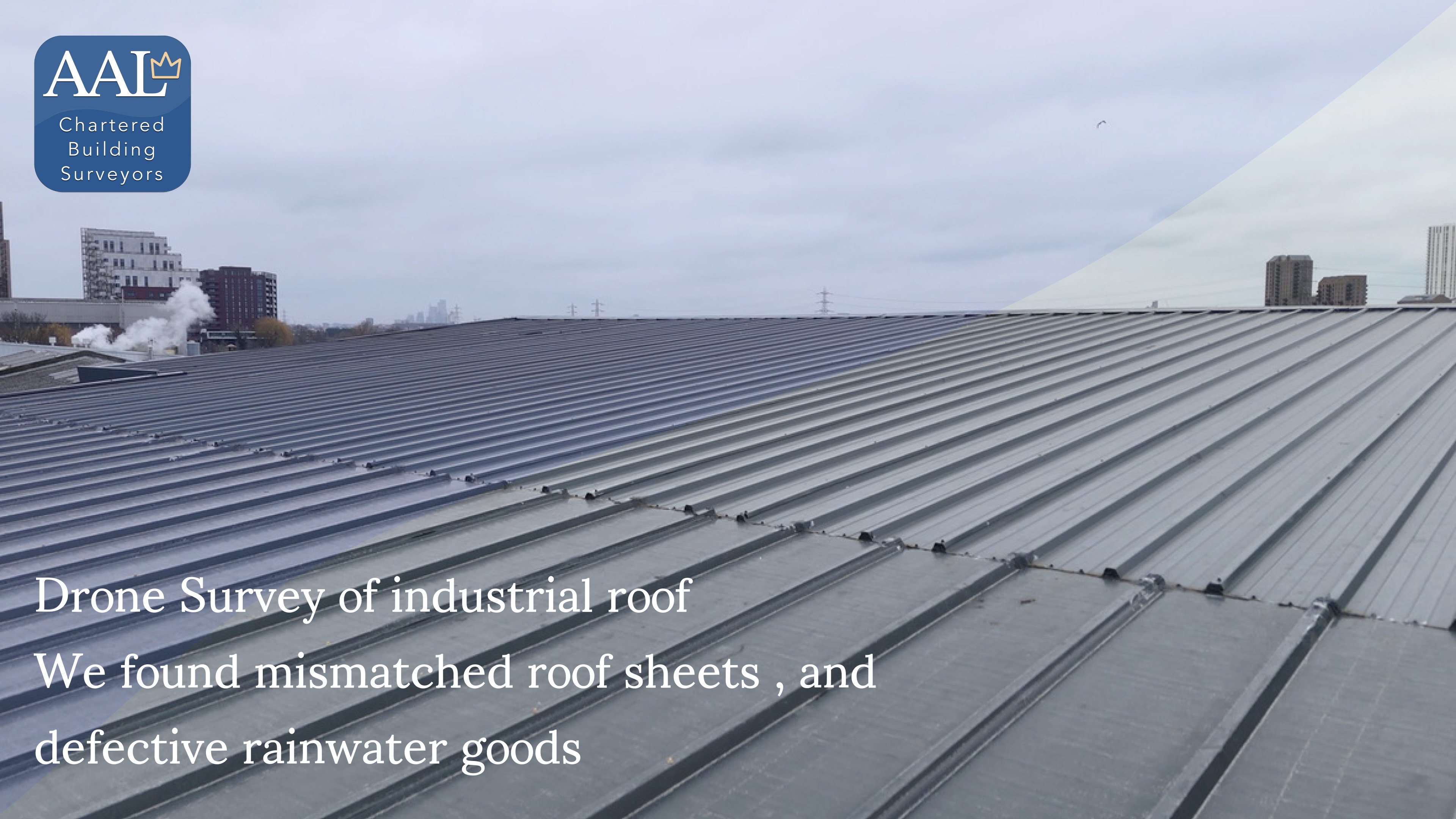
At our recent commercial due diligence survey of an industrial unit in East London, we utilised drone technology to conduct a detailed inspection of areas otherwise impossible to access, such as the roof, cladding, and high-level windows. Our surveyors, who...... Read more
The drone survey captured high-resolution images and data of the relevant areas, allowing us to identify key issues that might otherwise have been missed. Specifically, we discovered significant defects in the roof and cladding, along with issues in the rainwater goods. Such findings are crucial as they hold the potential to save our client significant expenditure, mitigating risks that could escalate into costly repairs if left unaddressed.
Our ability to integrate drone technology into traditional surveying practices not only elevates the thoroughness of our inspections but also adds substantial value to our clients by providing more comprehensive insights. This case in East London is a prime example of how leveraging innovative technology can lead to advantageous outcomes for our clients, ensuring their investments are sound, and their properties are maintained to the highest standard.
#FacilitiesManagement #AssetManagement #PropertyMaintenance #BuildingDefects #BuildingSurvey #RealEstateSurvey #StructuralAssessment #PropertyInspection #CommercialBuildingSurvey #CommercialProperty
Local Area
About Reading
Reading
Reading is the largest office market in the UK outside London, spanning town-centre stock from 1970s blocks to the recent station-quarter towers at Station Hill and Forbury Place, and out-of-town business parks at Thames Valley Park, Green Park, and Winnersh. Dilapidations liability on office leases is the dominant commercial exposure in the town, and surveying instructions in Reading commonly include lease-end negotiation on office and laboratory premises, schedules of condition at commencement, commercial building surveys on acquisition, and technical due diligence for investors and lenders active in the corridor.
The Office Market
Town-centre stock runs from 1970s and 1980s blocks, many refurbished repeatedly, through 1990s atrium buildings to the recent large-floorplate towers near the station. The business parks add two more generations: low-rise campus buildings from the late 1980s and 1990s with brick and curtain-wall envelopes, and later steel-framed offices with rainscreen cladding. Recurring lease-end items include mechanical plant at the end of its design life, raised floors and ceiling grids altered through successive fit-outs, curtain-wall gasket and seal failure, and membrane roofs on flat-roofed blocks approaching renewal. Occupiers vacating multi-let buildings face reinstatement questions accumulated across several tenancies, which makes the condition evidence taken at commencement decisive in negotiation, and landlord refurbishment intentions frequently decide what a claim is actually worth.
Retail and Town Centre Premises
Retail leases across Broad Street, the Oracle, and the station quarter generate schedule-of-condition and reinstatement instructions at each letting cycle. Premises in the Victorian trading streets occupy ground floors beneath separately held upper parts, raising demise-boundary questions over shared roofs, structure, and drainage. Hospitality and leisure stock around the Oracle riverside carries fit-out-heavy tenancies where reinstatement liability is routinely underestimated, and the churn of the town-centre market keeps this work steady.
Industrial and Laboratory Stock
Industrial and trade premises concentrate along the A33 corridor toward Green Park, at Cardiff Road, and toward Woodley and Winnersh, from mid-century sheds to modern distribution and trade-counter units. Roof sheeting condition, rooflights, and gutters drive lease-end liability, and the older estates add asbestos cement coverings to scope. The corridor's science and technology occupiers add laboratory fit-outs whose reinstatement costs run well beyond conventional office rates, and whose removal-versus-retention questions deserve settling before the lease is signed rather than at its expiry.