
Commercial Building Surveyors in Lee
Commercial building surveying services for inspections, due diligence, landlord and tenant matters, and asset management decisions. Serving Lee with technical reporting that supports acquisition, occupation, and lease strategy.
Commercial Chartered Building Surveyors
Commercial building surveying involves systematic evaluation of condition, risk, compliance, and liability across the lifecycle of a commercial asset. That can include pre-acquisition review, lease negotiation support, occupation-phase maintenance planning, and end-of-term landlord and tenant issues.
The service is intended to bring technical clarity to offices, industrial premises, retail property, and mixed-use assets where physical condition and building obligations influence investment and operational decisions.
- Technical due diligence and acquisition support.
- Commercial building surveys and defect diagnosis.
- Planned preventative maintenance and life-cycle planning.
- Lease-related advice for landlords and tenants.
Core Commercial Surveys
Technical Due Diligence
Inspection and assessment of condition, compliance position, and associated risks ahead of acquisition or lease commitment, helping clients identify liabilities and negotiation points early.
Commercial Building Surveys
Detailed review of structure, fabric, services, and condition to identify defects and issues that could affect occupation, safety, maintenance planning, or value.
Planned Preventative Maintenance
Forward-looking review of building elements to identify maintenance and replacement requirements over a defined period, supporting budgeting and asset planning.
Defect Diagnosis and Repair Specification
Targeted inspection to determine cause and extent of deterioration or failure, followed by technical specification to support pricing and remedial implementation.
Related Professional Services
Project Monitoring and Oversight
Independent professional oversight of refurbishment, maintenance, and construction activity to support programme, quality, scope, and risk control.
Landlord and Tenant Services
Commercial instructions often turn on lease obligations as much as on pure building condition. Landlord and tenant advice therefore sits alongside conventional survey work in this service line.
Instructions may include dilapidations strategy, schedules, condition reporting, exit planning, and review of the physical issues that influence repair liability and negotiation position.
Reporting is intended to help parties understand exposure, challenge assumptions where necessary, and move into negotiation from a technically defensible position.
Survey Methodology
Structured Visual Inspection
Systematic inspection remains the base layer of commercial survey work, with attention directed to structure, envelope, services, and the pattern of deterioration across the whole asset.
Technology-Led Data Capture
Where appropriate, digital capture tools and image-led inspection help improve consistency, speed, and the traceability of observations through the reporting process.
High-Level Review by Drone
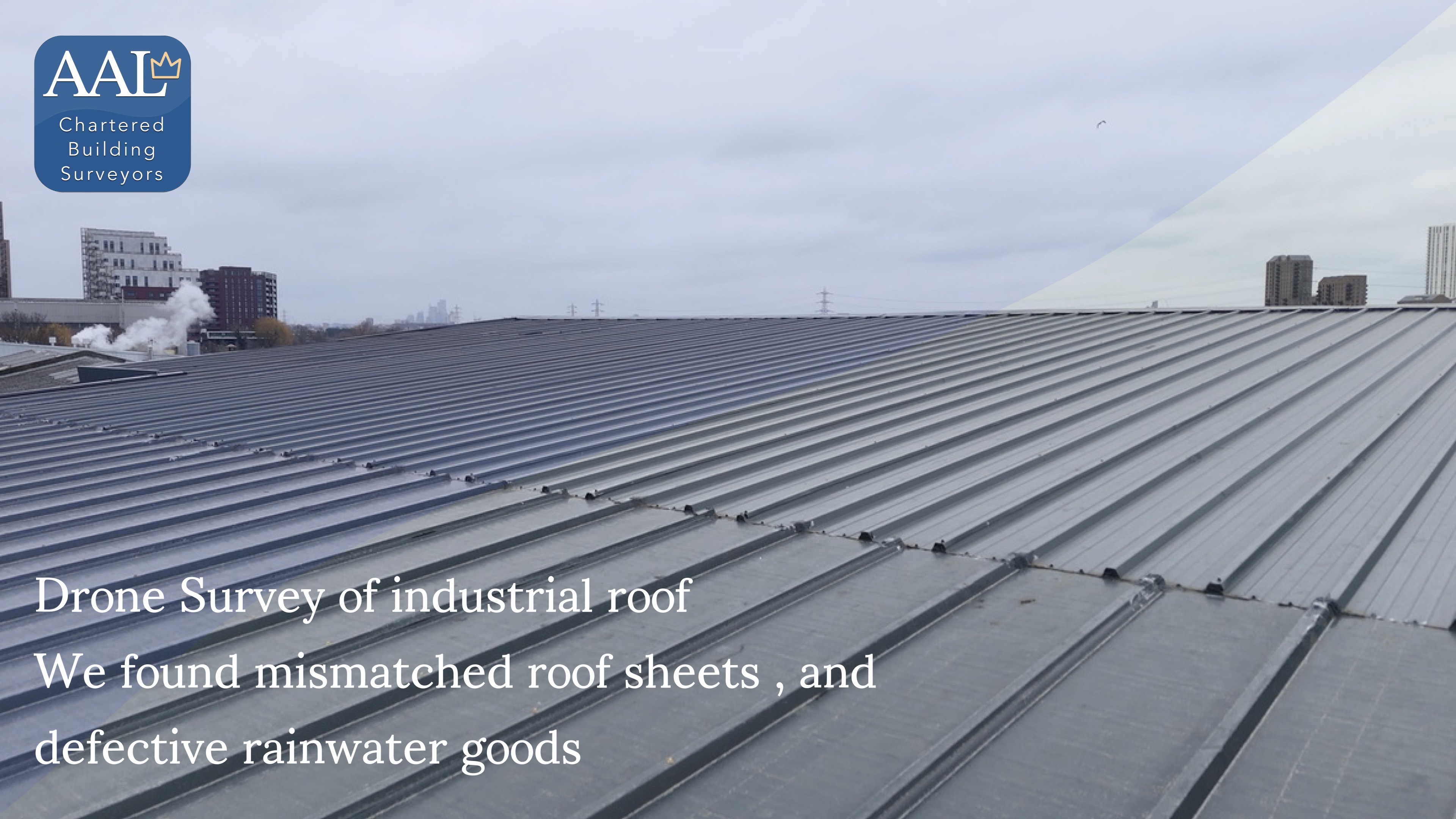
For industrial and other difficult-access buildings, drone inspection can help review roofs, cladding, rainwater goods, and other high-level elements more safely and efficiently.
Decision-Focused Reporting
The reporting emphasis is on giving occupiers, investors, and managers the evidence needed to negotiate terms, prioritise works, and plan capital or maintenance spend.
Commercial Case Studies
Industrial Due Diligence, East London
A commercial due diligence survey of an industrial unit in East London produced findings that led to potential cost savings of approximately £150,000 for the client.
The inspection identified issues that affected lease negotiations, allowing the client to engage with the landlord from a stronger technical position and to seek changes to rental values and other terms tied to the lease.
Technical due diligence of this kind does more than record defects. It supports commercial leverage at the point where property decisions are made.
Industrial Unit Pathology Review
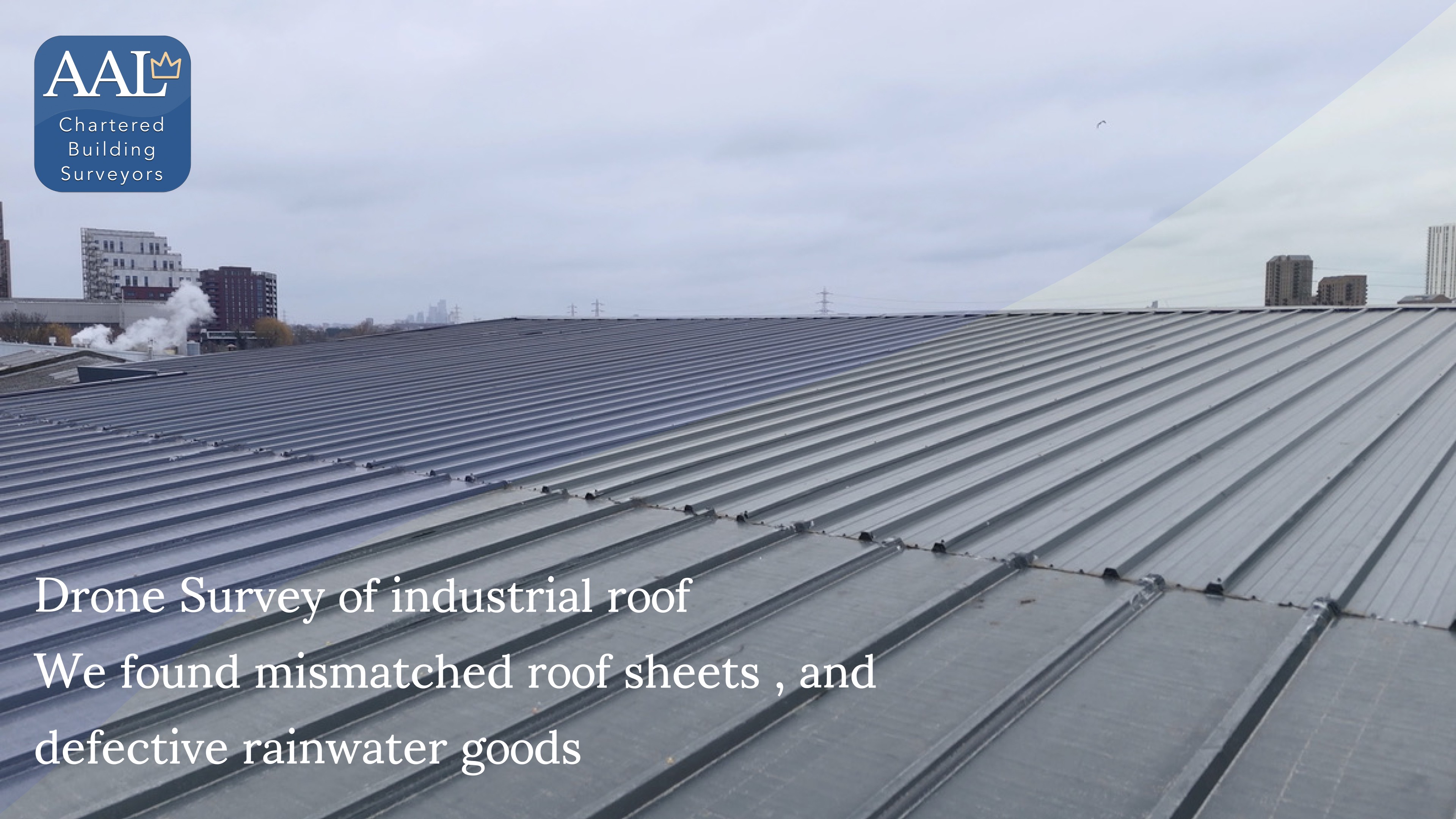
A separate industrial inspection identified floor slab irregularity and mismatched roof panels that increased the risk of water ingress and ongoing maintenance issues during the lease term.
The survey converted those technical observations into advice on condition risk, future liabilities, and likely remedial implications, giving the client a clearer basis for evaluating suitability and negotiating position.
Targeted reporting based on building pathology sets out not only the defects themselves, but the operational and financial consequences that follow from them.
Need Commercial Property Advice? in Lee?
We can advise on acquisitions, occupation risk, planned maintenance, and lease-related technical issues.
Contact UsSocial Media Feed

AAL Chartered Surveyors
2026-09-24 14:20:00 British local time

At our recent commercial due diligence survey of an industrial unit in East London the findings of our report led to significant financial advantages for our client. We identified several issues which equated to potential cost savings of approximately £150,...... Read more
These findings played a pivotal role in empowering our client during lease negotiations. With the evidence provided by us, our client was able to engage confidently and effectively in discussions with the landlord. This not only facilitated a reconsideration of the lease terms but also allowed the client to negotiate a reduction in rental values and improvements to other lease-related conditions.
Our proactive approach in highlighting these issues underscores our commitment to adding tangible value to our clients' investment decisions.
By ensuring that all factors are thoroughly vetted, we position our clients in a place of strength, enabling them to make informed and advantageous decisions and negotiations.
#FacilitiesManagement #AssetManagement #PropertyMaintenance #BuildingDefects #BuildingSurvey #RealEstateSurvey #StructuralAssessment #PropertyInspection #CommercialBuildingSurvey #CommercialProperty
AAL Chartered Surveyors
2026-09-24 12:20:00 British local time
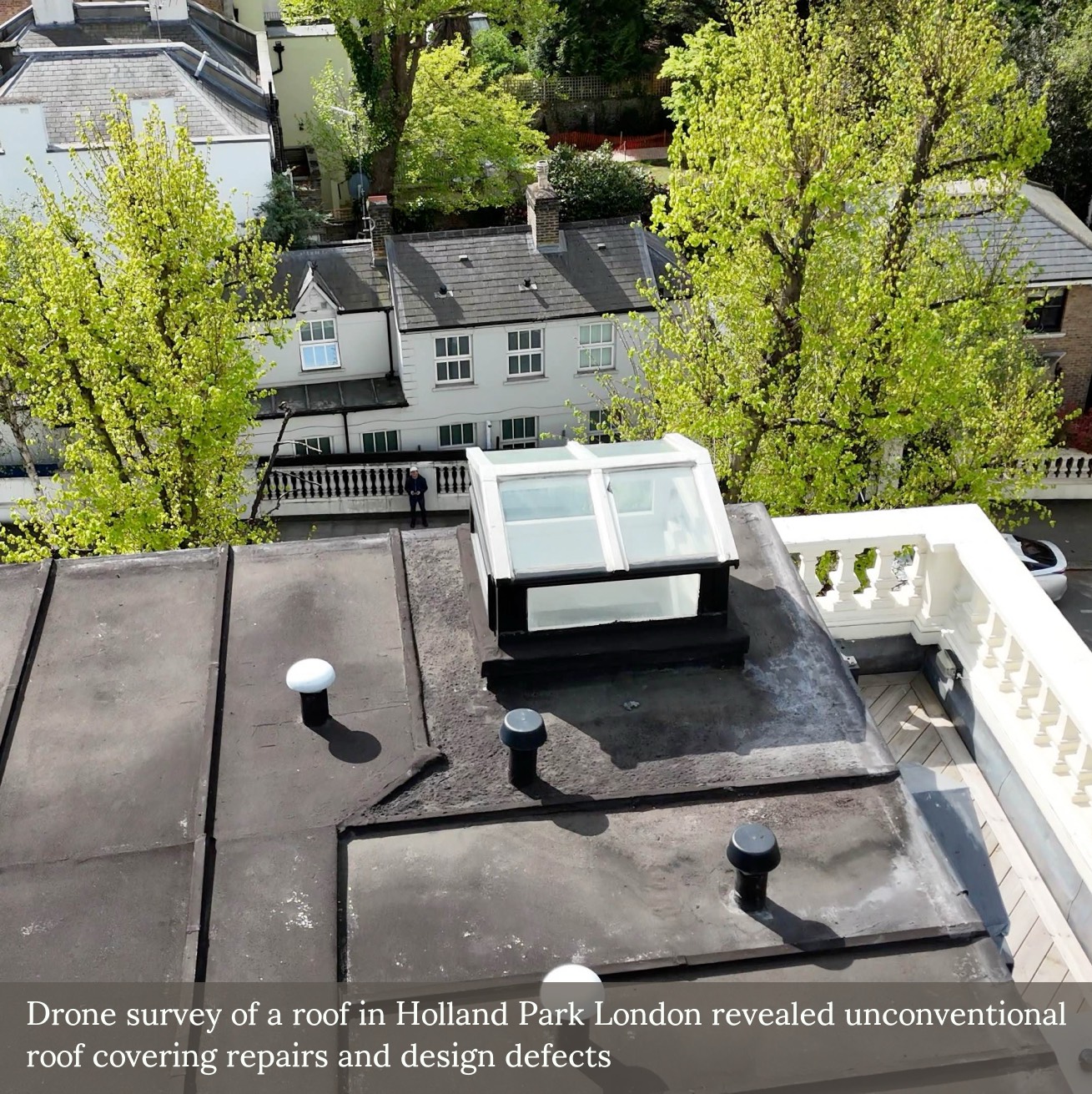
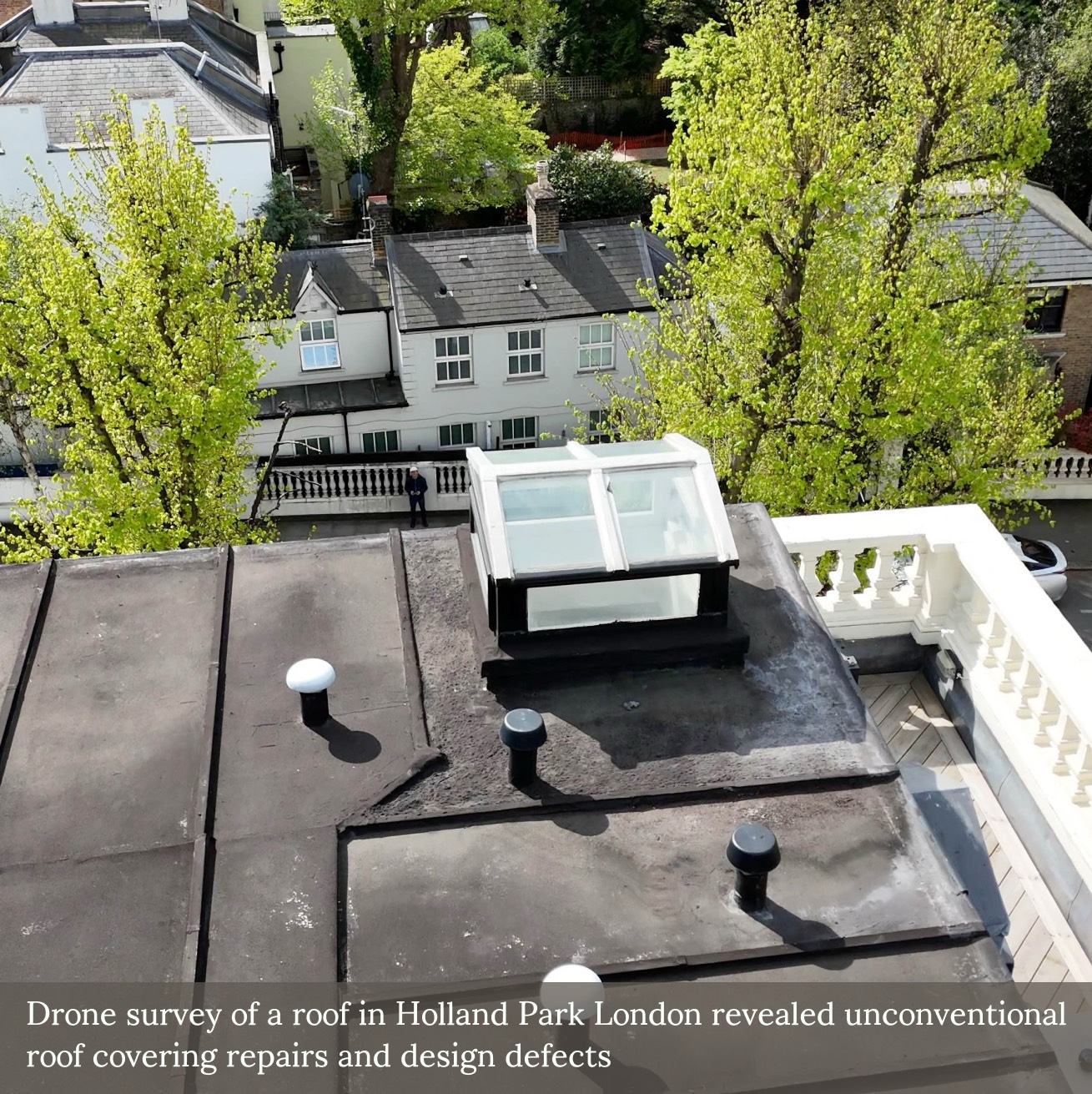
When Flat Roof Coverings Diverge from Standard Practice
We recently carried out a drone-based roof condition inspection in West London, where an unusual bituminous liquid-applied membrane had been installed over a zinc flat roof.
This type of overlay—rein...... Read more
We recently carried out a drone-based roof condition inspection in West London, where an unusual bituminous liquid-applied membrane had been installed over a zinc flat roof.
This type of overlay—reinforced with a textile mesh—is not typically encountered in applications of this kind, where polymeric systems are more commonly specified. In this case, surface discolouration, exposed reinforcement mesh, and evidence of ponding all raised concerns regarding durability and workmanship.
When flat roofing systems deviate from established detailing or product specifications, there is increased risk of premature failure—particularly when installation records or manufacturer compliance documentation are unavailable.
Early identification through external inspection can assist in defining appropriate next steps, including testing or sampling to determine whether remedial works or full replacement is required.
AAL Chartered Surveyors
2026-09-24 10:20:01 British local time
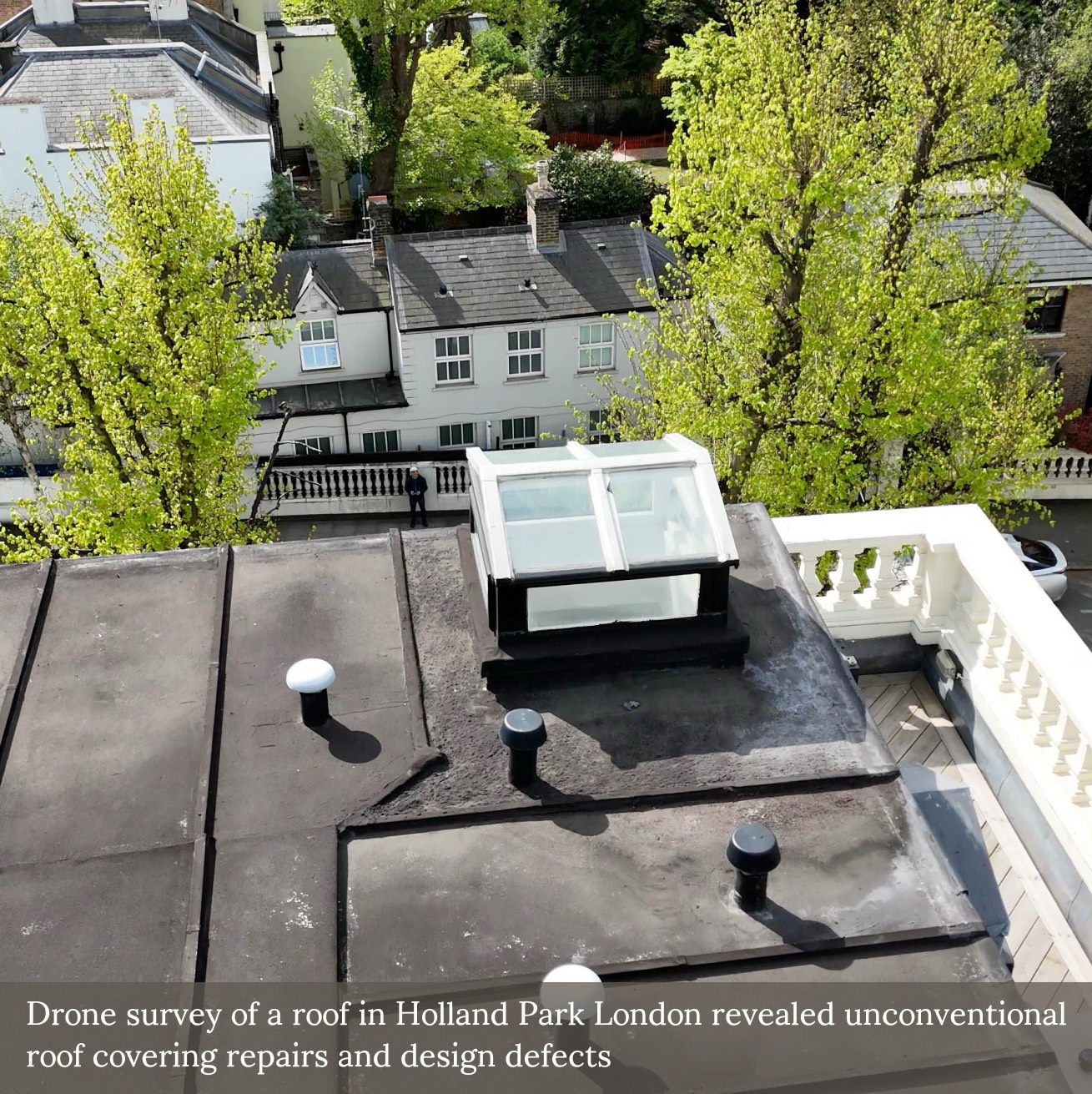
Roof Risk Without Internal Access
We are often instructed to assess external roof coverings where internal access is restricted. A recent case in W14 illustrates the value of high-level drone inspection for identifying latent structural concerns from the o...... Read more
We are often instructed to assess external roof coverings where internal access is restricted. A recent case in W14 illustrates the value of high-level drone inspection for identifying latent structural concerns from the outside.
Numerous depressions in the flat roof deck suggested potential hidden deterioration of the substrate, likely linked to historical water ingress. In the absence of internal inspection, we recommended core sampling to confirm the extent of any concealed damage and to inform the appropriate scope of remedial work.
External-only inspections, when carried out systematically, can yield sufficient evidence to justify further investigation, particularly where the risk of ongoing deterioration to concealed timber or insulation is suspected.
AAL Chartered Surveyors
2026-09-23 14:20:00 British local time
Where Roof Design Meets Condensation Risk
Two timber-framed roof lanterns formed part of a recent external inspection we undertook on a mansard roof in West London. Both featured single glazed elements, limited overhangs, and decorative paint finishes in p...... Read more
Two timber-framed roof lanterns formed part of a recent external inspection we undertook on a mansard roof in West London. Both featured single glazed elements, limited overhangs, and decorative paint finishes in poor condition.
The presence of condensation to internal glazing, along with signs of historical repair and timber exposure, highlights a common set of issues—particularly in traditional or poorly detailed roof structures.
Where single glazed rooflights are retained in occupied spaces, internal dampness is frequently the result of thermal bridging or trapped moisture, rather than rainwater penetration alone.
In such cases, replacement offers the opportunity to introduce modern, thermally efficient materials and more robust junction detailing—reducing risk and improving long-term performance.
AAL Chartered Surveyors
2026-09-23 12:20:00 British local time
At our recent commercial due diligence survey of an industrial unit in East London, we utilised drone technology to conduct a detailed inspection of areas otherwise impossible to access, such as the roof, cladding, and high-level windows. Our surveyors, who...... Read more
The drone survey captured high-resolution images and data of the relevant areas, allowing us to identify key issues that might otherwise have been missed. Specifically, we discovered significant defects in the roof and cladding, along with issues in the rainwater goods. Such findings are crucial as they hold the potential to save our client significant expenditure, mitigating risks that could escalate into costly repairs if left unaddressed.
Our ability to integrate drone technology into traditional surveying practices not only elevates the thoroughness of our inspections but also adds substantial value to our clients by providing more comprehensive insights. This case in East London is a prime example of how leveraging innovative technology can lead to advantageous outcomes for our clients, ensuring their investments are sound, and their properties are maintained to the highest standard.
#FacilitiesManagement #AssetManagement #PropertyMaintenance #BuildingDefects #BuildingSurvey #RealEstateSurvey #StructuralAssessment #PropertyInspection #CommercialBuildingSurvey #CommercialProperty
Local Area
About Lee
Lee
Lee sits in the London Borough of Lewisham in south-east London, between Blackheath and Hither Green, a predominantly residential area defined by substantial Victorian and Edwardian villa and terraced development around Lee High Road and the Lee Manor Conservation Area, extensive Edwardian and inter-war semi-detached housing across the streets towards Burnt Ash Hill and Lee Green, pockets of post-war infill, and a compact commercial centre at Lee Green. Typical building types include large Victorian detached and semi-detached villas — many converted into flats — Edwardian and inter-war semi-detached houses, Victorian bay-fronted terraces, and post-war estate blocks. Surveying instructions in Lee commonly include pre-purchase surveys on Victorian houses and converted flats, schedules of condition for residential lettings, party wall advice for widespread loft conversions and rear extensions, and dilapidations work on retail leases at Lee Green.
Victorian Villas and the Lee Manor Conservation Area
The Lee Manor Conservation Area and surrounding streets contain substantial Victorian detached and semi-detached villas, many converted into flats. Pre-purchase surveys require detailed assessment: slate or clay-tile roof condition, stucco render and brick facade performance, parapet and valley gutter condition, timber sash window and cornice joinery, and the cumulative impact of successive conversions. Fire separation, sound transmission, shared drainage, and common parts condition are central to converted-flat surveys. Conservation-area controls shape repair and alteration specification throughout.
Edwardian and Inter-War Housing
Extensive Edwardian and inter-war semi-detached housing across the wider streets towards Burnt Ash Hill, Eltham Road, and Lee Green presents early-cavity or cavity walls, clay-tile roofs, and timber sash or casement windows. Common survey findings include wall-tie corrosion in exposed elevations, original window deterioration, flat-roof failures on additions, chimney stack deterioration, and original drainage reaching the end of its life. London clay subsoil and mature trees make subsidence a recurring consideration on shallow-founded stock.
Extensions, Party Walls, and Commercial Stock
Loft conversions, rear extensions, and side infills are widespread across the residential stock, generating routine party wall work under the Party Wall etc. Act 1996. Schedules of condition on neighbouring properties before notifiable works begin, party wall awards, and monitoring during construction are standard. Pre-purchase surveys on already-extended properties assess extension quality, junction detailing, flat-roof performance, and consent compliance. Commercial stock at Lee Green and along Lee High Road generates schedule-of-condition and dilapidations work on retail, restaurant, and small office leases.