
RICS Party Wall Surveyors in Erith
RICS party wall surveyor services including notices, schedules of condition, awards, and practical guidance for owners and neighbours. Serving Erith with measured procedural advice and neighbour-aware support.

Party wall support in Erith
Choose the right starting point for party wall matters in Erith
The next step often depends on whether you are proposing the works, responding as an adjoining owner, or need the award and schedule process moved forward.
Building owner route
Use this route if you are proposing works and need advice on whether the Act applies, which notices are required, and how to keep the process moving without avoidable delay.
Best suited to loft conversions, structural alteration, excavation, and refurbishment near a shared or boundary wall.
Adjoining owner route
Use this route if you have received a notice, need help responding, or want an independent surveyor to review risk, access, schedule of condition, and award terms.
Best suited to adjoining owners who want a measured, independent response before proposed works commence.
Award and schedule route
Use this route if the main need is an early schedule of condition, award progression, or procedural review of drawings and information already prepared for the works.
Useful where the project is already defined and the priority is formal procedure rather than early scoping.
Typically instructed by
Building owners, adjoining owners, and project teams planning notifiable works.
Common instruction stage
Before notice service, after dissent, or before a schedule of condition and award are progressed.
Typical output
Notices, surveyor appointments, schedules of condition, and practical awards.
Common settings
The page covers terraces, basements, urban commercial sites, and mixed-use conversion contexts.
Introduction to the Party Wall etc. Act 1996
The Party Wall etc. Act 1996 provides a statutory framework for certain categories of work that may affect an adjoining owner. It is commonly engaged where proposed works involve a party wall, a party structure, a boundary wall, or excavations close to neighbouring structures.
The Act is not intended to prevent lawful development. It is intended to regulate how notifiable works are communicated and agreed, with a focus on advance notice, dispute resolution, recording of existing condition, and practical requirements for protection, access, making good, and compensation.
Where the Act applies, early identification of the relevant notices and appointments usually reduces avoidable cost and delay. Where it does not apply, owners remain subject to wider common law duties and other statutory obligations.
The Role of the Party Wall Surveyor
A party wall surveyor is appointed to determine matters arising from a dispute under the Act rather than to act as a partisan advocate for either owner. In practice, the role is to focus on points that materially affect risk, access, sequencing, protection, and the terms that should be recorded in the award.
The surveyor will commonly coordinate a schedule of condition, request drawings and structural information where necessary, and document decisions in a form that can be understood and followed by owners and contractors on site.
An effective appointment is usually characterised by early identification of the matters that need to be agreed and prompt progression to a proportionate award rather than prolonged correspondence for its own sake.
The Process
The process usually begins with service of the relevant notice on the adjoining owner. The adjoining owner may consent, dissent and appoint a surveyor, or agree to a single agreed surveyor. If a dispute arises, the statutory dispute resolution mechanism is engaged.
A schedule of condition is commonly undertaken at an early stage to record the state of the adjoining property that could be affected. Surveyors then review the proposed works, request further information where necessary, and negotiate towards an award that deals with access, sequencing, protection, working arrangements, and any route for dealing with damage.
During the works there may be interim inspections where the circumstances warrant them, and often an inspection at the end of the works to compare condition against the original schedule and address any making good or compensation issues.
The route of a party wall matter
Notice served
The building owner serves notice one to two months before the works, depending on the notice type.
Fourteen-day response
The adjoining owner consents or dissents in writing. No response within fourteen days is treated as dissent.
Surveyors appointed
On dissent the owners appoint an agreed surveyor, or one surveyor each, to resolve the matter under the Act.
Documents reviewed
Drawings, method statements, and structural information are reviewed so the works and their risks are understood.
Condition recorded
A schedule of condition records the adjoining property before the works start, protecting both owners.
Negotiation
The surveyors negotiate the terms of the award, narrowing sequencing, protections, and any disputed items.
Award served
Costs usually fall to the building owner
The award records the works, protections, access, and timings before they begin.
Why Qualification and Ethics Matter
Appointment of an individual who is not fully competent in party wall procedure can introduce avoidable risk. Common issues include defective notices, incorrect identification of notifiable works, inadequate schedules of condition, and awards that are difficult to implement on site.
Ethical obligations are not a formality. Surveyors acting with integrity are expected to pursue proportionate settlement and maintain procedural discipline, rather than inflaming disagreement or generating unnecessary cost through extended correspondence and escalation.
A careful appointment, grounded in professional standards, helps reduce the likelihood of avoidable delay, repeated referrals, or progression into appeal and litigation.
Typical Projects
Historic Terraces and Masonry Buildings
Older buildings often require careful attention to shared walls, timber elements, settlement history, and the recording of pre-existing cracking before works begin.
Basements and Excavation-Led Projects
Excavation close to adjoining structures raises specific risk management issues around sequencing, temporary works, access, and the adequacy of design information.
Dense Urban Commercial Sites
Commercial property can introduce additional complexity where access, contractor logistics, programme pressure, and ongoing occupation all need to be reflected in the award terms.
Conversions and Mixed-Use Buildings
Refurbishment and change-of-use projects often combine structural alteration with neighbourly sensitivity, making clear inspection records and proportionate awards especially important.
Schedule of Condition for Party Wall Works
A schedule of condition is a standard part of most party wall instructions. Prepared before works start, it records the existing condition of the adjoining property so that if damage is later alleged, there is a clear dated record to compare against.
The schedule covers the parts of the adjoining property most likely to be affected by the proposed works — typically internal and external elements close to the boundary, including walls, ceilings, floors, windows, and any visible pre-existing cracking or defect.
Instructed and prepared early, before contractor mobilisation and before any works begin that could affect the adjoining structure, it creates a stronger evidential foundation for the award and a clearer basis for resolving any making-good claim at the end of the works.
Party Wall FAQs
Practical answers to the questions clients usually ask before a party wall instruction is started.
A schedule of condition for party wall works should be prepared before contractor mobilisation and before any works begin that could affect the adjoining property. The earlier it is done, the more reliable the evidential record — once works have commenced, the original pre-existing condition is harder to establish with certainty.
In most party wall matters the building owner meets the cost of the schedule of condition, as it forms part of the surveying process that the building owner's proposed works have made necessary. The surveyor appointed under the Act will normally arrange and include the schedule as part of the overall procedure.
A schedule of condition is not an automatic legal requirement under the Party Wall etc. Act 1996, but it is standard practice in most instructions. Without one, it becomes much harder to establish what pre-existing defects or damage was already present before the works started, which can significantly complicate any later claim for making good or compensation.
A party wall schedule of condition typically covers the internal and external elements of the adjoining property most likely to be affected by the proposed works. That usually includes walls, ceilings, floors, windows, and any visible pre-existing cracking, damage, or repair history close to the boundary.
Planning Works Near a Shared Boundary? in Erith?
We can advise on notices, schedules of condition, surveyor appointments, and how to move the process forward properly.
Social Media Feed

AAL Chartered Surveyors
2026-09-24 14:20:00 British local time

At our recent commercial due diligence survey of an industrial unit in East London the findings of our report led to significant financial advantages for our client. We identified several issues which equated to potential cost savings of approximately £150,...... Read more
These findings played a pivotal role in empowering our client during lease negotiations. With the evidence provided by us, our client was able to engage confidently and effectively in discussions with the landlord. This not only facilitated a reconsideration of the lease terms but also allowed the client to negotiate a reduction in rental values and improvements to other lease-related conditions.
Our proactive approach in highlighting these issues underscores our commitment to adding tangible value to our clients' investment decisions.
By ensuring that all factors are thoroughly vetted, we position our clients in a place of strength, enabling them to make informed and advantageous decisions and negotiations.
#FacilitiesManagement #AssetManagement #PropertyMaintenance #BuildingDefects #BuildingSurvey #RealEstateSurvey #StructuralAssessment #PropertyInspection #CommercialBuildingSurvey #CommercialProperty

AAL Chartered Surveyors
2026-09-24 12:20:00 British local time
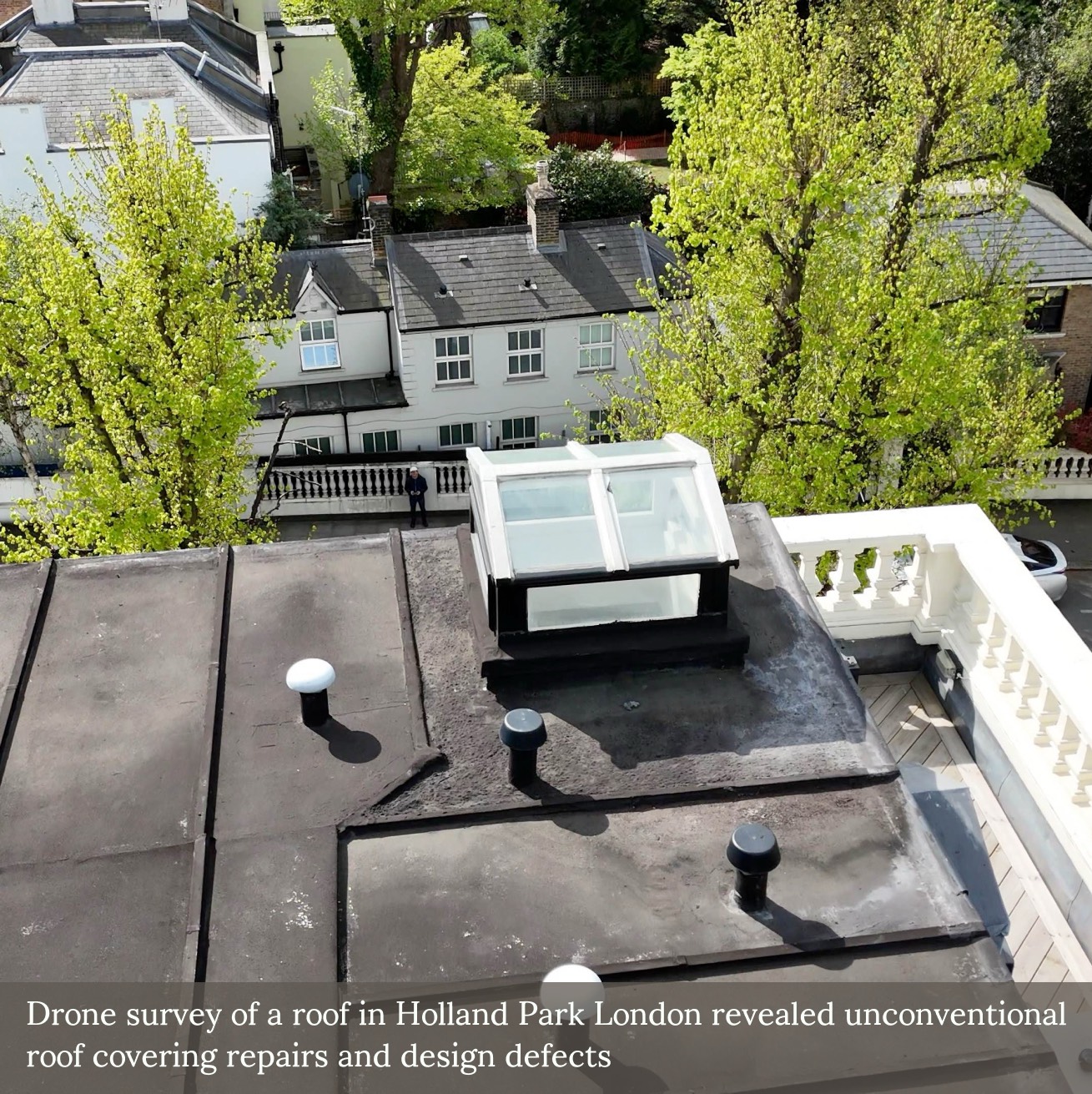
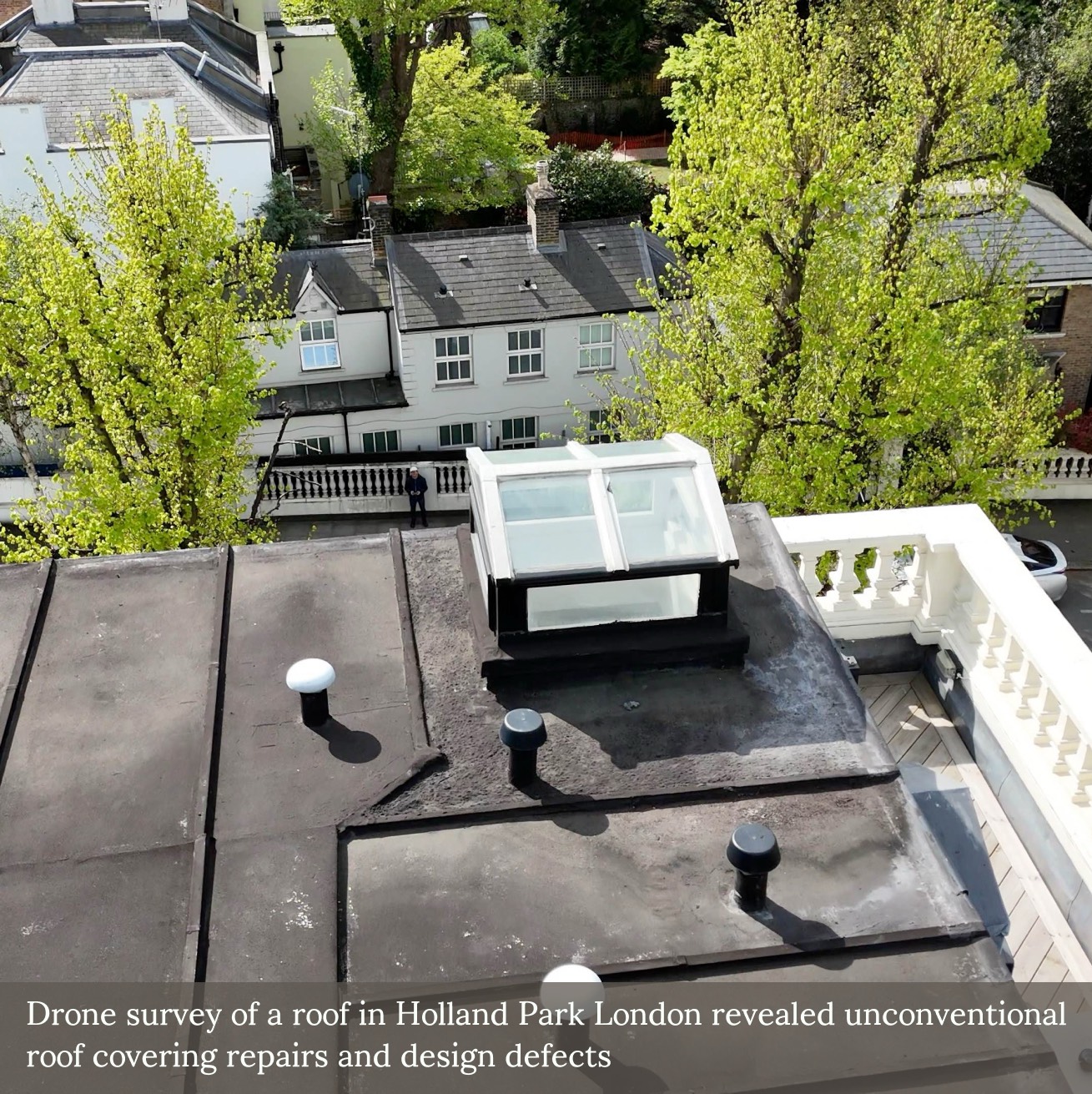
When Flat Roof Coverings Diverge from Standard Practice
We recently carried out a drone-based roof condition inspection in West London, where an unusual bituminous liquid-applied membrane had been installed over a zinc flat roof.
This type of overlay—rein...... Read more
We recently carried out a drone-based roof condition inspection in West London, where an unusual bituminous liquid-applied membrane had been installed over a zinc flat roof.
This type of overlay—reinforced with a textile mesh—is not typically encountered in applications of this kind, where polymeric systems are more commonly specified. In this case, surface discolouration, exposed reinforcement mesh, and evidence of ponding all raised concerns regarding durability and workmanship.
When flat roofing systems deviate from established detailing or product specifications, there is increased risk of premature failure—particularly when installation records or manufacturer compliance documentation are unavailable.
Early identification through external inspection can assist in defining appropriate next steps, including testing or sampling to determine whether remedial works or full replacement is required.
AAL Chartered Surveyors
2026-09-24 10:20:01 British local time
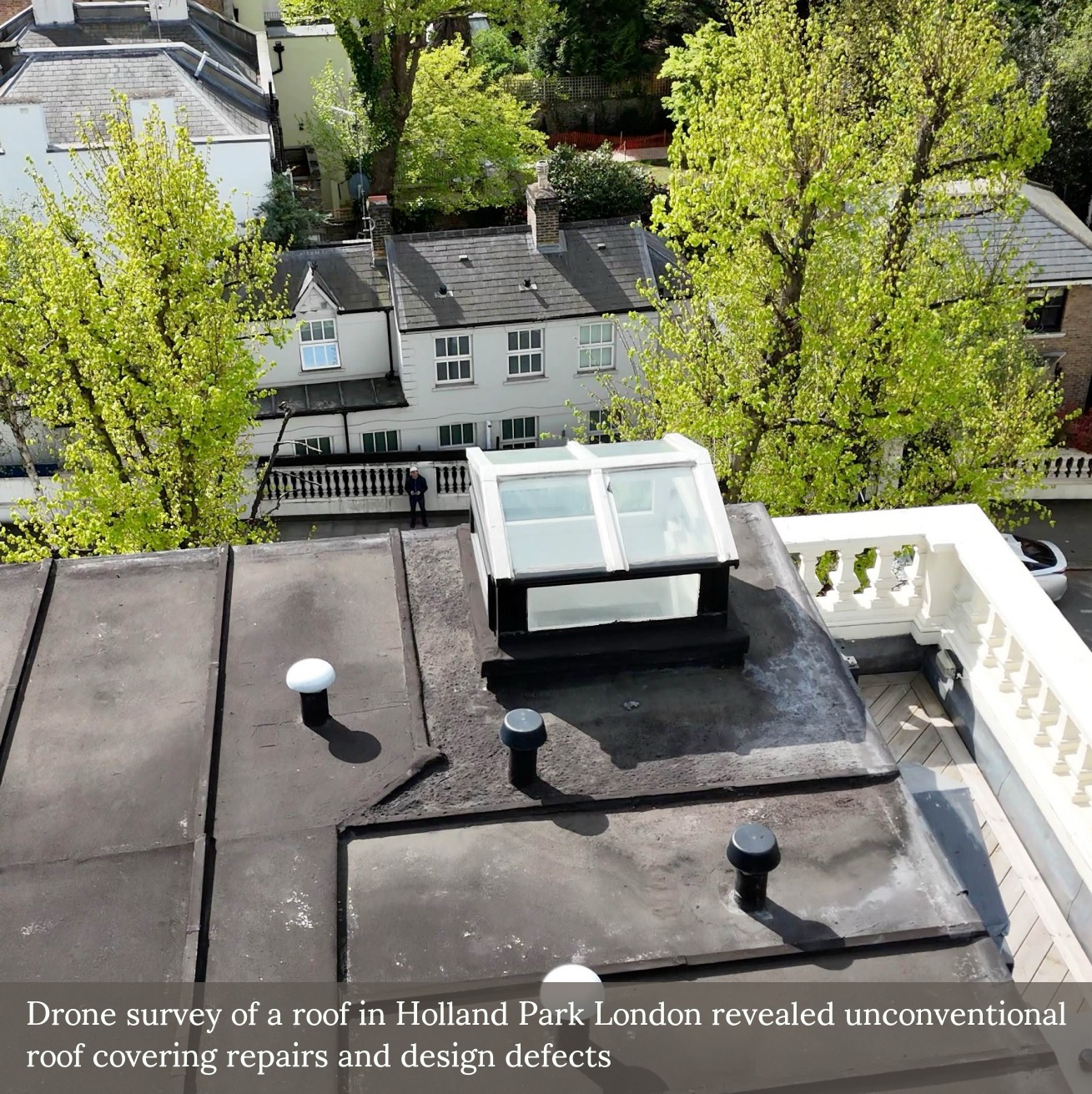
Roof Risk Without Internal Access
We are often instructed to assess external roof coverings where internal access is restricted. A recent case in W14 illustrates the value of high-level drone inspection for identifying latent structural concerns from the o...... Read more
We are often instructed to assess external roof coverings where internal access is restricted. A recent case in W14 illustrates the value of high-level drone inspection for identifying latent structural concerns from the outside.
Numerous depressions in the flat roof deck suggested potential hidden deterioration of the substrate, likely linked to historical water ingress. In the absence of internal inspection, we recommended core sampling to confirm the extent of any concealed damage and to inform the appropriate scope of remedial work.
External-only inspections, when carried out systematically, can yield sufficient evidence to justify further investigation, particularly where the risk of ongoing deterioration to concealed timber or insulation is suspected.
AAL Chartered Surveyors
2026-09-23 14:20:00 British local time
Where Roof Design Meets Condensation Risk
Two timber-framed roof lanterns formed part of a recent external inspection we undertook on a mansard roof in West London. Both featured single glazed elements, limited overhangs, and decorative paint finishes in p...... Read more
Two timber-framed roof lanterns formed part of a recent external inspection we undertook on a mansard roof in West London. Both featured single glazed elements, limited overhangs, and decorative paint finishes in poor condition.
The presence of condensation to internal glazing, along with signs of historical repair and timber exposure, highlights a common set of issues—particularly in traditional or poorly detailed roof structures.
Where single glazed rooflights are retained in occupied spaces, internal dampness is frequently the result of thermal bridging or trapped moisture, rather than rainwater penetration alone.
In such cases, replacement offers the opportunity to introduce modern, thermally efficient materials and more robust junction detailing—reducing risk and improving long-term performance.
AAL Chartered Surveyors
2026-09-23 12:20:00 British local time
At our recent commercial due diligence survey of an industrial unit in East London, we utilised drone technology to conduct a detailed inspection of areas otherwise impossible to access, such as the roof, cladding, and high-level windows. Our surveyors, who...... Read more
The drone survey captured high-resolution images and data of the relevant areas, allowing us to identify key issues that might otherwise have been missed. Specifically, we discovered significant defects in the roof and cladding, along with issues in the rainwater goods. Such findings are crucial as they hold the potential to save our client significant expenditure, mitigating risks that could escalate into costly repairs if left unaddressed.
Our ability to integrate drone technology into traditional surveying practices not only elevates the thoroughness of our inspections but also adds substantial value to our clients by providing more comprehensive insights. This case in East London is a prime example of how leveraging innovative technology can lead to advantageous outcomes for our clients, ensuring their investments are sound, and their properties are maintained to the highest standard.
#FacilitiesManagement #AssetManagement #PropertyMaintenance #BuildingDefects #BuildingSurvey #RealEstateSurvey #StructuralAssessment #PropertyInspection #CommercialBuildingSurvey #CommercialProperty

Local Area
About Erith
Erith Industrial Units
Erith sits on the south bank of the Thames in the London Borough of Bexley, between Belvedere and Slade Green, with a substantial riverside industrial belt along Manor Road, Erith Industrial Estate, Fraser Road, and the Thames frontage. The Erith industrial belt accommodates several hundred units across logistics and distribution warehousing, recycling and waste handling, light manufacturing, trade-counter operators, and specialist riverside operations, alongside a town centre of Victorian and post-war commercial stock and predominantly inter-war and post-war residential streets on rising ground to the south. The stock spans general industrial (B2) production buildings, storage and distribution (B8) high-bay warehouses, light industrial workshops, multi-bay trade-counter terraces, mid-century steel-portal sheds with asbestos-cement sheeting, and recent composite-panel logistics warehouses with dock-leveller loading. Surveying instructions commonly include terminal dilapidations on industrial leases, schedules of condition at lease commencement, reinstatement cost assessments on large-span buildings, flood resilience advice on premises in Thames Flood Zones 2 and 3, party wall awards arising from neighbouring intensification, and asbestos surveys on mid-century sheds.
Riverside Stock and Thames Flood Risk
Much of the Erith industrial belt sits within Thames Flood Zones 2 and 3, with the riverside flood defences providing the principal protection. Building stock spans mid-century steel-portal sheds with asbestos-cement roof and wall sheeting, recent composite-panel warehouses with dock-leveller loading, and process buildings with specialist mechanical and electrical installations. Common defects include asbestos-cement sheeting on the older premises, corroded steelwork at gutter and eaves, failed rooflights, water ingress at roof junctions, racking and fork-lift impact to perimeter walls and steel columns, cracked or settled concrete floor slabs from heavy use, salt-laden atmospheric corrosion on external metalwork, and end-of-life electrical and sprinkler installations. Flood resilience advice, including raised plant and electrical installations, flood barriers, and resilient low-level finishes, is increasingly part of pre-purchase and reinstatement-stage instructions.
Dilapidations and Schedules of Condition
Tenants at Erith face material dilapidations exposure on industrial leases because of the age of much of the building stock and the heavy use that floor slabs and yards experience. A schedule of condition recorded at lease commencement is intended to limit terminal dilapidations liability and is routinely instructed for all new leases, regardless of building age. Terminal schedules require assessment of repair, reinstatement, and statutory obligations, including asbestos management, fire compartmentation between adjoining units, and Minimum Energy Efficiency Standards on the building. Yard surfaces, drainage, dock-levellers, and external storage areas are frequently a significant element of overall claim value.