

Reviewed by Clayton Ayling BSc (Hons) MRICS MPTS, Chartered Building Surveyor — Updated 18 April 2026
Inspecting Cavity Walls
When inspecting an existing building, it is easy to assume that a wall must be a cavity wall because the external brickwork appears to be in stretcher bond. In many post-war properties that may well be the correct starting point, but it is still only an assumption until the wall build-up has been properly checked.
What is a cavity wall?
A cavity wall is usually formed with two separate leaves of masonry, an outer leaf and an inner leaf, with a gap or cavity between them. The outer leaf provides weather protection and external finish, while the inner leaf or structural frame commonly carries the main load. The cavity can help reduce rain penetration and, in later construction, often contains insulation.
Why external appearance can mislead
Stretcher bond brickwork on the outside of a building often points toward cavity wall construction, particularly in later housing, but it does not prove it. Alterations, later re-facing, unusual construction, solid wall forms, or other non-standard details can produce an external appearance that suggests one form of construction while the actual wall build-up is something else. A surveyor should therefore treat visual clues as indicators, not as final proof.
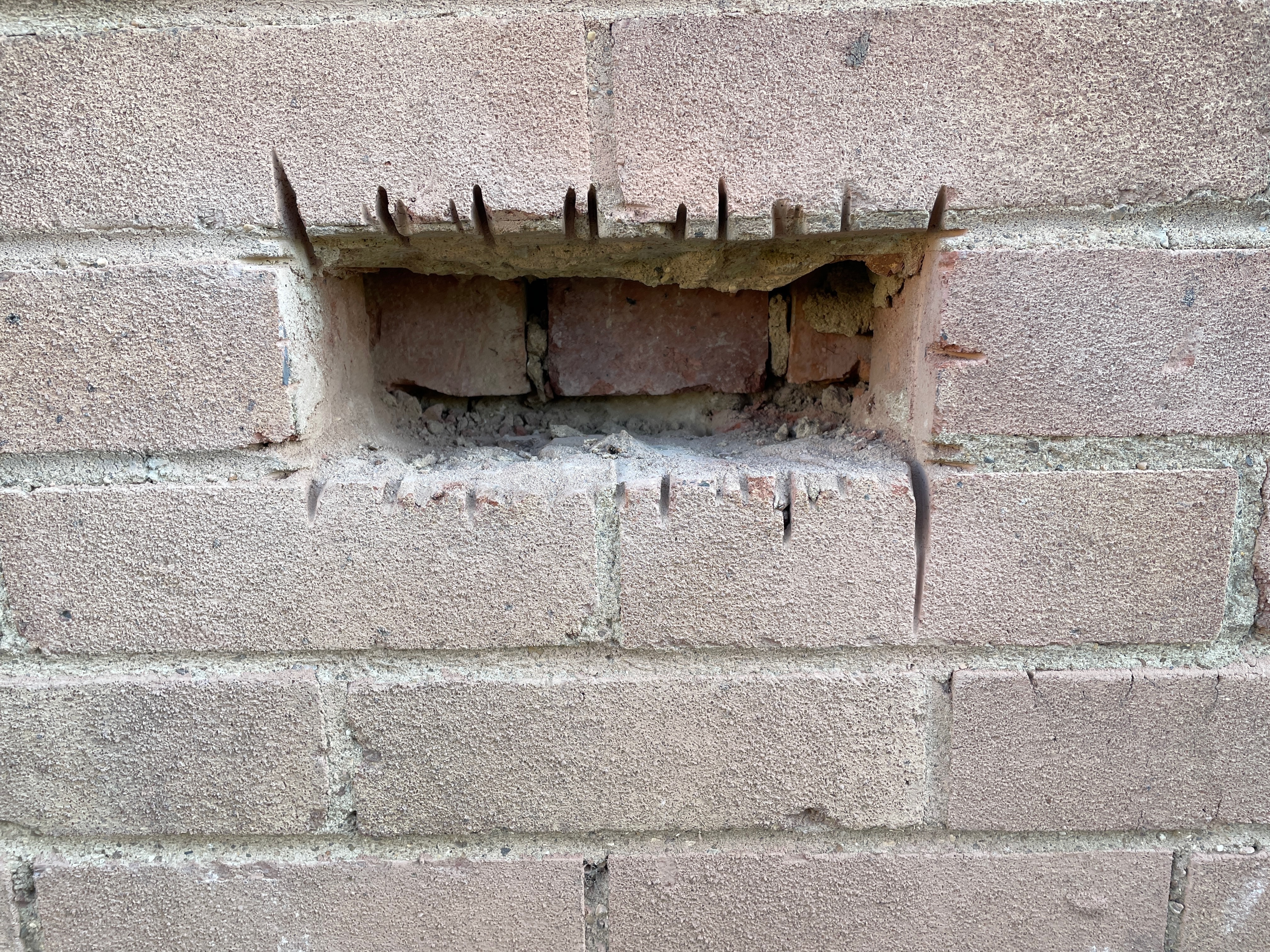
Opening-up inspection
On one inspection we asked a contractor to open up the wall so the cavity could be checked directly. Although the wall had a stretcher bond external face and might reasonably have been assumed to be a cavity wall, the opening-up inspection showed that it was not in fact built as a cavity wall. That outcome is a useful reminder that external appearance can only take the inspection so far.
When a surveyor may need more than visual inspection
Where the construction affects structural assessment, damp diagnosis, thermal upgrading, or proposed alteration works, visual inspection alone may not be enough. The surveyor may need to consider wall thickness, age, bond pattern, junction detailing, roof and floor relationships, and where appropriate intrusive opening-up works. The more important the decision, the less sensible it is to rely on appearance alone.
Practical inspection point
If the question is whether a wall truly contains a cavity, the right approach is to confirm the construction rather than assume it. That is particularly important before specifying insulation measures, diagnosing moisture paths, or deciding whether masonry removal or structural alteration is straightforward. In short: do not assume a cavity wall simply because the outside looks like one.
The key point
Do not assume a cavity wall simply because the outside looks like one. Confirm the construction rather than assume it — particularly before specifying insulation, diagnosing damp, or taking structural decisions.
If a wall build-up is critical to a decision you are taking on a property, send us the address and the specific question. We will advise what level of inspection is proportionate.
Contact us →Need wall construction confirmed?
If a decision on a property turns on whether a wall is truly a cavity wall, a short inspection by a chartered surveyor, with opening-up where justified, is usually the cheapest path to a reliable answer.
See related guides on structural surveys, building surveyors and roof inspections.
Related knowledge
Compare this article with the nearest matching pages if you want to follow the topic into related surveying questions.
Discover the critical role of structural surveys in property investments with our detailed guide. Learn why these surveys are essential, what they include, and how to select the right RICS-accredited professionals in London and the South East for an informed…
Discover expert Building Surveyor Services across London and the South East. Our RICS-accredited team offers detailed building surveys, construction design, regulatory compliance, defect diagnosis, and reinstatement cost assessments. Contact us for tailored…
Discover the importance of a Commercial Building Survey for your London property. Our RICS-accredited surveyors provide comprehensive structural assessments and actionable insights, ensuring informed decision-making for purchase, maintenance, or lease. Secure…
Opt for top-tier Roof Inspection Services in London and the South East with our RICS-accredited surveyors. Ensure your roof's longevity and safety with our advanced technology and expert evaluations. Book a detailed roof inspection today to prevent costly…
Key Services
Need a surveyor rather than another article?
If this article relates to a live property issue, one of these service pages is likely to be the most useful next step.
Lease-end claims
Dilapidations
Landlord and tenant advice on schedules, quantified demands, lease interpretation, and negotiated settlement.
Explore DilapidationsNeighbourly matters
Party wall matters
Notices, adjoining owner response, schedules of condition, awards, and practical support before works start.
Explore Party wall mattersLease protection
Schedules of condition
Condition recording for lease commencement, pre-works evidence, and later protection against dispute over pre-existing condition.
Explore Schedules of condition