
Drone Roof Survey by RICS Chartered Surveyors in Chiswick Park
Drone roof surveys carried out by RICS chartered surveyors flying under the CAA Article 16 / A2 Certificate of Competency framework, combining aerial inspection with practical technical reporting. Serving Chiswick Park with practical roof-condition advice and image-led reporting.
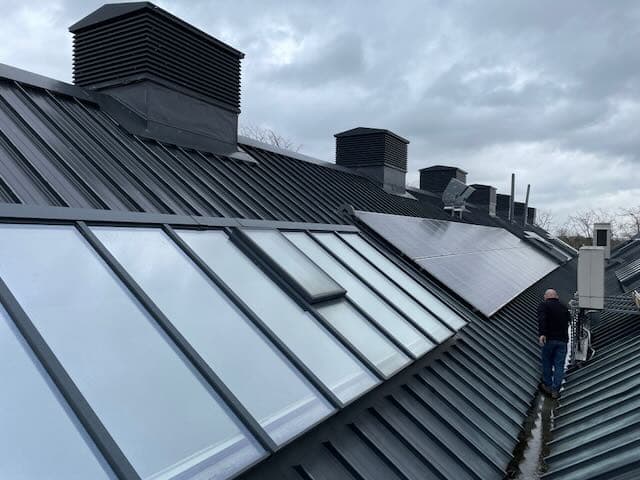
Drone Roof Survey Services in Chiswick Park
Ongoing inspection of roof coverings is important for risk management, defect identification, and maintenance planning. Drone roof surveys allow high-level elements to be reviewed efficiently without immediate reliance on scaffolding or other temporary access equipment.
- Safety through reduced working-at-height exposure.
- Efficiency across large or awkward roof areas.
For buildings with extensive roof areas, complex geometry, or difficult access constraints, the method can reduce disruption while still providing a structured visual record of roof condition, rainwater goods, flashings, and other high-level details.
- Potential cost savings where scaffold or access plant is not needed for the initial inspection.
- Better visual coverage of hard-to-reach areas.
What to Expect from a Drone Roof Survey in Chiswick Park
Drone roof surveys are intended to record the visible condition of roof elements in a methodical way and to turn that imagery into usable surveying advice. The process usually begins with a discussion about the property, the concerns to be investigated, and any operational constraints on site.
Controlled drone flights are then used to obtain high-resolution imagery and video footage of the roof covering and associated details from multiple viewpoints. The recorded data is reviewed by the surveyor to identify visible defects, deterioration, movement, failed repairs, or signs of water ingress.
Where required, the output can be turned into a written report with annotated images, commentary on the observed condition, and recommendations for further investigation, maintenance, or repair works.
- Pre-survey discussion to define scope, risks, and property-specific concerns.
- Aerial data capture using controlled flights and multiple viewpoints.
- Surveyor review of the recorded imagery to identify visible defects and condition issues.
- Reporting with annotated images, commentary, and recommendations where requested.
Applications of Drone Roof Surveys in Chiswick Park
Benefits of Using RICS Chartered Surveyors in Chiswick Park
The value of a drone survey depends on how the imagery is interpreted. RICS chartered surveyors review the recorded condition with knowledge of roof construction, deterioration, and maintenance liabilities.
Flights are flown under CAA Article 16 / A2 Certificate of Competency, with each flight checked against the airspace chart and operator authorisation sought where required.
- RICS-regulated competence in roof construction and failure patterns.
- CAA-compliant flying under Article 16 / A2 CofC.
- Reporting aligned to decision-making, not image capture alone.
Residential Roof Inspection
Useful for reviewing tiled, slated, and flat roof coverings, rainwater goods, chimneys, parapets, and other high-level details where direct access is awkward or disproportionate for an initial inspection.
It can help identify slipped coverings, deteriorated flashings, blocked gutters, localised movement, and visible signs of water ingress so owners can decide whether routine maintenance, targeted repair, or closer hands-on investigation is needed.
- Particularly suited to houses, conversions, and smaller residential blocks with constrained access.
- Helps prioritise repair items before committing to scaffold or more intrusive inspection methods.
Commercial and Industrial Buildings
Particularly valuable for extensive flat roofs, profiled sheet coverings, rooflights, plant zones, and gutter arrangements on occupied commercial and industrial sites where inspection disruption needs to be minimised.
The method allows visible condition issues to be recorded across larger roof areas in a structured way, supporting maintenance planning, defect scoping, and decisions about whether further access equipment or specialist testing is justified.
- Useful where operational continuity, tenant occupation, or health and safety constraints limit traditional inspection access.
- Provides a clearer visual record for repair budgeting, asset management, and follow-on investigation.
Pre-Purchase Advice
Can provide targeted roof condition evidence before acquisition, helping buyers understand defects and maintenance liabilities earlier.
Insurance and Damage Review
Can help record visible high-level condition and support discussions around storm damage, deterioration, and the need for further investigation.
Maintenance Planning
Can be used to create a structured visual record for planned maintenance, helping owners and managers prioritise repairs, monitor known defects, and decide when more intrusive access or follow-on investigation is warranted.
Drone Roof Survey Gallery
Each photograph records the condition of coverings, flashings, chimney stacks, and rainwater goods at the date of the flight. The images form a dated record that supports repair costing, dilapidations negotiations, and insurance claims. Select any image to view it at full size.
High-Level Roof Capture
Rainwater Goods and Edge Details
Condition Planning and Reporting
Drone Roof Survey FAQs in Chiswick Park
Are drone roof surveys CAA approved?
Drone flights for roof surveys in the UK are flown under the Civil Aviation Authority Article 16 / A2 Certificate of Competency framework. Each individual flight is checked against the airspace chart on the day of the survey, and operator authorisation is sought from the relevant aerodrome where the property sits within a Flight Restriction Zone.
Do you need a permit to fly a drone for a roof survey in London?
Within London, the constraints depend on the location of the property. A property inside the Flight Restriction Zone of an aerodrome such as Heathrow, London City, Biggin Hill or RAF Northolt requires operator authorisation from the aerodrome air traffic service before a flight is undertaken. Properties near royal residences, royal parks, or HM prisons are subject to additional statutory restrictions and are scoped accordingly.
How much does a drone roof survey cost?
The cost of a drone roof survey depends on the size and complexity of the roof, whether reporting is image-only or written, and whether airspace permissions are required. Standard residential drone surveys are typically priced from a few hundred pounds, while commercial and complex inspections are priced on enquiry. A written quotation is provided once the property and scope are confirmed.
What does a drone roof survey report include?
Reporting can range from an image-only deliverable to a written surveyor’s report with annotated images, commentary on observed condition, and recommendations for further investigation, maintenance, or repair works. The level of report is agreed at the outset based on the purpose of the instruction, whether that is pre-acquisition, maintenance planning, dilapidations support, or insurance discussion.
When is a drone roof survey not appropriate?
Drone roof surveys are not a substitute for a hands-on inspection where intrusive testing, lifting of coverings, or close physical inspection of failures is required. They are also constrained by weather, light, and statutory airspace restrictions. Where the property is unsuitable, a hands-on inspection method is recommended in place of, or in addition to, the drone work.
How long does a drone roof survey take on site?
On-site time for a typical residential drone roof survey is short, often under an hour for the flying itself. The greater part of the work is the surveyor’s post-flight review of the imagery and the drafting of any written report. Larger commercial roofs and properties inside Flight Restriction Zones require additional planning and on-site time.
Related Surveying Services in Chiswick Park
Need a Roof Inspected Quickly in Chiswick Park?
We can advise on whether a drone survey is the right first step and what level of reporting would best suit the property.
Contact UsSocial Media Feed

AAL Chartered Surveyors
2026-04-10 20:30:33 British local time

Where Roof Design Meets Condensation Risk
Two timber-framed roof lanterns formed part of a recent external inspection we undertook on a mansard roof in West London. Both featured single glazed elements, limited overhangs, and decorative paint finishes in p...... Read more
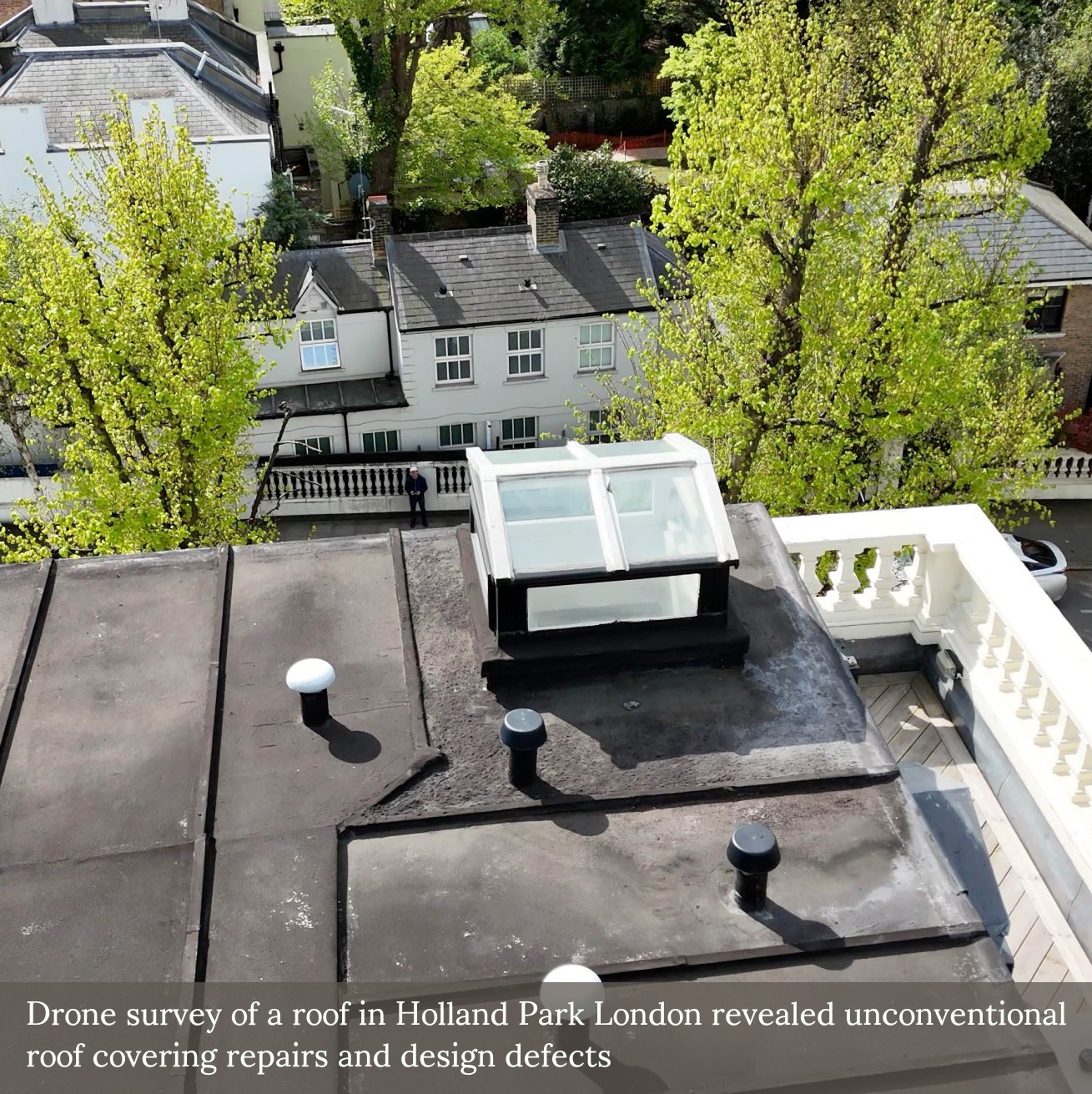
Two timber-framed roof lanterns formed part of a recent external inspection we undertook on a mansard roof in West London. Both featured single glazed elements, limited overhangs, and decorative paint finishes in poor condition.
The presence of condensation to internal glazing, along with signs of historical repair and timber exposure, highlights a common set of issues—particularly in traditional or poorly detailed roof structures.
Where single glazed rooflights are retained in occupied spaces, internal dampness is frequently the result of thermal bridging or trapped moisture, rather than rainwater penetration alone.
In such cases, replacement offers the opportunity to introduce modern, thermally efficient materials and more robust junction detailing—reducing risk and improving long-term performance.
AAL Chartered Surveyors
2026-04-10 11:40:23 British local time
Where Roof Design Meets Condensation Risk
Two timber-framed roof lanterns formed part of a recent external inspection we undertook on a mansard roof in West London. Both featured single glazed elements, limited overhangs, and decorative paint finishes in p...... Read more
Two timber-framed roof lanterns formed part of a recent external inspection we undertook on a mansard roof in West London. Both featured single glazed elements, limited overhangs, and decorative paint finishes in poor condition.
The presence of condensation to internal glazing, along with signs of historical repair and timber exposure, highlights a common set of issues—particularly in traditional or poorly detailed roof structures.
Where single glazed rooflights are retained in occupied spaces, internal dampness is frequently the result of thermal bridging or trapped moisture, rather than rainwater penetration alone.
In such cases, replacement offers the opportunity to introduce modern, thermally efficient materials and more robust junction detailing—reducing risk and improving long-term performance.
AAL Chartered Surveyors
2026-04-10 11:32:43 British local time
Where Roof Design Meets Condensation Risk
Two timber-framed roof lanterns formed part of a recent external inspection we undertook on a mansard roof in West London. Both featured single glazed elements, limited overhangs, and decorative paint finishes in p...... Read more
Two timber-framed roof lanterns formed part of a recent external inspection we undertook on a mansard roof in West London. Both featured single glazed elements, limited overhangs, and decorative paint finishes in poor condition.
The presence of condensation to internal glazing, along with signs of historical repair and timber exposure, highlights a common set of issues—particularly in traditional or poorly detailed roof structures.
Where single glazed rooflights are retained in occupied spaces, internal dampness is frequently the result of thermal bridging or trapped moisture, rather than rainwater penetration alone.
In such cases, replacement offers the opportunity to introduce modern, thermally efficient materials and more robust junction detailing—reducing risk and improving long-term performance.
AAL Chartered Surveyors
2026-04-10 11:27:03 British local time
Where Roof Design Meets Condensation Risk
Two timber-framed roof lanterns formed part of a recent external inspection we undertook on a mansard roof in West London. Both featured single glazed elements, limited overhangs, and decorative paint finishes in p...... Read more
Two timber-framed roof lanterns formed part of a recent external inspection we undertook on a mansard roof in West London. Both featured single glazed elements, limited overhangs, and decorative paint finishes in poor condition.
The presence of condensation to internal glazing, along with signs of historical repair and timber exposure, highlights a common set of issues—particularly in traditional or poorly detailed roof structures.
Where single glazed rooflights are retained in occupied spaces, internal dampness is frequently the result of thermal bridging or trapped moisture, rather than rainwater penetration alone.
In such cases, replacement offers the opportunity to introduce modern, thermally efficient materials and more robust junction detailing—reducing risk and improving long-term performance.
AAL Chartered Surveyors
2026-04-10 11:20:33 British local time
Where Roof Design Meets Condensation Risk
Two timber-framed roof lanterns formed part of a recent external inspection we undertook on a mansard roof in West London. Both featured single glazed elements, limited overhangs, and decorative paint finishes in p...... Read more
Two timber-framed roof lanterns formed part of a recent external inspection we undertook on a mansard roof in West London. Both featured single glazed elements, limited overhangs, and decorative paint finishes in poor condition.
The presence of condensation to internal glazing, along with signs of historical repair and timber exposure, highlights a common set of issues—particularly in traditional or poorly detailed roof structures.
Where single glazed rooflights are retained in occupied spaces, internal dampness is frequently the result of thermal bridging or trapped moisture, rather than rainwater penetration alone.
In such cases, replacement offers the opportunity to introduce modern, thermally efficient materials and more robust junction detailing—reducing risk and improving long-term performance.
Local Area
About Chiswick Park
Chiswick Park Office Buildings
Chiswick Park is a 33-acre business park on the boundary of the London Borough of Hounslow and the London Borough of Ealing, between Chiswick High Road and Gunnersbury station, developed progressively from 2000 to a masterplan by Rogers Stirk Harbour and Partners around a central landscaped lake. The park accommodates twelve six-storey HQ-grade office buildings together with an amenity building, ancillary retail and leisure floorspace, and structured car parking, operated under the Enjoy-Work management programme. Tenants include corporate occupiers across technology, media, pharmaceuticals, financial services, energy, and consumer goods. Typical building types comprise six-storey steel-framed office buildings of approximately 150,000 square feet, with floor-to-ceiling structural-glazed curtain-wall facades, exposed perimeter steel columns and roof beams, triple-height entrance atria, raised access floors, suspended ceilings, four-pipe fan-coil or underfloor air-conditioning, and parapeted single-ply flat roofs with substantial rooftop plant. Surveying instructions at Chiswick Park commonly include dilapidations and schedules of condition on office leases, category-A and category-B fit-out advice, reinstatement cost assessments, Minimum Energy Efficiency Standards strategy, and condition appraisals on curtain wall, atrium glazing, and rooftop plant.
Office Building Stock and Common Defects
The office buildings at Chiswick Park are steel-framed structures of consistent six-storey height, with floor-to-ceiling structural-glazed curtain-wall facades, exposed perimeter steel columns and roof beams, central or end-bay triple-height atria, raised access floors of 150 mm to 300 mm void depth, four-pipe fan-coil or underfloor air-conditioning, suspended ceilings, and parapeted single-ply flat roofs with extensive rooftop plant for cooling, ventilation, and emergency power. Common defects include sealant failure and gasket degradation at curtain-wall joints, water ingress at atrium glazing and rooflight perimeters, coating wear and condensation-related corrosion on exposed external steelwork, end-of-life chiller and boiler installations on the earlier buildings, raised access floor damage and inadequate void coordination after multiple fit-outs, suspended ceiling tile degradation, dated category-A finishes that fall short of current Grade A specification expectations, and flat-roof membrane ageing at upstands and outlets.
Office Dilapidations, Category-A and Category-B Fit-Out, and MEES
Tenants and landlords at Chiswick Park face material dilapidations exposure on office leases, driven by the age of building services on the earlier buildings, the cumulative impact of successive fit-outs, and the cost of returning premises to a defined category-A specification. A schedule of condition recorded at lease commencement is intended to limit terminal dilapidations liability and is routinely instructed for all new leases at the park. Terminal schedules require assessment of category-A reinstatement (raised floors, ceilings, mechanical and electrical services, perimeter finishes), removal of category-B fit-out (partitioning, joinery, IT cabling, kitchenettes, audio-visual installations), and statutory obligations including Minimum Energy Efficiency Standards. MEES strategy is increasingly central to dilapidations and asset management because letting and continued occupation under the EPC regime require careful planning around plant upgrade, lighting, and fabric improvements on the highly glazed envelope.
Reinstatement Cost Assessment and Building Refurbishment
Reinstatement cost assessments at Chiswick Park need to reflect the replacement cost of large-floorplate steel-framed office buildings with structural-glazed curtain-wall envelopes, exposed external steelwork, triple-height atria, raised access floors, fan-coil or underfloor air-conditioning services, and rooftop plant, together with professional fees, demolition and debris removal, and reinstatement of the surrounding landscape and water features. Refurbishment of the earlier 2000s buildings to current Grade A office specification, including plant replacement, lighting upgrades, end-of-trip facilities, and façade improvements, generates schedule of condition work for adjoining occupiers, party wall awards, and pre-construction condition records on neighbouring buildings. Owners considering capital expenditure on refurbishment or repositioning need early advice on existing-building condition, MEES compliance pathways, and the costs and risks of retained versus replaced building services.
Drone Roof Survey · Chiswick Park
Drone Roof Surveys in Chiswick Park
Drone roof surveys at Chiswick Park record visible condition across the twelve six-storey office buildings that define the park, including structural-glazed curtain-wall facades, exposed external steelwork, triple-height atria, parapeted single-ply flat roofs, and extensive rooftop plant compounds. The method is intended to provide structured imagery of roof coverings, atrium glazing, rooflights, and rooftop plant, with site access timed and scoped to ongoing tenant occupation.
Building Stock and Roof Types in Chiswick Park
Chiswick Park is dominated by six-storey steel-framed office buildings with floor-to-ceiling structural-glazed curtain-wall facades, exposed perimeter steel columns and roof beams, central or end-bay triple-height atria, parapeted single-ply flat roofs, and substantial rooftop plant compounds for cooling, ventilation, and emergency power. Drone roof surveys are well suited to the parapeted flat roofs, the atrium glazing perimeters, the rooflights, the rooftop plant decks, and the curtain-wall and exposed-steel elevations where ground-level access is disproportionate or where ongoing tenant occupation rules out scaffolded access.
- single-ply membrane flat roof on Chiswick Park office building
- rooftop plant deck and screened compound on office building
- atrium glazing and rooflight assembly on six-storey office
- exposed external steelwork at roof perimeter
- parapeted flat roof with photovoltaic array on refurbished office
- structural-glazed curtain-wall elevation on six-storey office building
Typical Drone Instructions in Chiswick Park
Typical drone instructions at Chiswick Park cover dilapidations imaging on office leases, schedule of condition imaging at lease commencement, planned-maintenance reporting on flat roofs and rooftop plant, defect investigation on atrium glazing and rooflight perimeters, sealant and gasket condition recording on curtain-wall elevations, coating-wear imaging on exposed external steelwork, and pre-refurbishment imaging to inform Grade A repositioning programmes.